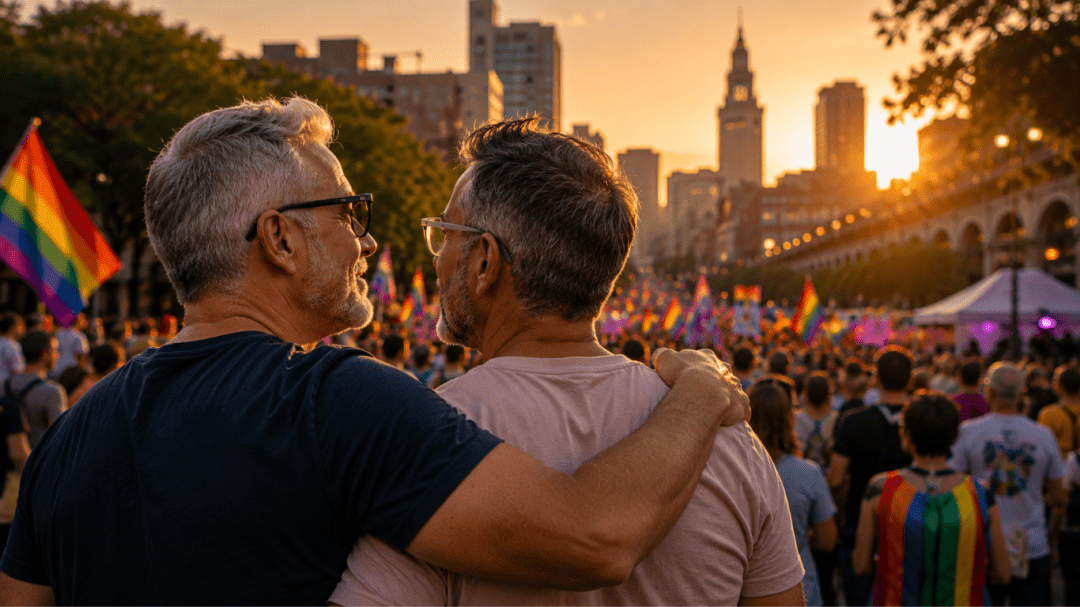
Have you noticed that, as you age, Pride starts to seem a little different? As we age, many LGBTQ+ people experience that feeling and often wonder if it means they’re becoming disconnected from the community. We question if we are simply out of touch and too old to be a part of it. That’s an easy assumption when so much of Pride culture seems focused on youth, nightlife, and celebration.
My first Pride parade was life changing, I saw our community and, for the first time, realized that I was not alone, that I was not some freak. I saw that I belonged to a much larger community. Each Pride season after gave me excitement and connection. As the years have passed, I missed some Pride events, took part in others, and even shaped my own, within my circles. I started to realize that there is more to Pride than just Pride events, and that how we experience it changes just as much as the celebrations themselves. And that is okay. All this means is that, as we age, Pride may take on a different meaning for us.
Perhaps that isnt a sing that we’re becoming disconnected. Perhaps it’s a sign that Pride is evolving alongside us. Let’s talk about why Why Pride Feels Different After 40, And Why That’s Not a Failure.
- When Pride felt like finding home
- The celebration gets more complicated
- My realization about what Pride means to me
- Pride doesn’t have to look the same to still matter
When Pride felt like finding home
For many LGBTQ+ people, their first Pride experience is something they never forget. It isn’t just the rainbow flags, the music, or the crowds. It’s the feeling that comes with seeing yourself reflected back in the world for perhaps the first time. After years of wondering if you belong, suddenly you find yourself surrounded by people who understand something fundamental about your experience.
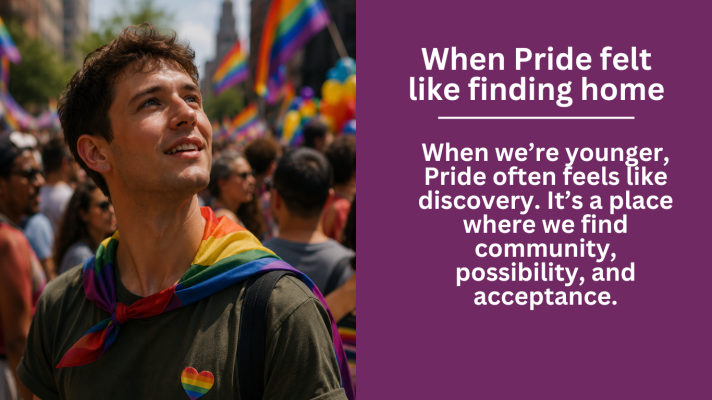
When we’re younger, Pride often feels like discovery. It’s a place where we find community, possibility, and acceptance. For some, it’s the first time they hold a partner’s hand in public without fear. For others, it’s the first time they realize they are part of something larger than themselves. Pride becomes more than an event, it becomes proof that we are not alone.
For me, that feeling arrived at my first Pride parade. I was newly out and dating my first boyfriend. He had been out longer than I had been alive and was excited to share the experience with me. We brought my mother and sister along, carefully avoiding the local television cameras so my father wouldn’t see us on the evening news. Standing there among thousands of other LGBTQ+ people, I felt something I had never felt before. There were people who looked like me, people who didn’t look like me, people from every walk of life imaginable, and somehow we all belonged there together.
It felt like home.
That feeling is what keeps many of us coming back year after year. Not just the celebration, but the reminder that we are part of a community that has always existed, even when we couldn’t yet see it. For many of us, Pride begins as a celebration of belonging before it becomes anything else.
The celebration gets more complicated
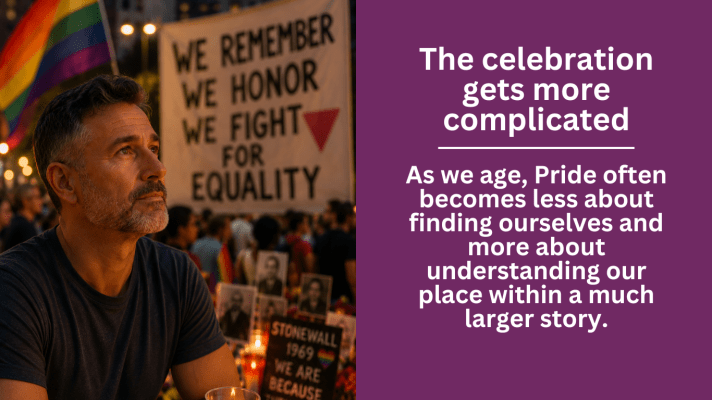
As we get older, our relationship with Pride often becomes more complicated. Not because we care less, but because we understand more. The excitement and celebration are still there, but they begin sharing space with history, memory, and a deeper awareness of what came before us.
When I first attended Pride, I was focused on the freedom of being there. I was discovering community and seeing a future that felt possible. Like many younger LGBTQ+ people, I was looking ahead. What I didn’t yet understand was how many people had fought, sacrificed, and endured so that I could stand there openly holding someone’s hand.
Over the years, I learned more about our history. I learned about the activists who demanded visibility when it was dangerous to do so. I learned about the generations we lost during the AIDS crisis. I learned that many of the rights and protections I had begun taking for granted existed because someone before me refused to stay silent. Pride stopped being just a celebration of who we are and became a recognition of who helped us get here.
That shift changes the experience.
The rainbow flags still fly. The music still plays. The joy is still present. But there is also gratitude. There is remembrance. There is an understanding that Pride is not simply about expressing ourselves in the present, it is also about honoring those who made that expression possible.
As we age, Pride often becomes less about finding ourselves and more about understanding our place within a much larger story. The celebration doesn’t disappear. It simply gains depth.
My realization about what Pride means to me
My first Pride Parade memory still blazes the rainbow colors it did when it happened. I was younger and had just started dating my first boyfriend. He had been out for more years than I was alive and was excited to share our local Pride Parade with me. We took my mother and sister, and we ducked the local news crews so we wouldnt end up on television for my father to see (except for our legs). It was liberating seeing so many other queer people, like me and not like me. It felt like home.
Over the years, I have went to Pride parades in other places and been a part of a great many memories, but each year it seems slightly different. In the beginning, where I was bright eyed and babe it the woods minded, I was excited about the prospects of living myself without fear, even for a day. As the years passed, I was made aware of the gross inequalities we live with daily and Pride seemed more like a memorial of what and who we have lost versus the celebration of bodies and sexual liberation.
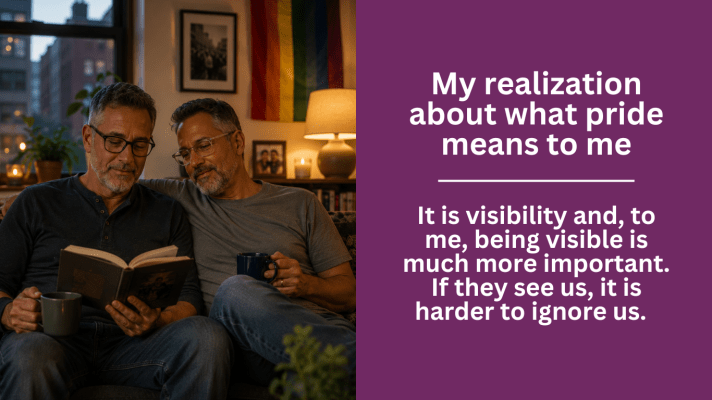
I am sad to say that I have not visited a Cleveland Pride in a few years. instead, my current partner and I try to live as openly and without shame, as we can. We support local queer business, try to visit as many drag shows as we can (depending on whether this administration makes us illegal or not) and show up to queer sponsored events. To me and to us, this seems more important, at this time, than simply showing up to a parade and waving a flag. There is no disapproval of anyone who enjoys and still does that, it is as instrumental for our survival as any other measure it. It is visibility and, to me, being visible is much more important. If they see us, it is harder to ignore us.
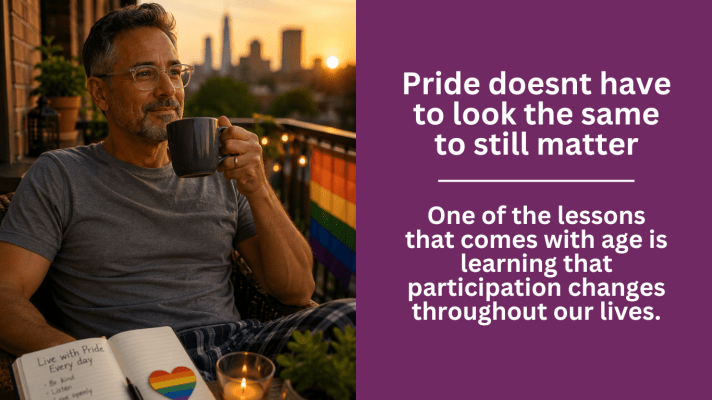
Pride doesn’t have to look the same to still matter
One of the lessons that comes with age is learning that participation changes throughout our lives. The things that once felt essential may no longer hold the same importance, while other things quietly take their place. Pride is no different.
For some people, Pride will always be the parade. It will be the music, the celebration, the rainbow flags stretching for blocks, and the feeling of standing shoulder to shoulder with thousands of other LGBTQ+ people. That visibility remains important. In a world where our rights and identities continue to be debated, challenged, and politicized, being seen still matters.
But Pride can also exist in smaller moments.
It exists when we support queer-owned businesses and artists. It exists when we attend drag performances, community events, and fundraisers. It exists when we mentor younger members of the community or share our stories with those who are just beginning their own journey. It exists every time we choose authenticity over fear and visibility over silence.
Perhaps that is why Pride feels different after 40.
We spend less time asking whether we belong and more time deciding how we want to contribute. We begin to understand that Pride was never meant to be confined to a single weekend in June. It was always intended to be carried into the rest of the year, into our relationships, our communities, and our daily lives.
The parade may end when the last float passes by. Pride does not.
It continues every time we choose to live openly, support one another, and refuse to disappear.
Because eventually, Pride stops being something we attend.
It becomes something we live.


