This year will mark my four year mark for my diagnosis with cirrhosis. (I’m a poet and didn’t know it.Joking aside) To this day, I am still learning, researching, and adapting to a disease that very well will kill me, at some point in the future. I have discussed how you get cirrhosis and things you need to do once you have been diagnosed. I have shared many of my health changes to light the way for others to make their own progress and know what they can do. The one thing I don’t talk about a lot are the procedures that you will go through and continue to have done, on a regular basis.
When I was diagnosed, I knew very little about this disease. I had only ever come into contact with those that were already in the late stages with it and we didn’t discuss medical appointments, or much else. After all, I was very young when I first learned about cirrhosis. Join me, today, as we discuss many of the procedures you are likely to encounter, and continue to do, in an article that I call Cirrhosis: What to Expect from Medical Appointments.

An unexpected Christmas gift
No sugar coating here, I have never been one to go to the doctor. That was a byproduct of my father. He loved to tell me again and again that a real man doesnt feel pain or get hurt. They simply get up, brush it off, and keep going. That changed with Karl. He had been listening to me complain about maladies that I was going through. He would ask if I had been to a doctor for tests or treatments and my answer was always a “no.” Why would I need to go to the doctor when I know what my symptoms are and was, as I thought, managing them. I reluctantly agreed to go, after it had caused some issues between us.
In the process of my work up, there were anomalies that caused some deeper testing. High blood pressure was one but the shock was cirrhosis. This diagnosis came from blood work, which led to other tests needing to be completed to narrow down my issues. From there I was referred to a hepatologist, a liver doctor, for a more targeted diagnosis. This led to more tests and lots of information being thrown at me. It was nerve wracking, to say the least, and terrifying to say the most. I didnt know what to expect or where it would end. Boy was I in for a rollercoaster of a ride.
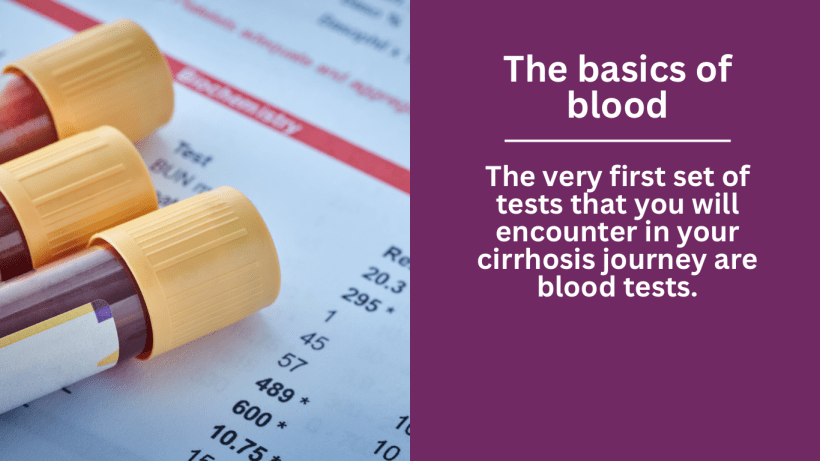
The basics of blood
The very first set of tests that you will encounter in your cirrhosis journey are blood tests. These are important for the initial diagnosis, as they speak to specific levels of various proteins and such, in your blood. Initially, these tests may be monthly so that they can find out how far advanced your condition is and what is going inside of you. The tests involve multiple data points to be analyzed. These tests help healthcare providers assess liver function, detect complications, and track the effectiveness of treatment.
Here are the core parts of the blood tests:
Liver Function Tests (LFTs):
- Alanine aminotransferase (ALT) and aspartate aminotransferase (AST): These enzymes are released into the bloodstream when liver cells are damaged. Elevated levels can indicate liver inflammation or injury.
- Alkaline phosphatase (ALP): Increased ALP levels can suggest bile duct obstruction or liver damage.
- Bilirubin: This pigment is produced when red blood cells break down. Elevated bilirubin levels can lead to jaundice, a condition characterized by yellowing of the skin and eyes.
- Albumin: A low albumin level can indicate liver dysfunction, as the liver produces this protein.
- Gamma-glutamyl transferase (GGT): Elevated GGT levels can suggest liver damage or alcohol abuse.
Coagulation Tests:
- Prothrombin time (PT) and international normalized ratio (INR): These tests measure blood clotting time. Liver dysfunction can interfere with blood clotting, leading to an increased risk of bleeding.
Complete Blood Count (CBC):
- Platelet count: Low platelet levels can increase the risk of bleeding.
- Red blood cell count and hemoglobin: Anemia, a condition characterized by a low red blood cell count, can occur in cirrhosis due to impaired blood production in the liver.
Electrolytes:
- Sodium, potassium, chloride, and bicarbonate: These electrolytes help maintain fluid balance in the body. Cirrhosis can disrupt electrolyte balance, leading to complications like fluid retention or electrolyte imbalances.
Ammonia:
- Elevated ammonia levels can indicate liver dysfunction and contribute to hepatic encephalopathy, a condition characterized by confusion and altered mental state.
Specific Markers for Liver Diseases:
- Alpha-fetoprotein (AFP): Elevated AFP levels can be associated with certain types of liver cancer.
- Ceruloplasmin: Low ceruloplasmin levels can suggest Wilson disease, a genetic disorder that can cause liver damage.
As I mentioned, initially, these tests can be quite frequent so your medical team can see exactly where you are and what procedure may be next. These tests also keep a track on where you are, in your condition, and help factor into your MELD Score. Personally, my blood tests now run every six months, around the same time in which I have appointments with my medical team.
A peek inside
Blood tests are the beginning of the processes you will become familiar with, in your journey with cirrhosis. They are the beginning and lead to other tests that will give confirmation about your condition. That leads us to the most important tests for verifying you have cirrhosis, the liver biopsy. There are two main types of biopsies that can be done. The most frequent is Percutaneous Liver Biopsy. This biopsy is done with a small incision in the skin taking a small sample to be reviewed. The other option is Transjugular Liver Biopsy and this is the procedure I had to go through. This procedure requires a small incision made in the neck and a catheter is inserted into the jugular and makes its way through your vein to the inside of the liver. Here a small sample is collected for further examination. This procedure is utilized more often with the liver being scarred, as was in my case. This procedure is don’t with minimal anesthesia so they can monitor your condition and watch for signs, it is also the most accurate and painful procedure.
The next procedure that you will encounter often is the endoscopy. This procedure is one where they insert, either orally(most often used) or anally, to examine the upper and lower digestive tract. It is used to primarily look for signs of varices in your throat. These varices are enlarged vessels in your throat that can lead to uncontrolled bleeding and possible death — if untreated. If varices are found, you will also undergo a banding procedure at the same time. This can be a slightly uncomfortable procedure, especially after it is completed. It will leave your esophagus feeling tight, pinched, and/or a sense of burning, from the bands used. The endoscopy is also used to detect bleeding in the stomach and intestines. This procedure can be about every six months or longer, depending on your condition.
The next three, most common procedures, are ones you will most likely encounter more often, the ultrasound, the fibroscan and the CT Scan/MRI. The ultrasound is done by sending soundwaves into the body to create images of the liver and other organs, the way it is used to take pictures of a developing fetus. This is used for assessing the size of the liver, fluid build ups (ascites), and looking for any abnormalities.
The fibroscan is very similar to how the endoscopy is performed but is specifically used to detect the amount of fibrosis the liver has. Fibrosis is the amount of scarring done to the liver as cirrhosis progresses. The big difference between this and the endoscopy is that the machine used in a fibroscan uses vibrations into the body. The vibration speed is affected by the scarring of the liver and allows them to know how bad it is.
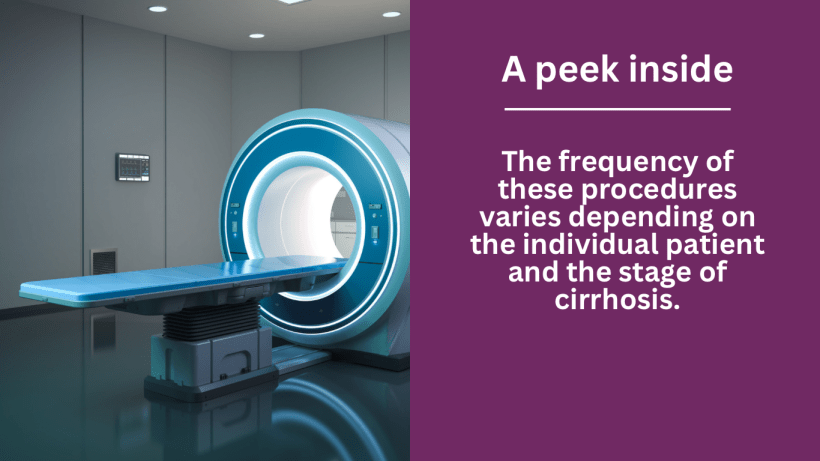
One of the conditions that come with cirrhosis is portal hypertension, sounds similar to hypertension you have in high blood pressure. The difference is it affects the portal vein in the liver. To monitor this, as well as detecting the possibility of liver cancer, a CT scan or MRI is done. You are given a fluid that allows the machine to detect anomalies in the liver. You are placed on a table and slide into a large machine that will take images of your body. This is my least favorite procedure as you are inserted into a tube that is only somewhat bigger than your body and have to hear the machine coolant systems as well as the procedure being done to you. That is about the only thing you get to hear for the entirety, other than the instruction to hold your breath at various intervals. At present, this procedure is done on me once a year. It is used for monitoring overall liver health as well as any of the surrounding organs like the kidney, pancreas, and gallbladder.
The last two tests are done if your condition is much more progressed. The first is paracentesis and is the process used when you have ascites. This procedure is where they drain fluid from your abdomen using a needle. Then there is the transjugular intrahepatic portosystemic shunt or the TIPS procedure. In this procedure, a shunt is placed between the portal vein and the hepatic vein to divert blood away from the liver. This procedure is done to help reduce the effects of portal hypertension and to prevent further complications, such as bleeding varices.
The frequency of these procedures varies depending on the individual patient and the stage of cirrhosis. Regular follow-up appointments with a healthcare provider are essential for monitoring the progression of the disease and adjusting treatment as needed.

The new normal
In this article, I described the most common procedures you will be subjected to as a cirrhosis patient. The frequency of these procedures and tests will vary greatly depending on the stage of your diagnosis and your overall health. I currently am at a MELD score of 7, which by most studies means my liver is still mostly functioning. That means some of these I only do every six months and others are once a year. Blood tests, for me, are done before my regularly scheduled visits with my liver doctor and the others are sprinkled throughout the times between visits to keep an overall idea of where my liver health is at any given time. Everyone of these tests has some level of intrusiveness but the necessity of them outweighs the comfort issue. I hope this has been helpful for anyone just starting out with their diagnosis, as well has helping those who wonder what the tests are for and do.
What about you, was any of this information helpful for you? Were there questions you had that were answered by this article? What questions would you like to see answered or curiosities removed? Let me know in the comments below and I will do what I can to help you, where I can. Just remember that these will vary greatly for each person diagnoses and that I am not a doctor and cannot/will not give you medical advice, only answer questions to the best of my ability and share my story. Thanks for being a part of GayintheCLE, I simply could not do this without each and every one of you.


