
Living with cirrhosis changes how you see your body. For me, it wasn’t just about staying active, it was about staying empowered. Once I was diagnosed, I realized how important movement was, not just physically, but mentally and emotionally. But let’s be real: when you’re dealing with liver disease, the idea of “hitting the gym” or pushing through a run can feel overwhelming.
Still, I’ve found that regular, mindful exercise, done at my pace, has made a huge difference in how I feel. This isn’t about achieving fitness perfection. It’s about honoring your body, being aware of your limits, and carving out space for strength in a life that sometimes feels unpredictable.
- Start where you are, not where you used to be
- Listen to fatigue, dont fight it
- Strength training is your friend
- Cardio: Light, Gentle, and Joyful
- Nutrition and hydration are part of your workout
- Mindset: It’s not a sprint, its a relationship

Start where you are, not where you used to be
If you were active before your diagnosis, it can be frustrating to feel like you’re starting over. And if you weren’t? That’s okay too. Movement doesn’t have to be intense to be effective. It just needs to be consistent and safe.
I started small:
- Short walks around my neighborhood
- Gentle strength training with bodyweight or light resistance bands
- Low-impact yoga on the days I needed more calm than motion
The goal wasn’t to burn calories or sculpt anything. The goal was to feel connected to my body again and to remind it (and myself) that we’re still in this together.

Listen to fatigue, dont fight it
Fatigue with cirrhosis is real. And not the “I stayed up too late watching horror movies” kind. This is deeper, cellular-level tired. If you’ve felt it, you know.
One of the biggest shifts for me was learning not to push through. Instead, I build my workouts and activities around fatigue.
Here’s how I manage it:
- I give myself permission to stop. If I planned to walk 30 minutes and I’m exhausted at 10? I stop.
- I break my activity into smaller chunks. A 10-minute walk in the morning and another in the evening is still a win.
- I build in rest days—and real rest, not just “doing errands instead of working out.”
- I check in with myself every single day. I ask: “What do I actually need today?”
Rest isn’t the enemy of progress. With cirrhosis, rest is part of the plan.

Strength training is your friend
Muscle loss can creep up quickly with liver disease. That’s why strength training, done safely, is a game changer. You don’t need a gym membership or a bench press setup. I started with:
- Wall pushups
- Chair squats
- Resistance bands while watching old episodes of The Golden Girls
It’s not about maxing out. It’s about preserving lean mass, protecting your bones, and giving your metabolism a little nudge.
A few tips I live by:
- Focus on form, not weight
- Skip exercises that cause strain or discomfort
- Use your breath, inhale during release, exhale during effort
Rest between sets, even if it’s longer than the “standard” advice
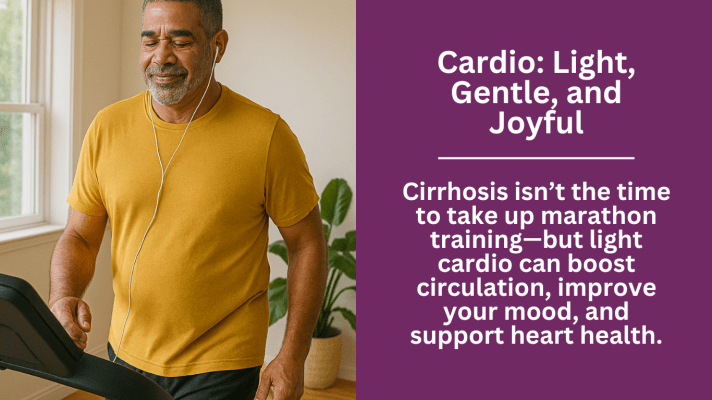
Cardio: Light, Gentle, and Joyful
Cirrhosis isn’t the time to take up marathon training, but light cardio can boost circulation, improve your mood, and support heart health. I keep it simple:
- Morning walks when the air is cool and the world is quiet
- Easy-paced treadmill strolls with music or old-school game soundtracks
- Dance breaks in my living room to ‘80s pop or goth classics
When it stops being fun, I pause. When I need to sit down, I do. And when I feel that internal “yes” to move again, I honor it.
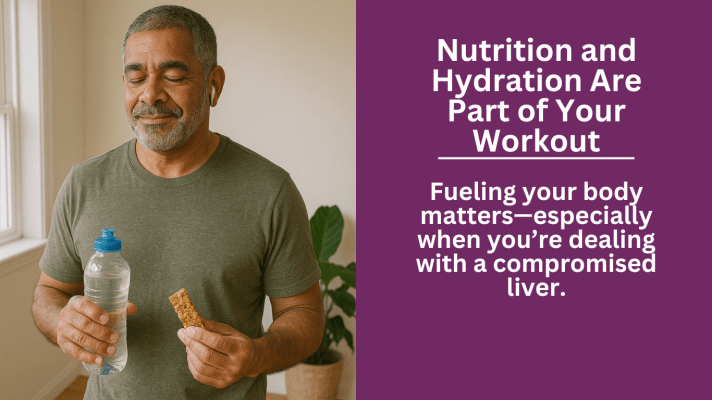
Nutrition and hydration are part of your workout
Fueling your body matters especially when you’re dealing with a compromised liver. Before I exercise, I make sure I’ve eaten something nourishing (usually a light, protein-rich snack) and that I’m hydrated. Dehydration can spike fatigue fast, and it’s an easy fix if you stay on top of it.
I also keep salty snacks or electrolyte drinks nearby, especially during the summer. One bad dehydration spell taught me that lesson the hard way.
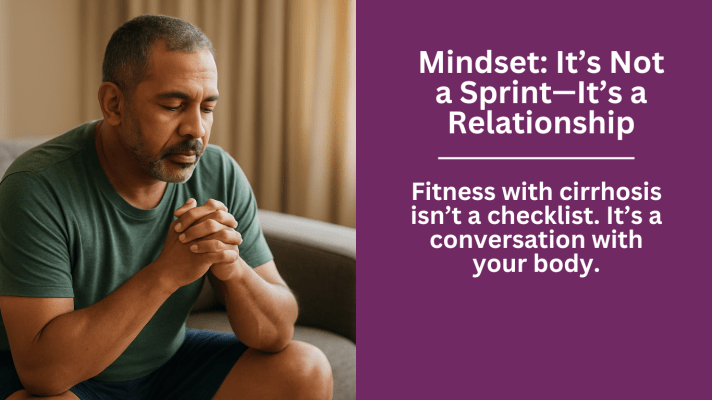
Mindset: It’s not a sprint, its a relationship
Fitness with cirrhosis isn’t a checklist. It’s a conversation with your body. Some days you’ll feel strong, other days you won’t. That’s okay. You’re not failing, you’re adapting. That flexibility is strength.
Be kind to yourself. Celebrate small wins. Rest without guilt. And remember that movement, no matter how modest, is a quiet form of rebellion against fear.
You don’t have to run, lift, or sweat to be fit. You just have to show up for your body in a way that’s gentle, consistent, and real. Cirrhosis changes the rules but it doesn’t end the game.


 Gay in the CLE