
Because you were always worthy. You just needed to remember.
When we hear the word REJECTION, most of us associate it with being turned down by someone we have feelings for, whether it’s romantic, platonic, or even familial. No matter the rejection stems from, it leaves an indelible mark on us — one that cuts us to our very core. While the wound never fully heals, it often calluses over and will, at some point, start to affect how we navigate situations in the future. Those reactions can grow to affect our future relationships and cause us to continue a negative feedback loop until something big changes. Usually not for the best.
The good news is there are ways to manage these feelings and responses.
Healing is a long road and involves a lot of self-reflection, this I have had a first hand seat at experiencing. It’s isn’t easy and it is sure to trudge up some memories you have forgotten or buried so deep that they could never see the light. Your progress will often seem less than you desired or, like me, feel more stagnant and even a reverse direction. With that said, join me as I share Healing from Rejection: Family, Faith, and the Long Road to Self-Worth.
- The first wound: When love isn’t conditional
- Holy harm: Navigating religious rejection
- Family isnt always blood
- Rejection lives in the nervous system
- Rebuilding self-worth: It’s a practice, not a destination
- You are the proof that healing is possible

The first wound: When love isn’t conditional
For many LGBTQ+ people—especially those of us over 40—our first experience of rejection didn’t come from strangers. It came from the people who were supposed to protect us. Parents. Siblings. Religious leaders. Even entire communities.
When you’re young, and someone tells you that who you are is wrong, broken, or sinful, it doesn’t just sting—it roots itself deep in your sense of identity. You start asking questions like: What did I do wrong? Am I truly lovable? Am I safe being myself anywhere?
If you’ve ever been made to feel like your existence was a disappointment, I want you to hear this clearly: their rejection was never about your worth. It was about their limitations.

Holy harm: Navigating religious rejection
Let’s talk about the sanctified shame many of us still carry. Whether you grew up Catholic, Evangelical, Mormon, or another conservative tradition, religion was often the blueprint of belonging—and we didn’t fit.
Many queer men over 40 were raised with doctrines that taught us to fear ourselves. We were taught that our desires were demonic, that our love was unnatural, and that salvation meant denying our truth. Some of us tried to pray the gay away. Others fled completely—carrying both guilt and grief in our wake.
Even if we’ve moved past those spaces physically, the emotional scars often linger, surfacing as shame, people-pleasing, or an inability to trust ourselves spiritually.
But here’s the magic: you get to rebuild your spiritual identity now. Whether that means reclaiming parts of your faith, building your own belief system (hello, modern mystics!), or simply embracing your queerness as sacred—you don’t owe loyalty to any belief that makes you hate yourself.

Family isnt always blood
Let’s be honest—some of us still carry the ache of not being invited to the wedding, the holiday dinner, or even back into the family group chat. The wound of family rejection is uniquely painful, because it’s tied to origin, safety, and belonging.
But here’s what many of us have learned: you can build the family you deserve. Chosen family isn’t just a buzzword—it’s a lifeline. It’s the group text that checks on you. It’s the friend who shows up when your blood relatives go quiet. It’s the mentor, partner, or neighbor who reminds you that you matter.
And when we say “it gets better,” we don’t mean the pain magically disappears. We mean that you grow bigger than the pain. And that growth often leads to deeper, more authentic connection—on your terms.
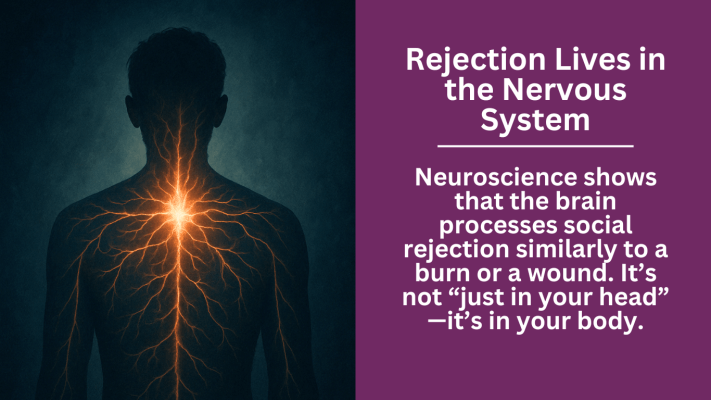
Rejection lives in the nervous system
One of the reasons rejection cuts so deep is because it hits the brain like physical pain. Neuroscience shows that the brain processes social rejection similarly to a burn or a wound. It’s not “just in your head”—it’s in your body.
So healing isn’t just a mental journey. It’s emotional. Physical. Somatic. It’s why affirmations help, but aren’t always enough. Sometimes you need to cry it out, dance it off, journal the pain, or scream into a pillow. And sometimes, you need therapy, ritual, community, or sacred space to move that trauma through your system.
There’s no one way to heal. But every step you take toward your truth is a step away from the lie that you were ever unworthy of love.
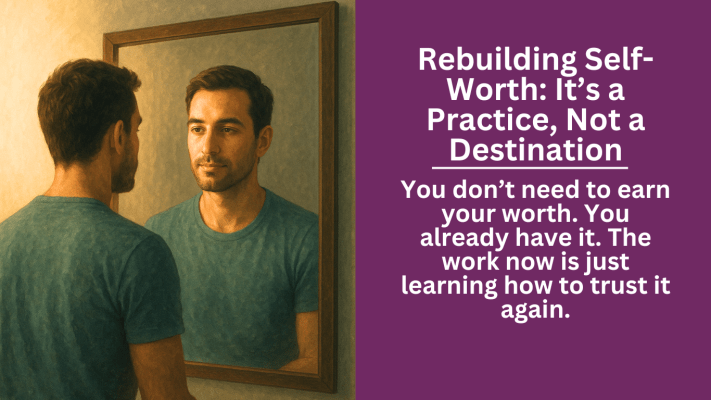
Rebuilding self-worth: It’s a practice, not a destination
The road back to self-worth is not a straight line (and neither are we). Some days you’ll feel strong. Other days you’ll hear the old voices echo. That’s okay. That’s normal.
Here are small, meaningful practices that help reinforce your worth:
- Write a letter to your younger self and tell him what you wish he knew.
- Speak your full name aloud while looking in the mirror—say, “I am worthy. I am lovable. I am enough.”
- Spend time in spaces where you don’t feel like you have to shrink, code-switch, or apologize.
- Celebrate your joy—even if it feels small. Joy is rebellion. Joy is healing.
You don’t need to earn your worth. You already have it. The work now is just learning how to trust it again.
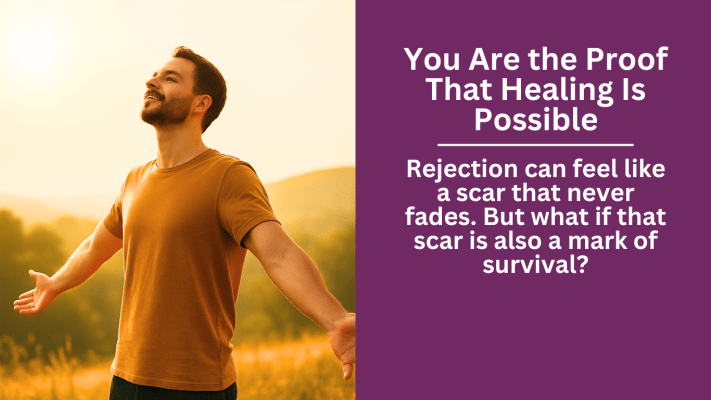
You are the proof that healing is possible
Rejection can feel like a scar that never fades. But what if that scar is also a mark of survival? A reminder that you’ve walked through fire—and came out glowing?
For every family member who turned away, there’s someone who chose you. For every church that closed its doors, there’s a space where your spirit can soar. For every moment you doubted yourself, there is this one—where you remember who you really are.
Healing is slow. Sometimes it’s messy. But it’s also beautiful. And you, my friend, are right on time.


 Gay in the CLE
One thought on “Healing from Rejection: Family, Faith, and the Long Road to Self-Worth”