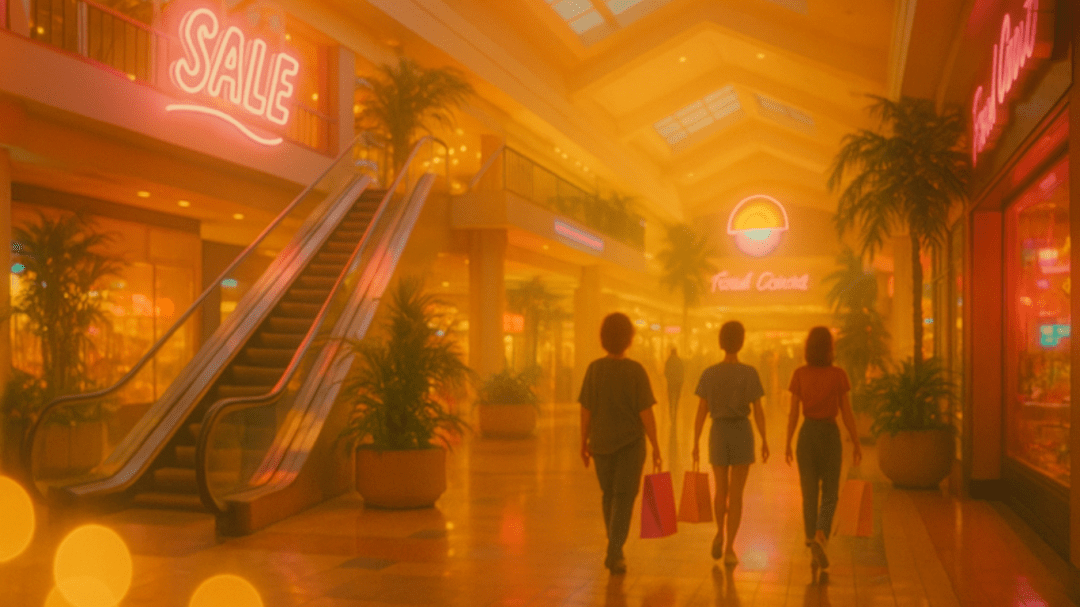
Where Gen X queers learned style, sparkle, and the fine art of extra—from retail temples to photo booth fantasies.
In the 1980s, if you wanted to be cool then you had to hang out at the mall. So, it is safe to say that I wasnt cool. The only time we got to go to the mall was the few sparse weekend visits we made to Roanoke. They were fleeting as they were shopping trips for our mom. We did have the ability to sneak away or waste some time at the arcade, but that had its limits. Unlike televisions shows like Stranger Things and the multitude of 80s movies, myself or my sister didnt hang out, unsupervised, at the mall with our friends.
That did not stop the allure of the mall.It was guaranteed you would find me in one of three stores, back then. If I was not pumping quarters into arcade games, I was at the toy store, like Kaybee Toys, and if you could not find me there then I was definitely in Spencer Gifts, trying to sneak my way into the more adult section of the store. The malls were the mecca of our youth, the church in which we prayed to the 80s gods of pop culture. So, let’s hop in our Delorean, rev it up to 88mph and jump back into a time of Mall Kiosks, Glamour Shots, and Other Micro-Eras of Queer Aesthetic Training.
- The mall was our church and we were devout
- Glamour shots: The first time we were allowed to be extra
- Mall kiosks: Queer aesthetic bootcamp, one spray at a time
- Claire’s and Spencer’s: Two genders, both chaotic
- Arcade glow and food court fashion
- Why it all mattered more than we realized
The mall was our church and we were devout
If you were a queer or questioning kid in the 80s or early 90s, there’s a good chance your local mall was more than just a weekend destination. It was sanctuary. The mall was where we first flirted with identity, where the fluorescent lighting and food court smells masked a sacred coming-of-age ritual. Before we had Pride parades or queer TikTok influencers, we had Claire’s. We had the kiosk girl who let us try the glittery nail polish even if we “weren’t supposed to.” And we had the quiet thrill of passing by Spencer’s Gifts and wondering what was in that section in the back.
Back then, queerness wasn’t something most of us could express openly. But the mall? That was a safe zone of silent codes and unspoken discovery. You could try on eyeliner “as a joke” with your friends, or spend hours browsing Guess jeans and leather chokers like you were studying for a final in fabulousness.

Glamour shots: The first time we were allowed to be extra
Ah, Glamour Shots. The holy grail of over-accessorized, soft-focus fantasy. For many of us, it was the first time we ever saw ourselves as art. You weren’t just photographed—you were transformed. Feather boas, leather jackets, fingerless gloves, teased hair, sultry lighting—it was part Madonna, part Dynasty, and completely empowering.
Even if you weren’t out, even if you were just “supporting your cousin” during her session, you felt something shift. This wasn’t a Sears family portrait. This was drama. This was fantasy. This was… you, finally dialed up to eleven. Glamour Shots gave us permission to see ourselves through a lens of fabulosity, long before selfies, Facetune, or ring lights made it common practice.
It wasn’t just about vanity. It was about vision. It was a low-stakes space to dream big, and honestly? We’ve been chasing that high ever since. I remember these booths so well. You would show up, run through various costumes, makeup, and hair to create this soft focused deity of supposed beauty. In most cases, what you got was a softcore photo that made you look like a prostitute. Sorry mom, I know you loved those pictures.
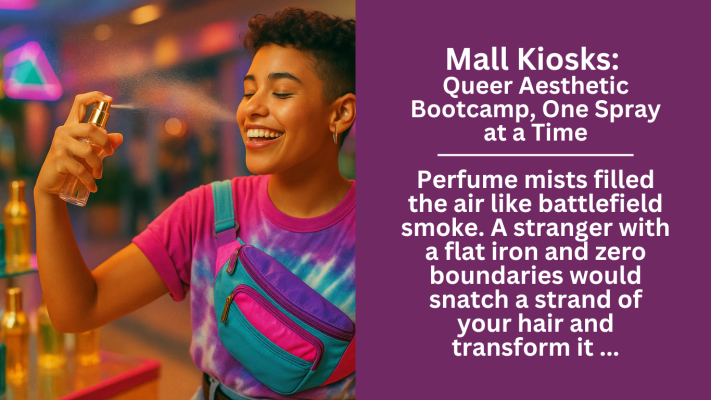
Mall kiosks: Queer aesthetic bootcamp, one spray at a time
Let’s not sleep on the mall kiosk experience, which was basically basic training for future drag queens, fashion gays, and style rebels alike. Perfume mists filled the air like battlefield smoke. A stranger with a flat iron and zero boundaries would snatch a strand of your hair and transform it into a crunchy spiral of destiny. If you were brave, you’d try out a stick-on tattoo. If you were bold, you’d walk away in a snap bracelet and rhinestone-studded friendship ring that cost your whole allowance.
These kiosks were chaotic, unpredictable, and a little unhinged—and that’s exactly why we loved them. You learned how to flirt, how to dodge, how to negotiate, and how to shop with flair. For queer kids, it was immersive theater—part consumerism, part character development.
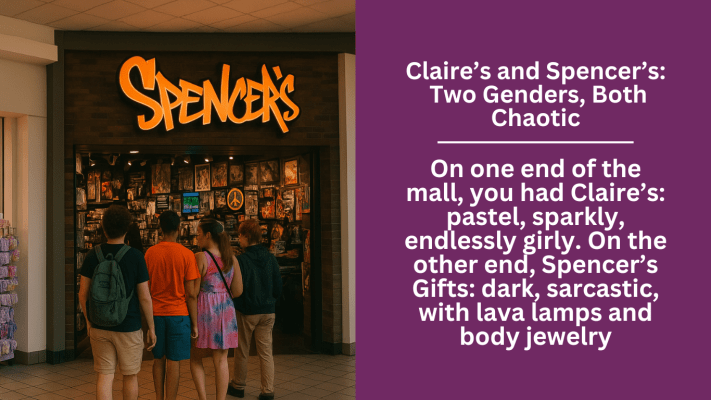
Claire’s and Spencer’s: Two genders, both chaotic
On one end of the mall, you had Claire’s: pastel, sparkly, endlessly girly. On the other end, Spencer’s Gifts: dark, sarcastic, with lava lamps and body jewelry you weren’t quite brave enough to buy. If you could bounce between both stores in a single visit, congratulations—you were probably already experimenting with gender long before you had the words for it.
Claire’s gave you your first taste of glitter nail polish, fake piercings, butterfly clips, and lip gloss that smelled like rainbow sherbet. Spencer’s offered you sex jokes, skull rings, and t-shirts with slogans that let you push boundaries without saying a word. These places weren’t just retail. They were mood boards for queerness in progress.
Spencer GIfts has a special place in my heart. In my youth I was in love with SciFi and horror, in the 80s, Spencer Gifts was different than it is today. Back then, they had an entire wall of Halloween masks that they carried all year around. With the visages of Darth Vader, Boba Fett, various presidents, and other pop culture references, I absolutely loved them all. Not to mention the various novelties they carried for kids and adults alike. The coolest novelty I bought, back then, was a spit ball bazooka. Yes, it was exactly what it sounded like, you would make small balls of paper and load them into a spring loaded small toy, plastic bazooka. You would pull a trigger and it would propel your paper bullet, or RPS (rocket powered spitball), at your unsuspecting target. That is until that target made a sound and you were busted for shooting it. I think that little toy lasted three days before my 3rd grade teacher took it from me, never to be seen again.
Arcade glow and food court fashion
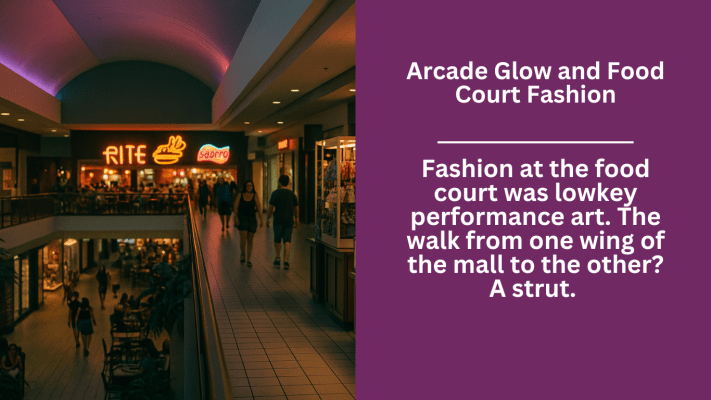
Even the arcade and food court held their lessons. The dark corners of the arcade taught us about crushes, competition, and how to look cool while pretending not to care. Over greasy slices of Sbarro or a shared Orange Julius, we eavesdropped, people-watched, and slowly learned the art of being seen without being too obvious.
Fashion at the food court was lowkey performance art. The walk from one wing of the mall to the other? A strut. Whether you were in acid-wash jeans or your older sister’s band tee, you were serving. And let’s not even get started on what it meant to be spotted wearing something you just bought from the other end of the mall—instant icon status.
Why it all mattered more than we realized
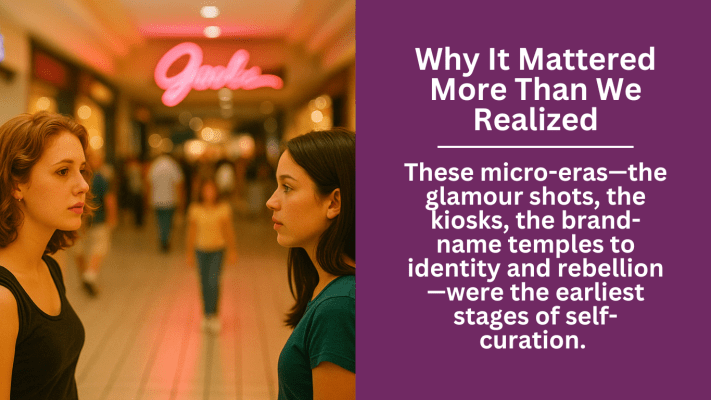
It might sound dramatic to say a trip to the mall helped shape our queer identities, but it’s true. These micro-eras—the glamour shots, the kiosks, the brand-name temples to identity and rebellion—were the earliest stages of self-curation. Before Instagram feeds, we had our shopping bags and the courage to ask for frosted tips at the Regis Hair Salon.
The mall gave us lessons in self-presentation, confidence, and boundary-pushing. It let us try on versions of ourselves we weren’t allowed to be at home. And through it all, we learned how to build a style that was ours, and sometimes, a future we didn’t know we were growing into.


 Gay in the CLE