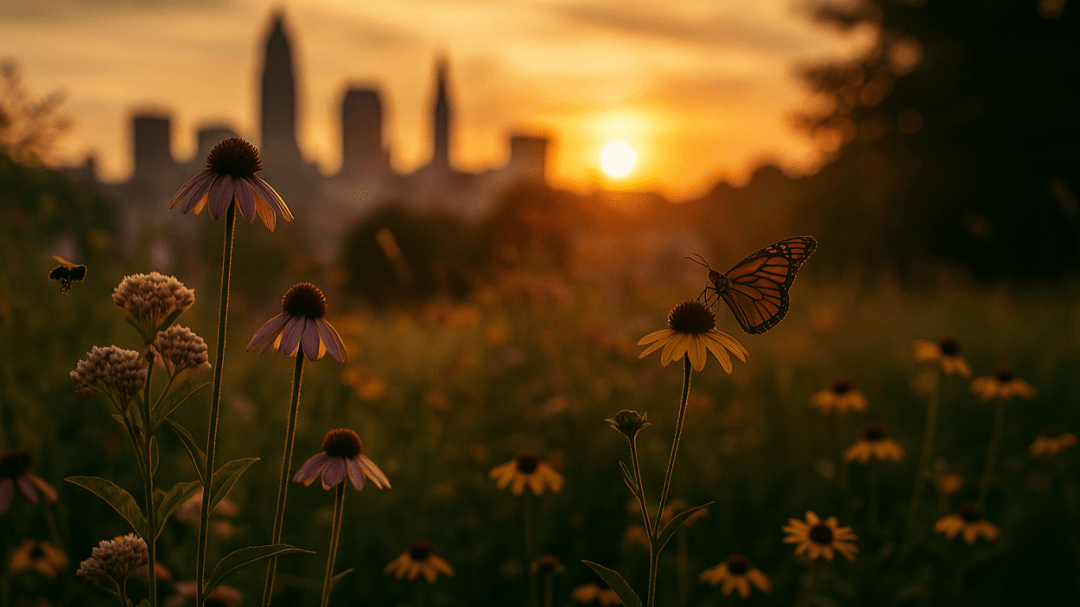
As a kid, I was both scared of and loved being outside. Allergies were a common thing for me to deal with, but they never seemed to completely stop me from playing outside. I grew up in a very rural area, what we lovingly called “the country.” It would take us at least an hour to drive for groceries, on the weekend. But what was amazing about that is we lived in a small pocket of the world that often seemed untouched by the scars and plagues of a more city life. I remember collecting wasps, collecting praying mantis egg sacks, and monitoring orb weaver spider webs for science class. I dodged bees, due to allergies, while I pretended to be any variation of a superhero, military guy, or explorer and took note of all of the animals around me. The wilderness seemed endless, when I was a child It seemed magical, at the time. I miss those childhood memories of nature.
Things don’t seem so boundless, anymore. The biodiversity loss that we are starting to see is scary. We are facing a pollinator crisis and, for most people, I dont think they see the correlation of things like climate change and bees and why things like backyard conservation are essential, if we are going to try to make enough small impacts to help save our world and ourselves. My little corner of nature, in our backyard, seems awfully quiet in comparison to those childhood memories and it has me worried.
Even as someone allergic to nature, I was always connected to it — and now I feel like I’m watching it disappear. Our life is contingent upon a web of interconnectedness and one small tug can cause it all to unravel. It is heartbreaking to think about.
- Becoming a reluctant child of nature
- Building a pollinator garden
- Where have all the pollinators gone?
- Environmental grief and queer resilience
- What can we still do

Becoming a reluctant child of nature
At a very early age, my mother was treated to a kid that seemed to be allergic to a great many things in nature; bees, pollen, dust, and animal dander, to name a few. I went through multiple rounds of allergy tests to determine the extent of my allergies. Laying on a table feeling your body covered in needles isnt how most children want to spend their time.
None of this stopped me from playing in the dirt, grass, or near any place that actually might have a bees nest.
Then came science classes and suddenly, the world was a very different place. I had teachers who sparked excitement about the natural world, showed how everything was connected, and taught me a power that was more impressive than almost anything Merlin could have conjured for King Arthur. I left high school knowing I wanted to go out and change the world.
Nature and science was an escape for me. In high school, I felt out of place, not part of the crowd. I knew I was different, knew I liked boys, but science didnt care about that and it allowed me to feel safe and to have a place to be seen for intellect. I didnt feel fear with things like biology, geology, and astronomy. A walk in the woods noticing spiders building webs, animals foraging for food, and the plants blooming were like going to church. Hearing birdsong was like the choir, it elevated my soul and gave me peace. It was astonishing. It changed me.

Building a pollinator garden
My family has always been gardeners. Most of the women in my family had a green thumb, hell, even my father did a great job of building and growing a garden. It would seem logical that both my sister and I would have some of that talent. I helped my mother keep her flower beds up until she died and I moved to Ohio. I vowed that at some point in my life, I would have my own garden to grow and tend. Then, Karl came into my life.
Once we started dating, we learned we had similar loves of nature. I brought up the idea of creating a small garden oasis in our backyard and use native plants to attract local pollinators, instead of just putting out random flowers for the sake of beauty. We scoured local farmer’s markets and plant stands to find things like Whorled Milkweed, Common Blue Violet, Lily of the Valley, and anything else we could find. We even raised local varieties of butterflies. All of this was in mind to help establish local pollinators back into our neighborhood.
This year, we added a few more plants, but as we get into July I started to noticed something different. This difference hit me when I was out on a run, recently. The park I run in has a huge field of milkweed and it is flowering. The sweet, floral scent, almost akin to jasmine, just wafts across the area and is a welcome sense on my run. This year I happened to notice that the flowers were already dying back and I had not seen butterflies on them. This started a process in my mind to questions whether this was an oddity or something more. The more I thought about it the more I realized that even in our own backyard oasis, there had been a sharp decline in pollinators.
Last year, we had bumblebees feasting on our Wisteria, Foxglove, and other plants. Butterflies had feasted on our Goldenrod, tomato and bean blooms. This year it all seemed quiet.

Where have all the pollinators gone?
You may wonder what are pollinators, the short answer is that they are animals or insects that carry pollen from one plant to another, enabling those plants to reproduce. They are cornerstone species, meaning that they affect how other species and systems interact. Without them, they simply fall apart and cease to be.
This year, 2025, Ohio, as has been witnessed across the country, experienced a massive decline in bee populations. Current statistics show that roughly 60-70% of the commercial honey bee colonies have disappeared. As our cities grow, we cut down more forests, and pave over fields of flowering plants bee populations decline. Adding to that government roll back of EPA Standards and the increase of the rate of climate change. There is little wonder these precious species are dying off.
As someone with a chronic illness, I am fully aware of what it means to be fragile — how quickly something can unravel. However, just like my chronic illness, hope still remains in making the population more healthy.
Environmental grief and queer resilience
This isnt about the decline in bugs, it goes beyond that. It is about watching our memories of happy childhood vanish and the survival of our species and this planet. Our environment is a fragile system of interconnected symbiosis. Just like a fragile tapestry, tugging on one small stream can have a ripple effect in the rest of the pattern. If that thread comes loose, the entire thing can come apart.
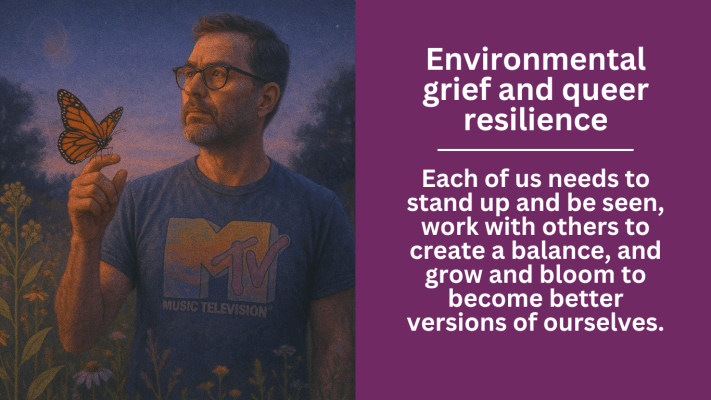
Queer survival is a microcosm of this, as well. Each of us needs to stand up and be seen, work with others to create a balance, and grow and bloom to become better versions of ourselves. Our friends, families, and communities are our pollinators, they bring diversity to our system, encourage growth, and help us remove the things that hold us back. Each and every one of our LGBTQ+ community has always found ways to grow and survive, despite being told we shouldn’t exist. Therefore, we should be one of the first stewards that stand up to help save another fragile system from being torn down and dismissed.

What can we still do
How to help pollinators isnt complicated. Each of us can work to create a shift in the current path we are on. Small steps matter and when enough people combine their small steps, they have created a foundation to support something larger, something important. So, how do we do it?
The easiest way to help these populations return is to create safe havens for them simply by following the things that we do here, at our house. We continue to fill out our garden every year, we ensure there is ground cover for them to hide in during the colder times of years, we plant varied flowers to attract and give a diverse diet to each of the pollinators that visit. We build a garden that has both food sources and shelter for various animal and insect types.
Each of you can do similar things, no matter where you live, as long as you have an outside area. Stop using harmful chemicals and pesticides around your house, stop killing insects, plant native flowers in windowsill boxes or pots for your patio. Learn more about how to attract and keep local pollinators in your area. Lastly, remember to vote like it matters because it does. Like our lives, we only have one Earth to call home. Once it has been ruined, forced into becoming a barren wasteland, and the animals are gone, so shall we be.
The truth is that this is an uphill battle and its not going to be easy. We are competing with people who are more concerned about profit margins than whether flowers are disappearing in the world. We have to be the ones to start the process of change and then teach others by example. Simple things likes backyard wildlife conservation and gardening for biodiversity can have large impacts on what the future holds. It is up to each of us to ensure we pass on a beautiful and habitable place for our children.


 Gay in the CLE
One thought on “Stung by Memory: How a Pollinator Garden Reconnected Me to a Vanishing World”