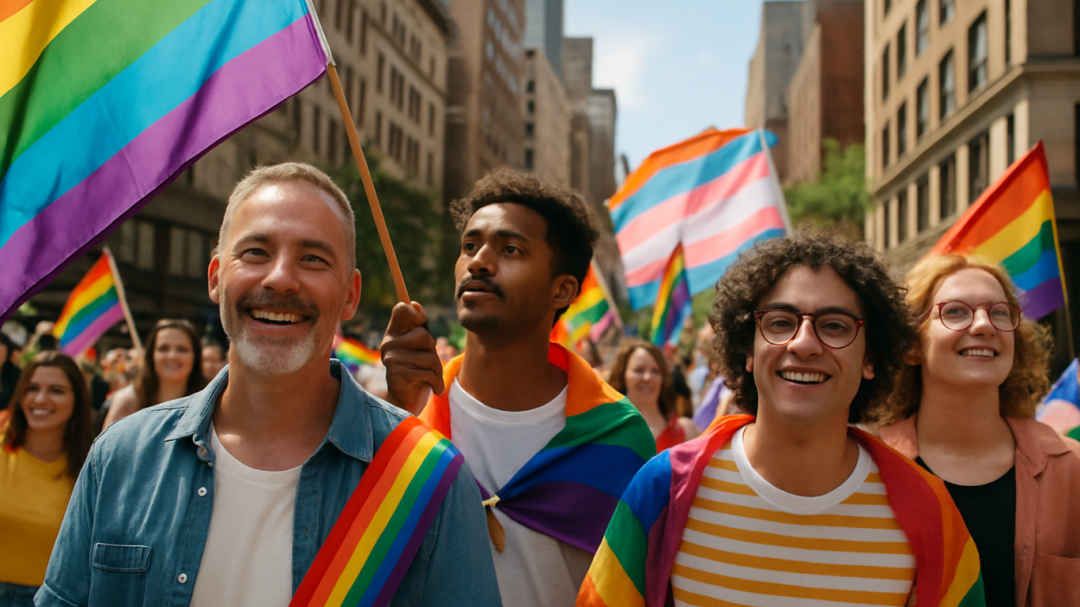
When I think about Pride, I don’t just think about rainbow flags, parades, or clever t-shirts. I think about bricks. About blood. About courage in the face of brutality. I think about how much has changed—and how much is once again under threat.
For those of us over 40, Pride isn’t just a party. It’s a pulse. A remembrance. A warning. It’s knowing what it meant to be closeted in the ’80s, to lose friends in the ’90s, to celebrate wins in the 2000s, and now—to fight again in 2025, as old battles resurface with frightening speed.
We’ve come a long way since the Stonewall Riots. But we are not done. And we cannot afford to be silent now. In light of the current administration gutting protections to LGBTQ+ individualism, actively working on how to overturn gay marriage, and the multitude of other protections, it is important for us to know the landscape, our rights, and how to effectively and legally stand up against those that seek to diminish us. Those of us who witnessed the activism from the late 70s through to the 90s remember times we had to accept so much less and we cant go back to those times. Join me today as we look at Stonewall to Today: What Pride Still Means to Gay Men Over 40.
- From Stonewall to the Supreme Court: A Legacy of Resistance
- Pride in 2025: What’s at risk under the current administrastion
- What we could lose: Why midlife gay men should be alarmed
- What can we do: Everyday resistance, real power
- The fight today: Voices on the front lines of LGBTQ+ rights
- Pride is protest, and we’re not done yet

From Stonewall to the Supreme Court: A Legacy of Resistance
The Stonewall Uprising in June 1969 was never about rainbows and corporate sponsors. It was about survival. Queer people—led by trans women of color like Marsha P. Johnson and Sylvia Rivera—fought back against police harassment and institutional violence. That night wasn’t the beginning of our movement, but it was the spark that ignited a fire we’ve been tending ever since.
In the decades since, we’ve seen monumental change. Pride evolved from protest to celebration—but always carried the echoes of resistance. Here’s how far we’ve come since Stonewall:
- 2003 – Lawrence v. Texas struck down sodomy laws nationwide, finally decriminalizing same-sex relationships.
- 2010 – Repeal of “Don’t Ask, Don’t Tell”, allowing gay, lesbian, and bisexual service members to serve openly.
- 2015 – Obergefell v. Hodges, which granted us marriage equality across all 50 states.
- 2016 – Pulse nightclub massacre in Orlando shocked the world, but galvanized new waves of activism focused on LGBTQ+ safety and hate crime awareness.
- 2020 – Bostock v. Clayton County, confirming that Title VII of the Civil Rights Act protects employees from discrimination based on sexual orientation or gender identity.
These victories were not handed to us. They were fought for by generations of LGBTQ+ elders, allies, and activists:
- Harvey Milk, whose assassination in 1978 turned him into a symbol of unapologetic visibility.
- Bayard Rustin, a Black gay civil rights organizer often erased from history, who brought nonviolent protest strategy to the forefront.
- Frank Kameny, fired from his federal job in 1957 for being gay, who later became one of the most relentless voices in early LGBTQ+ organizing.
They made our modern lives possible—but the work was never finished.

Pride in 2025: What’s at risk under the current administrastion
The truth is: our rights are back on the chopping block. The 2025 political landscape is hostile—and for LGBTQ+ people, especially gay men over 40 who remember the cost of silence, the danger feels familiar.
The current administration has made it clear through legislation, appointments, and rhetoric that LGBTQ+ equality is not guaranteed. We are watching the slow, strategic dismantling of protections we once thought permanent:
- Supreme Court signals suggest that Obergefell v. Hodges (marriage equality) may be revisited under a future conservative challenge.
- Anti-LGBTQ+ legislation has passed or been proposed in over 30 states—under the guise of “religious freedom” or “parental rights”—which could impact employment protections, health care access, and public safety.
- Attempts to defund HIV/AIDS research and health programs disproportionately impact gay men over 40, many of whom are long-term survivors or managing chronic conditions tied to stigma and underfunded care.
- Book bans and curriculum censorship are trying to erase our history from the next generation—making it harder for LGBTQ+ youth to learn the truth about the battles we’ve fought and the rights we’ve secured.
Let’s be blunt: marriage, medical care, housing protections, and personal safety are all on the table again. If we’re not paying attention, we risk losing it all.
What we could lose: Why midlife gay men should be alarmed
For gay men over 40, the stakes are personal. We’ve lived through closets, crises, and culture wars. We know what it means to be invisible. To be criminalized. To be “othered.” And we know that progress isn’t linear.
If LGBTQ+ protections are rolled back federally or state by state, here’s what we’re risking:
- Loss of legal marriage benefits—including access to health care, inheritance rights, and survivor pensions.
- Weakened workplace protections, making it easier for employers to discriminate based on “belief.”
- Targeted healthcare rollbacks, especially in conservative states—meaning reduced funding for HIV services, PrEP access, and mental health programs.
- Increased housing insecurity for LGBTQ+ seniors, especially those who never married or don’t have traditional family support systems.
- Reduced public funding for LGBTQ+ centers, housing, and community services—cutting off lifelines many older gay men rely on.
This isn’t theoretical. These are daily life issues—where we live, how we age, who we love, and whether we’re safe being out.
What can we do: Everyday resistance, real power
You don’t need to be a political strategist or full-time activist to make a difference. Every voice matters. Every action adds up. And the more we show up—especially as seasoned members of the LGBTQ+ community—the louder we become.
Here’s how we can fight back together:
- Stay informed: Don’t let fatigue silence you. Follow LGBTQ+ organizations like the ACLU, Lambda Legal, and GLAAD.
- Call your representatives: Especially about pending legislation that affects LGBTQ+ rights. State-level advocacy is critical.
- Donate to grassroots orgs: Support trans rights groups, queer Black and Brown-led efforts, and LGBTQ+ centers that serve marginalized communities.
- Mentor and speak up: Use your voice to support LGBTQ+ youth, especially those facing rejection or censorship.
- Vote in every election: Not just federal—local elections shape school boards, city laws, and judgeships that directly impact our rights.
Share your story: Visibility is power. When we speak openly about what we’ve lived through, we remind others what’s at stake—and what’s worth fighting for.
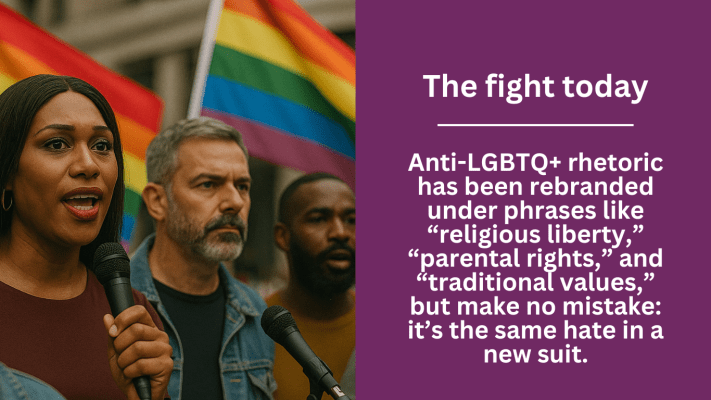
The fight today: Voices on the front lines of LGBTQ+ rights
We are living through a backlash moment—one that aims to unravel decades of hard-won progress. Anti-LGBTQ+ rhetoric has been rebranded under phrases like “religious liberty,” “parental rights,” and “traditional values,” but make no mistake: it’s the same hate in a new suit. And as the political climate becomes increasingly hostile, we need to know who is fighting—and why their work matters now more than ever.
Today’s LGBTQ+ activists are up against everything from book bans and bathroom bills to drag bans and healthcare restrictions. The fight isn’t limited to national headlines—it’s happening at school board meetings, in courtrooms, and on TikTok feeds. And it’s being led by a diverse group of warriors who understand that silence isn’t safety—it’s surrender.
Some of the voices shaping the movement right now include:
- Imara Jones, founder of TransLash Media, who is amplifying trans and nonbinary voices in mainstream and independent media, while speaking truth to power about the intersection of race, gender, and policy.
- Chasten Buttigieg, who continues to use his platform to speak out about queer youth safety, family rights, and mental health support—reminding us that visibility still matters, especially in rural and conservative spaces.
- Raquel Willis, a Black trans writer, activist, and organizer who helped lead the Trans Obituaries Project and consistently calls out systemic erasure within our own community.
- Brandon Wolf, a survivor of the Pulse nightclub shooting and a national advocate for gun reform, LGBTQ+ safety, and HIV awareness. His voice is equal parts grief and grit—and a crucial reminder of what’s at stake.
- Sarah Kate Ellis, President and CEO of GLAAD, who has led massive campaigns to hold media and corporations accountable while pushing back on anti-queer narratives in everything from politics to advertising.
These leaders—and many more—are not just fighting for us. They’re fighting with us. They are expanding the definition of what queer advocacy looks like, grounding it in racial justice, youth protection, trans visibility, and elder inclusion.
Their work is important not just because it’s political, but because it’s personal. They’re challenging a system that wants to turn back the clock. And for those of us over 40, who remember how dark those earlier decades were, we know that giving in now means repeating that trauma for a new generation.
This is why we must support, amplify, and follow these modern trailblazers. They are carrying the torch lit at Stonewall, passed down through ACT UP and Marriage Equality, and now blazing through our screens, our streets, and our communities. Their fight is our fight—and their courage should reignite our own.

Pride is protest, and we’re not done yet
For those of us over 40, Pride isn’t just memory—it’s mission. We are the bridge between the riot and the moment. We’ve seen what happens when we don’t show up. We’ve buried friends. We’ve survived silence. And we’ve built a world where queer joy could finally breathe.
Now it’s on us—again—to protect it.
From Stonewall to today, we’ve never won anything without a fight. And if the current political winds are any indication, we’re entering another chapter where our collective courage will be tested. But if history tells us anything, it’s that queer people don’t back down. We rise.
Because Pride is not just a celebration.
It’s a legacy.
It’s a warning.
And it’s a promise.


 Gay in the CLE