
When you’re first diagnosed with cirrhosis, it can feel like the ground beneath you shifts. There’s the medical vocabulary you never asked for, the lifestyle changes you never planned for, and the quiet fear that creeps into the back of your mind when you’re alone with your thoughts. I’ve been there — staring at a list of “shoulds” and “can’ts” while trying to hold on to a sense of who I am.
But here’s the truth I’ve come to live by: you can still live well with cirrhosis. It won’t look exactly the same as life before your diagnosis, but that doesn’t mean it’s lesser. It means it’s different — more intentional, more attuned, more rooted in the kind of self-care that actually matters. It’s something that I live and consciously choose to do, every single day.
Let’s talk about some of the most common symptoms and side effects, and more importantly, how we can manage them — not just to survive, but to live fully and authentically.
- Fatigue: The Invisible Weight
- Digestive Discomfort and Loss of Appetite
- Brain Fog and Mental Fuzziness
- Skin Changes and Jaundice
- The Emotional Landscape: Grief, Anxiety, and Identity
- You are more than this diagnosis

Fatigue: The Invisible Weight
One of the most universal, yet misunderstood, symptoms of cirrhosis is the kind of fatigue that doesn’t go away with a nap or a good night’s sleep. This isn’t just being tired — it’s like your body is carrying a weight you can’t quite put down. Simple tasks like making breakfast, walking around the block, or even answering a few emails can feel like you’ve run a marathon.
This kind of deep, systemic fatigue happens because your liver, which helps regulate your energy metabolism, isn’t functioning efficiently. When your liver can’t break down and store energy properly — or when toxins like ammonia linger in your body — the result is a profound sense of exhaustion that impacts both your body and your brain.
What I’ve found helpful is adjusting expectations and routines. Breaking up my day into smaller tasks and building in rest before I feel exhausted has been a game changer. Incorporating gentle movement — things like slow walks, light stretching, or bodyweight exercises on good days — often boosts my energy instead of draining it. And maintaining a consistent sleep schedule, even if I don’t fall asleep right away, has helped train my body into a better rhythm. Though, admittedly, following a planned sleep schedule is often hard, at times.
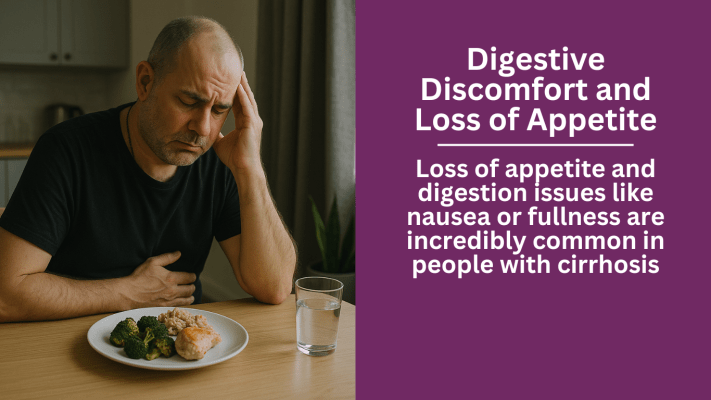
Digestive Discomfort and Loss of Appetite
One of the first things I noticed after my diagnosis was how unpredictable my stomach became. Some days I felt bloated after just a few bites of food. Other days, I couldn’t even look at a plate of anything without my stomach turning. Loss of appetite and digestion issues like nausea or fullness are incredibly common in people with cirrhosis, and they often stem from things like fluid buildup in the abdomen (known as ascites), changes in bile flow, or slowed metabolism.
To work with my body instead of against it, I started shifting from the standard three-meals-a-day mindset to eating small, protein-rich snacks throughout the day. A little tofu scramble here, a protein smoothie there — it all adds up. Focusing on easily digestible, low-sodium foods like brown rice, lentils, eggs, roasted vegetables, and soft fruits not only made eating easier, but also helped my energy levels stay more stable.
I also learned to avoid anything too greasy or overly salty — especially at night — which often made bloating worse and sleep harder to come by.
Start by changing your mindset on what and when to eat. As I mentioned, break up those “Three Square Meals” to a smaller six meals a day. When you do eat, eat smaller portions and go for what may be considered a grazing method. One thing that will help is making sure your sixth meal is near your bedtime. This will help keep your blood sugar balanced and something to digest so that your liver doesnt cause issues.

Brain Fog and Mental Fuzziness
I’ll be honest — this was the scariest one for me. Some days, it felt like my thoughts were stuck in molasses. I’d forget names, lose track of conversations, or feel like I couldn’t concentrate no matter how hard I tried. It wasn’t laziness or distraction. My worst fear was that it was hepatic encephalopathy — a condition where toxins that your liver would normally filter, like ammonia, build up in your bloodstream and start to affect brain function.
This brain fog is frustrating, sometimes embarrassing, and can even be dangerous if left unchecked. But it’s manageable. For many of us, medications like lactulose or rifaximin (which help flush out those toxins) can make a huge difference, if you are diagnosed with hepatic encephalopathy. If your symptoms are bad enough, you can request your doctor to put you on these treatments. Hydration is key — even mild dehydration can make symptoms worse. And as awkward as it is, staying on top of bowel movements helps clear toxins from your system, reducing the fog.
There are symptoms to taking these medications, so check into those and talk to your doctor first. Lactulose, for example, can distrust your digestive process and cause more or unexpected restroom stops. This could prove inconvenient if you are super active, like being a runner.
Talking about it with people you trust — whether it’s your partner, a close friend, or a caregiver — can also help you feel less alone when your mind doesn’t quite feel like your own.

Skin Changes and Jaundice
Another side effect that crept up on me was persistent itching, sometimes so intense I’d scratch in my sleep. My skin felt like it was trying to crawl away from my body, and I didn’t understand why until I learned it was due to bile salts accumulating in my system. My symptom of itchy skin is small, in comparison. My skin also seems to dry out more quickly, which may or may not be a similar problem.
This, along with jaundice (yellowing of the skin and eyes), often signals that the liver is struggling to process and eliminate toxins properly.
I started using unscented, hypoallergenic lotions to soothe my skin, and found that oatmeal baths helped during bad flare-ups. Heat made everything worse, so staying cool — especially in summer — became part of my self-care.
If it gets really bad, make sure to talk to your doctor about bile acid binders, which can offer some relief. Jaundice, on the other hand, can be corrected if the underlying symptoms change.

The Emotional Landscape: Grief, Anxiety, and Identity
We don’t talk enough about the emotional toll of cirrhosis. There’s the obvious anxiety about your health, but also a quieter kind of grief — for the version of yourself that felt limitless, spontaneous, carefree. Chronic illness changes how you see yourself, and if you’re part of the LGBTQ+ community, those changes can intersect with other struggles around identity and visibility.
Many of us, especially gay and bi men over 40, have internalized messages that tell us our bodies need to be perfect, our sex lives should be constant, and our energy should never fade. Cirrhosis challenges all of that. And it can leave you feeling angry, isolated, and like you’re mourning something no one else understands.
Many things can and will change, with your diagnosis. As your liver touches almost every system in your body, you will see the effects. From bowel movements being vastly different than you are used to and erectile and libido issues making appearances from time to time, it can be hard to process how we feel, internally, and how we perceive others actions or feelings towards us. We dont realize the impact of not knowing if you can be intimate with your partner, the way you would want, can be really detrimental to your mental welfare.
What’s helped me most is therapy — especially with a queer-affirming therapist who understands the unique intersection of chronic illness and LGBTQ+ identity. Writing out my experiences, even just in a journal or blog post, has also helped me process and stay grounded. And finding community — whether in person or online — reminds me I’m not in this alone.

You are more than this diagnosis
Cirrhosis may be part of your life, but it doesn’t get to define who you are. You can still cook meals that nourish both body and soul. You can still move your body in ways that bring you joy. You can still laugh, love, have sex, find connection, and dance to your favorite 80s track while folding laundry. This is not the end of your story. It’s a new chapter — one that requires more care, more gentleness, and yes, more discipline — but one that is still very much yours.
You don’t have to do it perfectly. You just have to keep showing up. Remember, every day is a new day. You get to choose to be here and how you embrace it. Make the most of what you have, the best ways you can. And remember to be kind to yourself.
Thanks to each and everyone of you who make GayintheCLE what it is, I simply could not do this without each and everyone of you! Make sure you sign up to get notifications when new posts are made. I am hoping, this year, to make better use of the newsletter options to interact with you guys and, hopefully, make it worthwhile for your interactions.


 Gay in the CLE