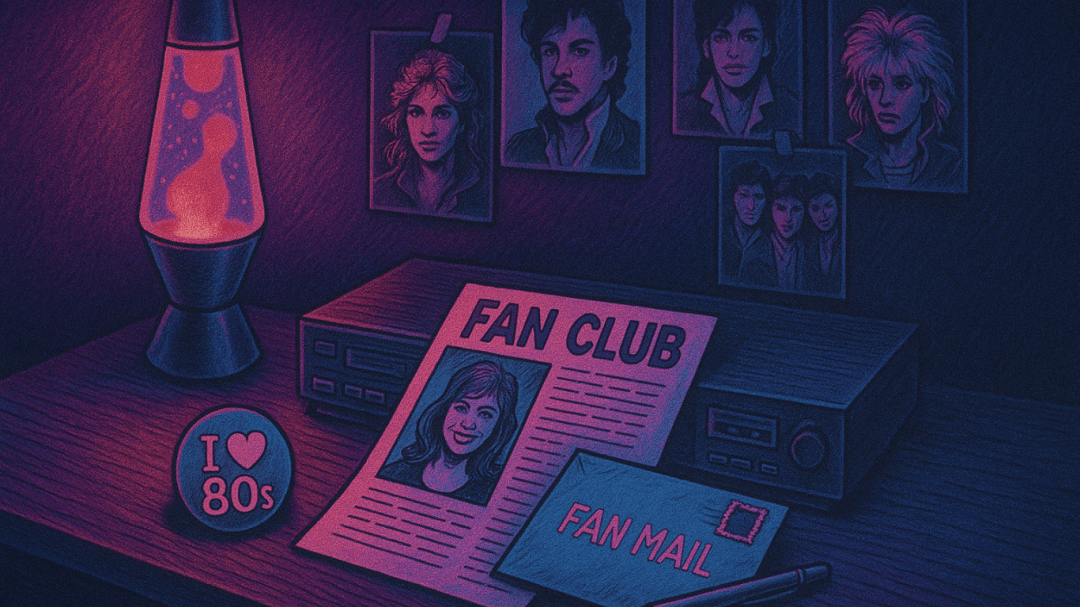
Long before hashtags, live streams, and social media follows, being a fan in the ’80s was a labor of love. There was no TikTok to catch a glimpse of your favorite pop star behind the scenes, no Instagram to like their latest outfit, and certainly no Twitter (or X) to fire off a comment and maybe—just maybe—get a reply. If you were a fan in the 80s, you didn’t double-tap a photo. You mailed a self-addressed stamped envelope and waited weeks for a response.
Welcome to the analog era of fandom: the 1980s fan club. I have a few memories from my childhood of fan clubs I was obsessed with. The first was Star Wars. As a kid, Kenner was the brand that made Star Wars
- The magic of the mailbox
- The gateways: magazines, TV, and more
- Fandom was a slow burn
- A sense of belonging for LGBTQ+ fans
- The end of an era
- Final thoughts

The magic of the mailbox
Ah, the generation that still understood the excitement and mystery that came from Snail Mail. Corresponding to someone, especially Fan Clubs, was somewhat of an adventure. You filled out your forms, wrote your letters, sealed them every so delicately with a stamp, place them in the mail box for the postal carrier to pick up, and then… wait. All you had was your excitement of what may be on its way to keep you checking that box daily.

For a generation raised on rotary phones and cassette mixtapes, 80s fan clubs were the only lifeline to their idols. Whether it was Madonna, Prince, Elvira, or the members of Duran Duran, there was a certain thrill in sending off for a fan club packet. These mail-in clubs usually offered:
- Official fan club membership cards
- Exclusive fan newsletters
- 8×10 glossy celebrity photos
- Stickers, buttons, or iron-on patches
- Secret contest announcements and backstage access teasers
All of this came through the mail—yes, the actual physical mailbox—and felt like a personal connection between you and the star.

The gateways: magazines, TV, and more
Before the internet, discovery happened through teen magazines like Tiger Beat, Teen Beat, Bop, and Star Hits. These glossy, poster-packed publications often included tear-out cards or printed addresses where you could join official fan clubs. Shows like MTV and Solid Gold helped fuel the obsession, but the only way to get closer was by becoming an official fan club member.
You’d fill out a form, send in a few bucks (often hidden in aluminum foil or taped inside the letter so it wouldn’t be stolen), and hope that in 6 to 8 weeks, something magical would arrive. And when it did? That envelope felt like a sacred artifact.
For me, there were two specific memories I have of fan clubs. The first came from the Kenner company and its Star Wars figures. There was an option to receive a special unreleased figure from the movies, if you were a fan club member and saved up enough box points. I saved those points and sent off my address and shipping and two months later that beautiful figure came along with other cool diecast oddities from the Star Wars universe.
The second was from the Michael Jackson Fan Club. I remember buying the Thriller album and listening to it religiously, on the back in the bottom was the MIchael Jackson Fan Club address. I was in love with MJ, so I decided to write a letter to the fan club telling how much I love the album and how much it meant to a young kid like myself. I mailed that off and waited… and waited… and waited. As a young, naive kid, I half expected to get a solemn response from the music legend himself, instead, what this obsessed young kid received, was a form letter thanking me for my message of appreciation and was given a picture of Michael Jackson, akin to the album cover and some stickers. I only saw it as confirmation that he actually read my letter. I was over the moon with excitement.
Fandom was a slow burn
Unlike today’s instant gratification, 80s fan culture thrived on anticipation. The wait was part of the experience. It taught patience and made the reward—those glossy photos, newsletters, or the occasional autographed item—feel even more special.
Fan clubs also offered pen pal services, giving fans the chance to connect across the country or even internationally. Bonds were formed over shared devotion to pop idols, often leading to lifelong friendships.I never got much in the way of bonding experiences in my fan club experiences. It was nice receiving a fan club letter with others who shared similar feelings, as I did, but it only fueled my love of both Star Wars and MIchael Jackson.

A sense of belonging for LGBTQ+ fans
For LGBTQ+ youth in the 1980s, especially, these fan clubs were more than just a hobby—they were a sanctuary. In a world that didn’t yet have GSA clubs or online LGBTQ+ communities, celebrity fan clubs offered a place to dream, to express passion, and to feel like part of something bigger. Loving Boy George, Cyndi Lauper, or Siouxsie Sioux wasn’t just about the music—it was about identity, escape, and connection.
There was also an air of anonymity, you could be obsessed with your favorite thing without fear of judgement that often came with the same expressed feelings in person. In school, I was often called a geek or nerd due to my love of Sci Fi, In a fan club I was just another person who loved and appreciated the movies, characters, and universe created by someone else. It was safe, it felt welcoming and more, it felt like home. No one cared if you were the outcast in your school or neighborhood. They just knew that we all loved the same things. It was like finding lost treasure if it just so happened that some of those fans were closer to you, giving a better sense of belonging.
The best part about 80s fan clubs was the fact that it was free of bullying, no one to taunt you or belittle you the way that happens in our culture, today. Those things were reserved for the halls of school.

The end of an era
As the 90s ushered in the rise of the internet and digital communication, traditional fan clubs started to fade. Some evolved into email lists or rudimentary websites, but the tactile magic—the thrill of opening a thick envelope stuffed with glossy treasures—slowly disappeared.
Today, we’re more connected than ever, but maybe a little less enchanted. We have infinite information, good and bad, at our fingertips. But it also means we are out there, exposed, more than the days of yore offered us. The 1980s fan club was a beautiful relic of a slower, more intimate era of pop culture love.

Final thoughts
Revisiting these vintage fan clubs is a trip back to a time when being a fan meant effort, patience, and passion. It reminds us that connection doesn’t always have to be instant to be meaningful.
So if you ever belonged to one of these clubs, dig through your attic or those old photo boxes—you might just rediscover the joy of being an 80s fan in the most analog way possible. Oh, by the way, if you would like to relive some of that 80s Fan Club Nostalgia, check below for your copy of the 80s GayintheCLE Fan Club Welcome Pack, all free for my readers. Just download and have fun with them,



Want to share your fan club memories? Drop a comment or tag us on social media with your retro fan treasures. We’d love to feature them!


 Gay in the CLE