
Non-monogamy isn’t just for younger couples, anymore, many gay and bisesual men over the age of 40 are redefining relationships and embracing open dynamics. But, is it an option for everyone?Why are open relationships becoming more common among LGBTQ+ men over 40 and how are they differ from traditional monogamous partnerships? These are just a few questions I have pondered and wanted to look into. My hope is to find and share guidance, best practices, and considerations for those that are exploring a non-monogamous relationship later in life. So, sit back and join me as we take a dive into Open Relationships over 40: How to Navigate Non-Monogamy.
- Why More LGBTQ+ Men Over 40 Are Exploring Non-Monogamy
- Open relationships, what works for you
- Open realtionships in the digital age
- Safe sex and health in non-monogamous relationships
- Common pitfall and how to avoid them
- From monogamy to open relationships
- Final thoughts: Is non-monogamy right for you?

Why More LGBTQ+ Men Over 40 Are Exploring Non-Monogamy
Let’s cut to the chase, here. the majority of LGBTQ men are raised in households that tried to teach us we needed to marry someone to have a family and that sex should only happen in a marriage between two consenting adults, If you have thoughts of sleeping with others or even decide to enact on them, you are labeled a cheater and a sinner, by most.
They teach that we are supposed to marry someone and raise children and they also introduce the idea of sin. We are not here to discuss right and wrong, per se, but to expand on the concept of sin in regards to relationships.
As societal attitudes around relationships continue to evolve, more LGBTQ+ men over 40 are reconsidering what commitment, intimacy, and partnership truly mean. Traditional monogamy, once seen as the gold standard for relationships, is no longer the default expectation—especially within LGBTQ+ communities, where historical and cultural factors have shaped a more fluid approach to love and connection. The growing visibility of open relationships, polyamory, and “monogamish” dynamics reflects a broader shift toward relationship models that prioritize individual needs and desires over societal norms. For many gay and bisexual men, non-monogamy isn’t just about sexual variety—it’s about expanding emotional intimacy, maintaining personal freedom, and redefining commitment in a way that works for them. As a result, more men are exploring consensual, ethical non-monogamy as a viable alternative to traditional monogamy, embracing relationship structures that allow for honesty, trust, and long-term fulfillment on their own terms.
There is a saying that “variety is the spice of lift” and for many gay men, that has been a guiding principle. Being bound by the trappings of heterosexual lifestyles were one of the main things we hoped to escape, as we came out. Perhaps, we chose the route of marriage as a means to collect our equality with others. Or perhaps there is some validity in having a life partner to come home to. Does any of this change the ideas behind non-monogamy? Let’s take a look at some variations into open relationships.
Open relationships, what works for you
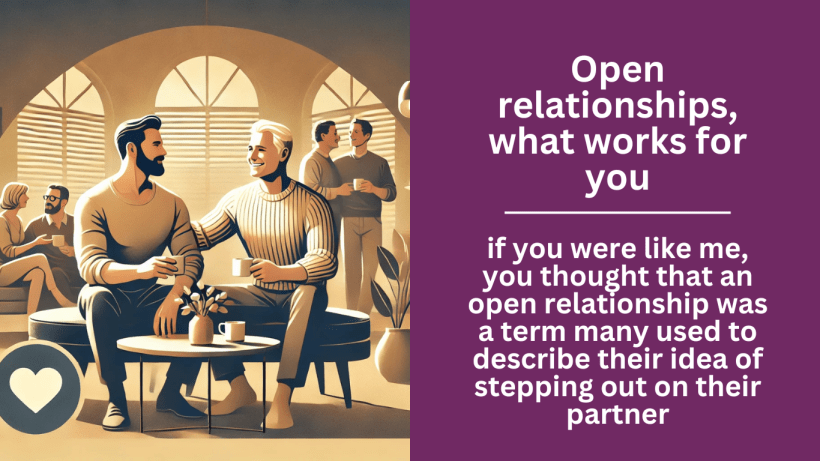
At first, if you were like me, you thought that an open relationship was a term many used to describe their idea of stepping out on their partner, a common misconception when you are taught to believe there are only two types of relationships; with yourself and with a partner. The truth is that, like most things in life, there is a buffer of choices to choose from. Some may be to your liking and some may not. But what are some of those choices, you ask? Here are a few forms of non-monogamy.
- Monogamish – Monogamish is where people in relationships may occasionally play with others but stay emotionally exclusive with their partner. Or as Sex advice columnist Dan Savage explains it, you are committed to your partner but can have sex with others.
- Polyamory – Engaging in multiple romantic and sexual relationships. A place where love isnt for just one person, but many.
- Casual Open Relationships – No romantic attachments, just sexual experiences. Typically more common in single men who aren’t looking to commit to any specific person.
- Swinging and Group Play – When a couple decided to share sexual experiences as a couple. Whether with another couple or multiple others.
How do you start to decide, from all of the choices? First, make sure you are having this discussion with your partner, if you are dating. Then, here are some good questions to get the ball rolling.
Question #1 – “Are we looking for more sexual freedom, emotional connections, or both?” – This is one of the most important considerations to ask and you also need to be honest with yourself and your partner. Maybe you want to experience more or different sex than you have had in the past. Maybe you feel like your relationship could benefit from a little more intimacy. Or is it a combination of both. Topics to consider here are defining safe sex practices and setting emotional boundaries.
- Safe sex practices – using PrEP, condoms, or routine STI testing
- Setting emotional boundaries – only casual play vs. allowing deeper connections
Question #2 – “Do we want to explore this as a couple or separately?” – Not everyone on a relationship is seeking the same things. Maybe your partner is okay with you pursuing this on your own or maybe you have both decided this is how you want to try things together. Either way, be on the same page about it and be open to the reasons as to why you want to try this or why one of you may be against it. Communication is key, here, especially in handling Jealousy & Emotional Challenges. Before you start a journey into open relationships, remember this key point, jealousy is normal and may come up at some point. Whether it is from seeing your partner in a delicate situation, for the first time, with someone else or if you may have feelings that appear different with one person than your partner feels, it is a normal feeling. But we need to look at the root cause of the jealousy here. Is it insecurity vs. real concerns? If this is new for you or your partner, there could be some insecurity behind the feelings. It could be that the feeling of jealousy is stemming from a body image issue, emotional feeling, or perceived interactions or is it a real concern. Afterall, there are people who start down the road of open-relationships as a means to end their current one,
Question #3 – “What level of communication feel right?” While I said Question 1 was important, this one is at the top of that list. You must communicate your thoughts and feelings with your partner. But, communication is also about how much of what is going on you should/need to tell your partner. Some may be okay with not knowing when it happens, others may want to know the when, where, and who of it, and then there are those who may want to be completely open about what happens with whom, and such. Talking about this point is crucial in setting boundaries and expectations. Some ways to navigate this are full transparency about interactions with others or taking a page from the military and incorporating a “Dont ask, Dont tell” policy.
One thing to remember, here, is that any of these answers may change as you pursue your new relationship statuses. Make sure you are constantly checking in with your partner and not avoiding things that could turn messy. Be as open and honest here as you can, setting clear expectations and boundaries can ensure that feelings are taken into account and the specifics of how your new interactions will occur. Checking in regularly will ensure that you both are on the same page and not avoiding emotional issues or needs, after all, your partner is the one you are entering this new journey with.
Now that the discussions are out of the way and you both have agreed to the version of open-relationships that work for you, where do you start the process of searching for others who share your ideals? Thankfully, there are no shortage of places to look, thanks to dating apps, community spaces, and social networks. Let’s look at some of these.At first, if you were like me, you thought that an open relationship was a term many used to describe their idea of stepping out on their partner, a common misconception when you are taught to believe there are only two types of relationships; with yourself and with a partner. The truth is that, like most things in life, there is a buffer of choices to choose from. Some may be to your liking and some may not. But what are some of those choices, you ask? Here are a few forms of non-monogamy.
- Monogamish – Monogamish is where people in relationships may occasionally play with others but stay emotionally exclusive with their partner. Or as Sex advice columnist Dan Savage explains it, you are committed to your partner but can have sex with others.
- Polyamory – Engaging in multiple romantic and sexual relationships. A place where love isnt for just one person, but many.
- Casual Open Relationships – No romantic attachments, just sexual experiences. Typically more common in single men who aren’t looking to commit to any specific person.
- Swinging and Group Play – When a couple decided to share sexual experiences as a couple. Whether with another couple or multiple others.
How do you start to decide, from all of the choices? First, make sure you are having this discussion with your partner, if you are dating. Then, here are some good questions to get the ball rolling.
Question #1 – “Are we looking for more sexual freedom, emotional connections, or both?” – This is one of the most important considerations to ask and you also need to be honest with yourself and your partner. Maybe you want to experience more or different sex than you have had in the past. Maybe you feel like your relationship could benefit from a little more intimacy. Or is it a combination of both. Topics to consider here are defining safe sex practices and setting emotional boundaries.
- Safe sex practices – using PrEP, condoms, or routine STI testing
- Setting emotional boundaries – only casual play vs. allowing deeper connections
Question #2 – “Do we want to explore this as a couple or separately?” – Not everyone on a relationship is seeking the same things. Maybe your partner is okay with you pursuing this on your own or maybe you have both decided this is how you want to try things together. Either way, be on the same page about it and be open to the reasons as to why you want to try this or why one of you may be against it. Communication is key, here, especially in handling Jealousy & Emotional Challenges. Before you start a journey into open relationships, remember this key point, jealousy is normal and may come up at some point. Whether it is from seeing your partner in a delicate situation, for the first time, with someone else or if you may have feelings that appear different with one person than your partner feels, it is a normal feeling. But we need to look at the root cause of the jealousy here. Is it insecurity vs. real concerns? If this is new for you or your partner, there could be some insecurity behind the feelings. It could be that the feeling of jealousy is stemming from a body image issue, emotional feeling, or perceived interactions or is it a real concern. Afterall, there are people who start down the road of open-relationships as a means to end their current one,
Question #3 – “What level of communication feel right?” While I said Question 1 was important, this one is at the top of that list. You must communicate your thoughts and feelings with your partner. But, communication is also about how much of what is going on you should/need to tell your partner. Some may be okay with not knowing when it happens, others may want to know the when, where, and who of it, and then there are those who may want to be completely open about what happens with whom, and such. Talking about this point is crucial in setting boundaries and expectations. Some ways to navigate this are full transparency about interactions with others or taking a page from the military and incorporating a “Dont ask, Dont tell” policy.
One thing to remember, here, is that any of these answers may change as you pursue your new relationship statuses. Make sure you are constantly checking in with your partner and not avoiding things that could turn messy. Be as open and honest here as you can, setting clear expectations and boundaries can ensure that feelings are taken into account and the specifics of how your new interactions will occur. Checking in regularly will ensure that you both are on the same page and not avoiding emotional issues or needs, after all, your partner is the one you are entering this new journey with.
Now that the discussions are out of the way and you both have agreed to the version of open-relationships that work for you, where do you start the process of searching for others who share your ideals? Thankfully, there are no shortage of places to look, thanks to dating apps, community spaces, and social networks. Let’s look at some of these.

Open realtionships in the digital age
In today’s digital world, dating apps and social media have made it easier than ever for LGBTQ+ men over 40 to explore open relationships and connect with like-minded individuals. Apps like Grindr, Scruff, Feeld, and OkCupid allow couples to find partners based on their specific relationship dynamics—whether they’re looking for casual encounters, polyamorous relationships, or something in between. Most of us are already familiar with Grindr, Scruff, and OkCupid but Feeld may be new. Feeld is touted as the Dating App for Open-Minded Individuals. However, effectively navigating these platforms requires clear communication and transparency. Crafting a dating profile that accurately reflects your relationship status and expectations can help avoid misunderstandings while ensuring potential partners are on the same page. Many couples set ground rules for app use, such as whether they engage with new partners individually or together and how much information they share about their experiences. Establishing these boundaries early can help maintain trust while making the most of modern dating technology.
At the same time, privacy and discretion remain critical considerations, particularly for those in professional careers or social circles where non-monogamy may not be widely accepted. While dating apps provide opportunities for connection, they also come with risks—such as unintentional exposure to colleagues, clients, or family members. Some individuals opt for separate profiles or use platforms that cater specifically to non-monogamous relationships to maintain anonymity and control over their visibility. Additionally, setting social media boundaries can help prevent potential conflicts; for example, discussing whether tagging, posting photos, or interacting with partners online aligns with your relationship agreements. By balancing digital exploration with intentional discretion, LGBTQ+ men can enjoy the benefits of open relationships while maintaining their personal and professional privacy.
Safe sex and health in non-monogamous relationships
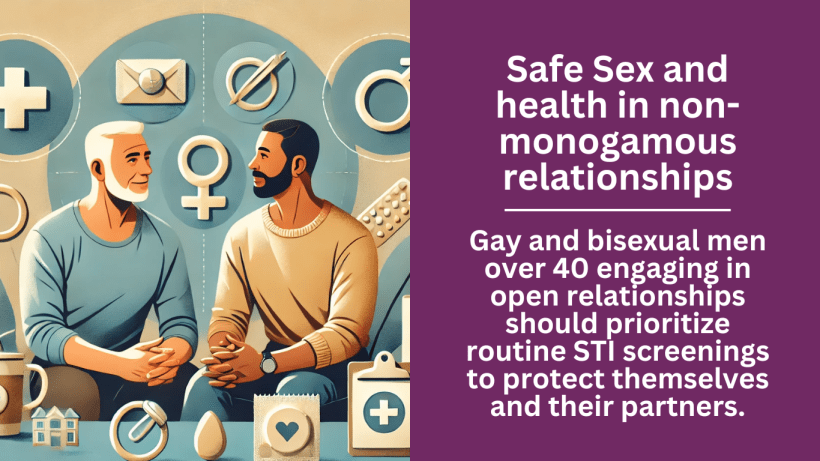
Maintaining sexual health in a non-monogamous relationship requires a proactive approach to STI prevention and regular testing. Gay and bisexual men over 40 engaging in open relationships should prioritize routine STI screenings to protect themselves and their partners. The CDC recommends that sexually active men who have multiple partners get tested for HIV, syphilis, gonorrhea, and chlamydia every 3 to 6 months. Beyond testing, using PrEP (pre-exposure prophylaxis) can significantly reduce the risk of HIV transmission, while PEP (post-exposure prophylaxis) serves as an emergency prevention option if exposure occurs. Condoms and other barrier methods remain essential tools for reducing the transmission of STIs like gonorrhea, syphilis, and herpes. When navigating multiple partners, discussing and updating safe sex practices regularly ensures that everyone involved is informed and protected.
In addition to physical protection, creating a Sexual Health Agreement is key to fostering trust, transparency, and mutual care in a non-monogamous relationship. Partners should have open, judgment-free conversations about STI history, testing frequency, and sexual boundaries to establish practices that work for everyone involved. This may include deciding on condom use with external partners, defining which types of encounters are allowed, and setting expectations for full disclosure of any new sexual activity. Approaching these discussions with honesty and respect helps prevent miscommunication and ensures that all partners feel secure in the relationship. Regularly revisiting and adjusting the agreement as circumstances evolve keeps communication strong and reinforces a commitment to sexual wellness and safety.
Common pitfall and how to avoid them
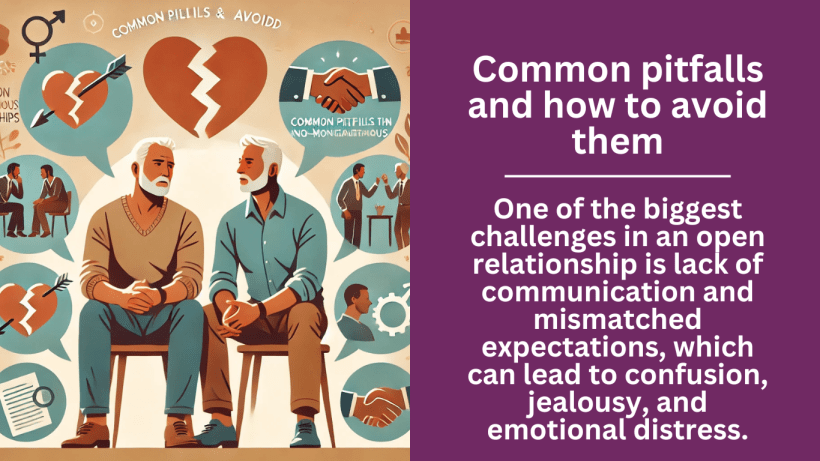
One of the biggest challenges in an open relationship is lack of communication and mismatched expectations, which can lead to confusion, jealousy, and emotional distress. Successful non-monogamous relationships require ongoing, open conversations about boundaries, desires, and concerns. Without clear communication, one partner may assume the relationship is purely casual, while the other develops deeper emotional attachments. Setting expectations from the start—such as defining what types of relationships are allowed (casual encounters vs. romantic connections) and how often check-ins should occur—can help prevent misunderstandings. Regularly revisiting these discussions ensures that both partners feel heard, respected, and comfortable with the relationship structure as it evolves.
Another major pitfall is crossing established boundaries, which can break trust and create lasting emotional wounds. Whether it’s seeing someone outside of agreed-upon parameters or failing to disclose new encounters, violations of trust can signal deeper relationship issues. If boundaries are consistently ignored or one partner feels anxious, insecure, or pressured into non-monogamy, it may be a sign that an open relationship isn’t the right fit. Not everyone thrives in non-monogamous dynamics, and that’s okay—if feelings of discomfort, jealousy, or resentment persist despite healthy communication, it may be worth reevaluating whether monogamy better aligns with personal and emotional needs. Understanding and respecting personal limits is key to ensuring that any relationship structure—monogamous or non-monogamous—remains fulfilling and supportive.

From monogamy to open relationships
You have done your research, thought out your views very well and have decided to have the talk with your partner, so, how do you have “The Conversation?” Unless you both have been discussing this topic for a while, it may come as a shock to your partner. There are a few things to keep in mind here, keep the lines of communication open while addressing any fears or concerns. If any are brought up, be sure to approach this with respect and curiosity. Maybe your partner is telling you they want to move to an open relationship. Either way, being open and respectful will go much further in the discussion. All fears and concerns are valid, be sure to dive into what may spark those feelings. Once they have been discussed and you both are in agreement, you can start to move in your new direction. What are the next steps in that, you ask?
When moving into a big and new decision, sometimes it is best to do so with a Trial Period. A trial period is a good way to get your beak wet, so to speak, with the pressure of commitment. You both can try out what you have discussed and see if there is a continued interest or if a one time scratch of the itch was enough. Then, come back together and discuss the experience. Maybe this trial period is one or two meetups or a period of time, either way, set the boundaries and be sure to follow through with it. Listen to one another’s points of view and them work from there.

Final thoughts: Is non-monogamy right for you?
Deciding whether non-monogamy is the right relationship model for you requires self-reflection, honest communication, and a clear understanding of your emotional needs. While open relationships can offer sexual freedom, deeper connections, and personal growth, they also require a strong foundation of trust, transparency, and mutual respect. Some individuals thrive in ethical non-monogamy, while others find that monogamy better suits their emotional and relational well-being. There’s no one-size-fits-all approach to relationships, and the key is to choose what feels authentic and fulfilling for you and your partner(s).
What are your thoughts on open relationships? Do you think they work or not? Maybe you have seen the pains and hardship someone close to you experienced in an open relationship. What prompted their problems? Were they able to work through them? Do you agree with the idea of open relationships and non-monogamy? Let me know in the comments below. Remember that we do not have to be defined by the dogma and ideals that have been handed down to us. Thank you all for being a part of GayintheCLE. I simply could not do it without each and everyone of you.


 Gay in the CLE