We often don’t realize how important simple exercises can be to our bodies, at least not until it is too late. We hear in health class that we need to exercise to stay healthy, increase muscle mass, and etc, but the focus on how important it will be to us in the later years is simply glossed over or we tend to not focus on it because we see ourselves as young and invulnerable. If you are reading this, then you have found yourself in a similar situation as I did. If you don’t maintain some kind of exercise regimen your body will pay for it as you age.
In 2021 I had to make better choices so that I could continue to fight this disease and, for lack of being delicate, to stay alive. I became my own advocate for my health and well being and, guess what, you need to as well. Join me today as we dive into Building a Foundation: Essential Exercises for Men Over 45.
- Built to breakdown
- Foundation is key
- Tortoise vs the hare
- The essentials, please
- Sample beginner workout routines
- K.I.S.S. (Keep It Simple, Silly)
Built to breakdown
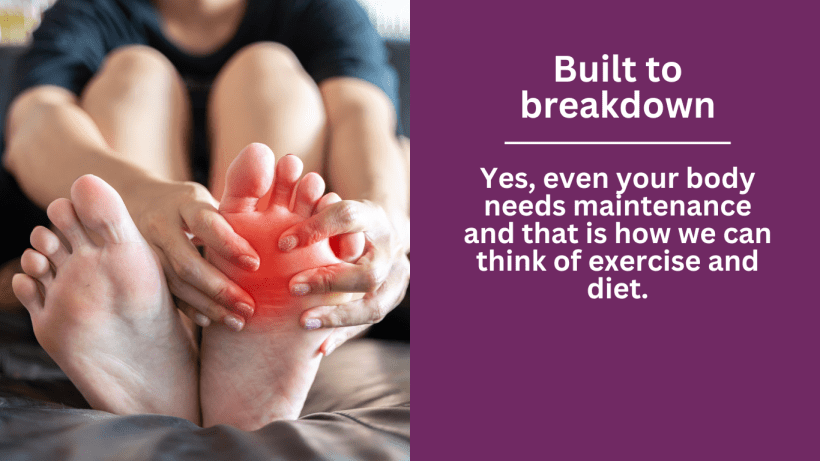
Everything that is made has a life expectancy, everything . There is no greater truth than that. From the most expensive and well built luxury car all the way up to one of the most complicated machines ever created, your body will come to an end. Simple maintenance can push that expectancy further away and ensure that you continue to have the best experiences with that equipment. Yes, even your body needs maintenance and that is how we can think of exercise and diet. They are the new tires, oil and filter changes and more that your car goes through. By incorporating those things into our lives, we hone how our body acts and reacts to life and the world around us.
If you are a follower of my blog, then you already know that I have made massive changes to my life due to the diagnosis of an illness on December 24th, 2020. Prior to that, I operated on the belief that if there was something wrong with my body, it would let me know. Other than being seriously overweight, I thought things were fine.
I have said it many times here, I only ever did the barest of minimum of exercises and that was mostly a brisk walk for short periods of time or the occasional hike. I thought I was in fairly good shape. I flirted with lifting weights throughout my life and that was mainly when I wanted my arms to look better in a tank top. I even resigned myself to being a bear because, well I thought that is what my body wanted. Boy was I wrong. When the diagnosis hit and the initial conversations with my specialist happened, I soon realized that I needed to change a lot in my life or I simply wouldn;t be here to see 60. But I didnt know where to begin and so, I tried many things to get there. I want to share with you a more refined version so that you dont have to go through many of the same mistakes I did.
Let’s dive in.
Foundation is key
This essay will focus mainly on exercises that will help you grow strength, improve mobility, and help with cardio-vascular health. These building blocks are the core for a more healthy life, dietary help will come in another essay.
You may be wondering why exercise is such a crucial piece of the puzzle, especially as we age. The simplest answer is that it helps us manage many of the chronic diseases that we become more susceptible to as we age. It will help us fight heart disease, lower blood pressure, combat diabetes, and help us simply get around with less aches and pains. Did you also know that doing simple daily exercises will also help improve muscle mass, bone density, and cognitive function? It also helps us manage our weight and keeps our physical functions going. But finding where to start can be tricky. So many places on this internet tell you that you need big weights, excessive dietary changes, and doing cardio for x amount of time to get the benefits you want. While there is some merit to it, it is not the only path to get there.
Remember, before starting any new exercise use routine or dietary changes, please consult your physician or medical team to ensure you are physically able to do anything mentioned here.
Here is the good news, starting these changes are relatively simple. All you need to do is remember these three things and you can’t go wrong.
- Start slowly and gradually increase intensity and duration. This will help avoid injuries.
- Incorporate a mix of aerobic exercise (jogging, walking, swimming) and strength training (weight lifting).
- List to your body and take rest days when needed. (THIS IS SUPER IMPORTANT).
Following these three tips will ensure that you don’t overdo it too quickly and you progress without injury.
Tortoise vs the hare
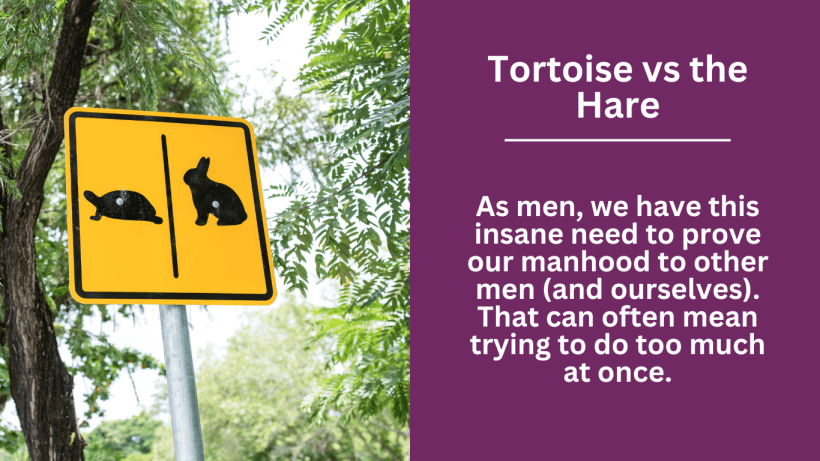
As men, we have this insane need to prove our manhood to other men (and ourselves). That can often mean trying to do too much at once. Whether that is running faster than our bodies are ready for or trying to lift weights that we think we can handle even though the heaviest thing we have lifted in the last ten, or so, years is dragging our butts out of bed. Trying to do too much too quickly can result in an injury that can sideline your plans for improvement. Keep your end goals in mind when you start and this will help keep you grounded in your training.
For me, I never wanted to be some weight lifting champion or the next Usain Bolt. I wanted to be healthy and toned. Using that as my guideline, I talked with dieticians and trainers about the best place to start. Their recommendation was to start small, use my own body weight for resistance. Focus on mixed cardio to raise my heart rate and lose weight and change up my routines so my body doesn’t become stuck in one mode.
Shortly after my diagnosis and in the early stages of getting more healthy, my bf took me on a trip to Hocking HIlls. The day we were leaving, he wanted to do a hike that he had always done, when he stayed there. I agreed, thinking it couldn’t be too bad. The first hill we climbed almost killed me. The funny thing is that it wasn’t a very steep incline. Many older people were passing me with little difficulty. My bf saw my struggling and took pity on me, allowing us to cut the hike short. That was all the encouragement I needed to do more.
For aerobic exercises, I started with just getting out and walking daily. I started at a trail that was a two mile loop and had a couple hills to offer a mild challenge. It was one I took my bf to and also had some difficulty, in the beginning. I started with a mid temp walk and did the full lap. As I got accustomed to it, I increased it to two laps. That gave me a total of four miles. As I got better, I slowly started adding running to the mix, short distances at first. As I got better or felt I could push, I would increase the distance. In about two months I was running most of the first lap. This I initially did five days a week.
For about two months, that was my initial workout. Then I realized I needed to add some additional cardio and strength training. I bought two 10 pound weights, a recumbent exercise bike, and some resistance bands. I also turned to YouTube for some easier workout videos to help with the mixed cardio. I started biking twice a week and running three times a week. With the bike, I started out doing two miles on a 1 or 2 resistance, until I got better. With the weights, I started with simple bicep curls and chest presses. I would do around 5 sets of 5 reps until it became too easy. From there I gradually increased reps and then sets. I found some tabata exercises that would help with targeting other areas of my body like the stomach, thighs, glutes, and such. This way, I was ensuring that I had a fairly complete routine to get me into better shape.

The essentials, please
There are three areas that we need to focus on, as men, as we age. Those areas are strength, cardiovascular, and flexibility/mobility. As we age, so do our muscles. They become less pliable and growth is much more depending on proper fuel, like protein. Again, we will talk about diet in another essay. Flexibility helps us maintain pliable muscles that will fight injury better. Cardiovascular training will ensure our heart and circulatory system stay strong and functional. Strength training will ensure that we have the ability to get around without the need of assistance and help prevent the possibility of falls and injuries.
Strength training basics
You are probably wondering why strength training is so crucial, the short answer is that it helps build and maintain muscle as we age. It also helps with bone density, boosts metabolism, and enhances overall functional capacity. It becomes much harder to build muscle as we age and if we are not keeping out muscles working then our bone density will also decrease. These, combined, add to the chances of us becoming hurt.
I bet you are wondering what some of the easy key exercises that can be done to help maintain and build muscle, huh? Well I have a short list for you and each of these can be done with just your body weights and the gradually build up to adding more weight.
- Squats – this is a basic compound exercise that works many muscle groups at once; calves, quads, hamstrings, glutes and your core
- Push-ups – A tried and true bodyweight exercise that targets your chest, shoulders, and triceps. (Perfect for tank top season)
- Overhead press – this also targets shoulders and triceps and can be done with minimal weight and more reps
- Bicep curls – simple arm curl that targets the biceps
- Tricep extensions – another simple curl that focuses solely on triceps and minimal weights.
Some things to keep in mind here is that in order to get the most out of these exercises, you need to focus on proper form – first and foremost. This will reduce chances of injury and help you target those areas better. The next factor is progressive overloading. This can be done whether you are using body weight or standard weights, it simply means gradually increase the amount of weight, reps or sets to get you stronger. If you are using body weight to achieve this, remember to keep the muscles you are targeting under tension, as best you can, to maximize the outcome. And lastly, the most important factor to consider is listening to your body. Your body will tell you when you have had enough or when you simply can push a little more. Remember it is crucial to rest when you need it and not to push yourself too hard. Doing so can increase the chances of injuries.
Cardiovascular training basics
You see this word thrown around when you are at the doctor’s, on health commercials, and just about everywhere else but do you really know what it means? Exercises that target cardiovascular training focus on the heart, improving blood circulation, and helping maintain your body weight. These are the longevity exercises, the ones that will help keep you going so you can do the others ones. They are the most important ones for your overall health,
You guessed it, I also have some basics here for you to start with. Most of these can be done without any additional purchasing of equipment, of any kind. Adding things like weights, can push your growth but aren’t necessary.
- Brisk walking – the key here is BRISK walking. This means you have to raise your heart rate above what your normal rate is. Remember, we should be targeting about 10,000 or more steps a day for weight management and heart health. (10,000 steps is roughly equal to five miles a day, your stride and mileage may vary).
- Swimming – this is an excellent low impact exercise option. Low impact means less stress on your joints. The amazing part is that forcing your muscles to work against the resistance of water adds additional resistance to your work out. This allows you to build muscle in a more easier way.
- Running – (not using jogging here because running is running, even if you walk for a little bit) Running is probably the most intense cardio exercise you can do but offers some of the best benefits. It can help increase lung capacity, strengthen your heart, increase blood flow, manage weight, and boost your mood.
- Cycling – I saved this for last as it does mean you will need some form of a bike to accomplish it and that is a pretty hefty expense for a cardiovascular exercise.
Cardiovascular training can be demanding and oftentimes the one that will burn you out the most. The best way to ensure you stay with it is to find the activities you enjoy doing. Warming up and cooling down are very important to these exercises. Doing them will help reduce the possibility of injury during and just after. It also helps in muscle regeneration and growth. I will go over some warm ups and cool downs below. And lastly, remember to start slowly and build gradually. You only have one body and it cannot be traded in.
Flexibility and mobility training basics
Second to cardio health, flexibility/mobility is essential to our aging bodies. As we age, our muscles lose the suppleness and ability to heal themselves as good. By following some simple and basic exercises, we can ensure that our range of motion is maintained, while ensuring that we lessen our chance of injury and falls. Here are a few training basics that you can employ to help you stay in the battle.
- Yoga – The good news is there are so many great yoga channels on YouTube that you don’t have to spend your time finding a studio where you feel comfortable, you can do it in your living room instead. Yoga is great for stretching, strengthening, and working on mindfulness. It teaches breathing techniques that can aid with stress management and the poses are amazing for keeping out joints working and building that needed muscle.
- Stretching – We did these in school and most of us thought they were a waste of time. Now we have started to realize the importance. Dynamic stretches will help us get ready to work out and static stretches will help in keeping us loose after our workouts, while helping muscle growth.
- Foam Rolling – I learned this technique from watching videos on improving my running technique. Why this is beneficial is that it helps release muscle tension and improve flexibility. My bf uses it a lot to help his back, for me it helps keep muscle cramps at bay after running. It is also amazing for working out back issues or loosening over worked muscles.
Proper form is important for all three of these. If you are not making sure your poses are correct, you could injure yourself, instead. For instance, if you do not pay attention to the foam roller placement, when targeting your back, you could do some serious injury. Listen to your body, it knows when it has had enough and needs a break. Pay attention to it.
Sample beginner workout routines
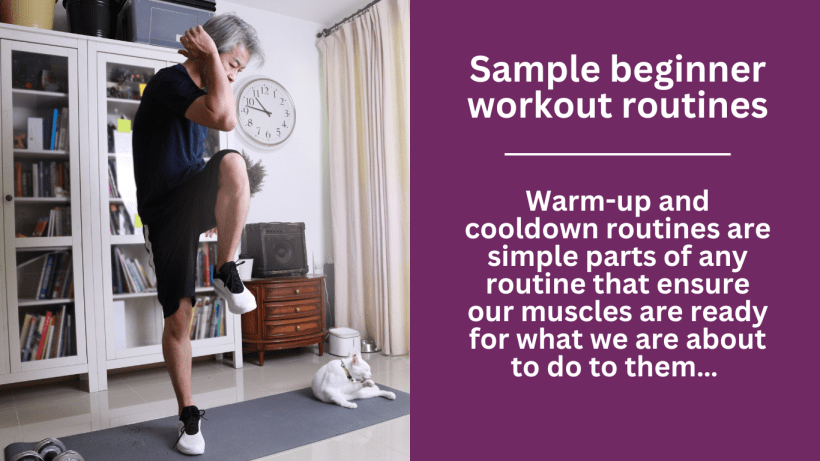
Below you will find two beginner workout routines. One is strength training and the other is a cardio workout. Each of these include a warm-up and cooldown routine. Warm-up and cooldown routines are simple parts of any routine that ensure our muscles are ready for what we are about to do to them and simple after care to ensure they continue to perform in the best way possible.Below you will find two beginner workout routines. One is strength training and the other is a cardio workout. Each of these include a warm-up and cooldown routine. Warm-up and cooldown routines are simple parts of any routine that ensure our muscles are ready for what we are about to do to them and simple after care to ensure they continue to perform in the best way possible.
Beginner strength training routine
Warm up: 5 -10 minutes of light cardio, such as swinging arms in a circle or jumping jacks. Just to get our muscles warmed up and blood flowing. If you would like suggestions of warm up routines, drop a comment below
Routine: you will do 2 – 3 sets of 8 – 12 reps fo reach
- Squats
- Push-ups
- Overhead press
- Bicep curls
- Tricep extensions
Cooldown: 5 – 10 minutes of light stretching. Stretching your arms across your body, leg stretches
Beginner cardiovascular training routine
Warm up: 5 – 10 minutes of light cardio like running in place or jumping jacks, Some dynamic stretches like leg swings and torso rotations. If you would like suggestions of warm up routines, drop a comment below
Routine: (about 20 – 30 minutes) Choose one of the following.
- Brisk walking – Aim for a pace where you can still hold a normal conversation but you feel slightly out of breath. To be functional, the pace needs to elevate your heart rate higher than your normal rate.
- Running – start with a comfortable pace and gradually increase steps per minute, then speed and distance. Add varying terrain to help increase muscles strength and stamina
- Swimming – try using different swimming styles like backstroke or breaststroke. This will help with targeting different muscle groups.
- Cycling – Start at a moderate pace. From there you can gradually increase resistance and/or incline, as your fitness improves.
Cooldown: light cardio to lower your heart rate, this could mean a slower walk or a moderate paced walk, if you were running. Add in some static stretches to help your muscles relax and not cramp up after your work out.
Two important facts to consider for either training, stay hydrated and make it enjoyable. If you’re not hydrating, you are setting yourself up for muscle cramps and failure. By making it enjoyable, you increase the likelihood that you will maintain your workouts far into the future and continue the benefits they provide.

K.I.S.S. (Keep It Simple, Silly)
Exercise and health are not the most glamorous parts of life but keeping them in mind will allow us to have that glamorous lifestyle we so dearly covet. The great thing is that it is never too late to start a healthier life journey. Starting small is just as effective as going in hardcore, it has the added benefit of increasing the likelihood that you will maintain your more healthy lifestyle changes. Start slow and build up once you find that easy. The most important part is deciding what you want your body to look like and keep it in mind as you work towards that goal. The good news is that if I was able to manage these changes, then you can also.
Are you wanting to start a healthier part of your life? Did you find anything helpful in this article? Are there things you would add to this article to help other people who are starting their journeys to a happier and healthier person? Then let me know in the comments below. Each of you are the reason this blog exists and your interactions are helpful to everyone who visits. Thank you to each and every one of you all.


 Gay in the CLE