
From books to movies, there is no doubt that we love heroes. Many times, as children, our first experiences are with the superheroes in comic books and cartoons. They appear nobel and unfaltering, to us, in a world that is often filled with chaos and sadness. They give us a set of standards to look up to and teach us that it is a noble virtue to help those in need.
Personally, my first introduction to heroes was with Batman and I was obsessed. I would wear a blanket tied around my neck as my cape. My afternoons would be filled with saving people from whatever bad guy I could dream up that day. As I grew older, I fell for the heroes of books with example like King Arthur and Robin Hood. From there it was easy to watch similar heroes in daily television shows and movies. For an asthmatic kid who was often bullied in school, this was my escape to feeling normal and strong. With my secret stash of heroes, my daily life didn’t feel as overwhelming. I took the for granted, at the time, and never considered where it all started or its impact on people, collectively. Today let’s dive into the rise of the action hero. Join me as we discuss The Rise of the Action Hero: From Myths to Movies.
- Mythology and ancient heroes
- Rise across the action hero
- Totally tubular action heroes
- My Top 5 action
- The legacy of the action hero
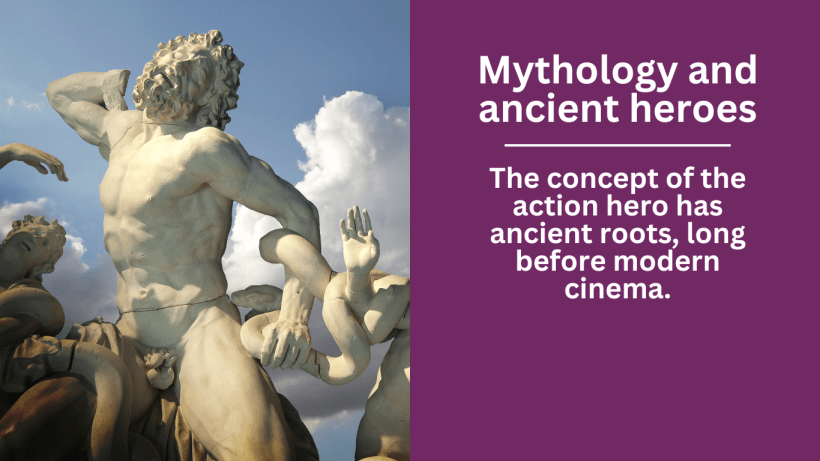
Mythology and ancient heroes
The concept of the action hero has ancient roots, long before modern cinema. It draws from mythology, literature, and early theatrical traditions, evolving into what we recognize today. Ancient history is filled with stories of proto-action heroes. Some of the earliest written stories date back to the 7th and 8th centuries with hero types like Beowulf, the Odyssey, and the Iliad. The concept of the action hero has ancient roots, long before modern cinema. It draws from mythology, literature, and early theatrical traditions, evolving into what we recognize today.
From there, the stories and heroes evolved into the Medieval period with the introduction of chivalry and knights on horseback, enter the era of King Arthur. During the Middle Ages, the action hero concept shifted towards knights and warriors who fought for honor, justice, and love. The medieval action hero was defined by his adherence to a code of honor and chivalry, defending the weak and fighting for righteous causes, often with some sense of moral ambiguity or tragedy.
From there, the 16th to the 19th centuries gave us a new kind of action hero, one who often combined physical courage with intellectual prowess. It was during this time that we saw new heroes like Zorro and Tarzan. This era would lay the groundwork for the emergence of the action hero onto the silver screen.
Rise across the action hero
The rise of the action hero in film can be traced back to the early 20th century with the advent of silent films and serial adventures. Figures like Douglas Fairbanks in swashbuckling roles such as Robin Hood (1922) and The Thief of Bagdad(1924) became early prototypes of the cinematic action hero. These characters embodied athleticism, daring stunts, and a larger-than-life sense of adventure, setting the stage for future film heroes. Fairbanks’ roles introduced the concept of the “everyman” rising to heroic status, a theme that would recur throughout action cinema.
As Hollywood matured, the action hero genre expanded with the rise of James Bond in the 1960s, beginning with Dr. No(1962). Bond redefined the action hero archetype by blending suave sophistication with deadly combat skills, using gadgets, intelligence, and wit to outsmart villains. His popularity during the Cold War era reflected the political tensions of the time, with the character serving as a symbol of Western power and individualism. Around this time, martial arts also became a major influence on the genre, with Bruce Lee leading the charge in films like Enter the Dragon (1973), introducing the physical prowess of hand-to-hand combat as central to action hero identity.
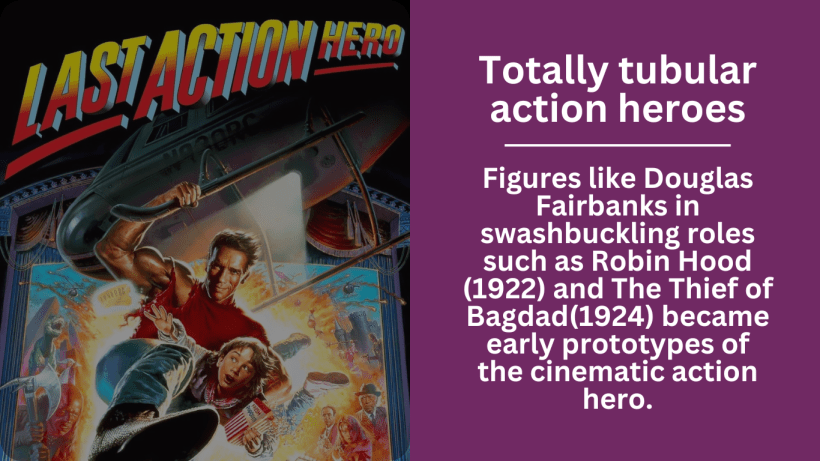
Totally tubular action heroes
The 1980s fundamentally shaped the action hero archetype, emphasizing exaggerated physicality, hyper-masculinity, and individualism. With stars like Arnold Schwarzenegger in The Terminator (1984) and Sylvester Stallone in Rambo: First Blood Part II (1985), action heroes became larger-than-life figures who could take on entire armies or machines single-handedly. These films celebrated physical strength, resilience, and a no-nonsense approach to justice, mirroring the geopolitical climate of the Cold War. American heroes were often depicted battling external threats, particularly communists or Soviet-inspired enemies, reinforcing Western ideals of strength and freedom. The era defined the action hero as a symbol of brute force, unwavering confidence, and the triumph of individualism.
The 1980s also introduced the idea of the action hero as a cultural icon beyond the screen. Actors like Schwarzenegger and Stallone embodied their on-screen personas in real life, becoming symbols of masculine power and invincibility. This period also saw the rise of franchises like Die Hard (1988) with Bruce Willis, whose character, John McClane, presented a slightly more vulnerable, yet equally resilient, version of the action hero. These films often had high-stakes plots involving global or national threats, further amplifying the scale and intensity of the action hero’s mission. The 1980s set a new standard for action cinema, creating lasting images of heroes as physically dominant, morally clear, and unyielding in the face of danger.

My Top 5 action
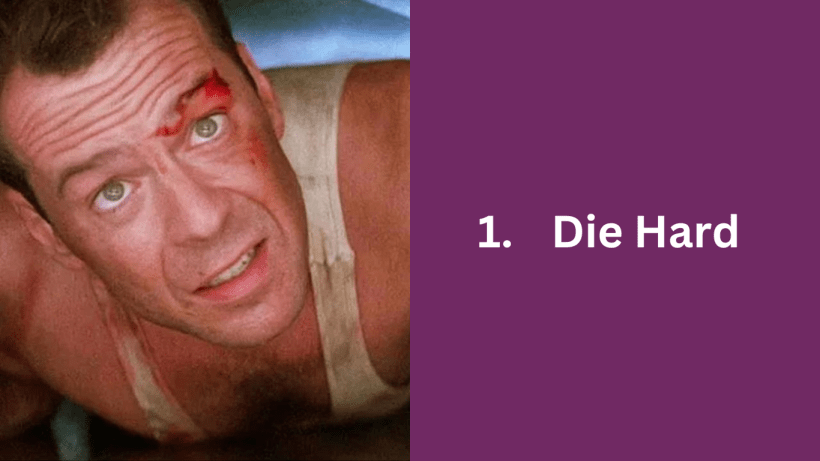
1. Die Hard (1988)
New York cop John McClane (Bruce Willis) is trapped in a Los Angeles skyscraper taken over by terrorists during a Christmas party. With no backup, McClane single-handedly fights off the criminals led by Hans Gruber (Alan Rickman) while trying to rescue hostages, including his estranged wife.
Die Hard redefined the action genre by introducing an everyman hero who wasn’t invincible. McClane’s vulnerability, humor, and reliance on quick thinking over brute force made him relatable. The film also pioneered the “lone hero vs. overwhelming odds” scenario, which became a staple of action cinema.
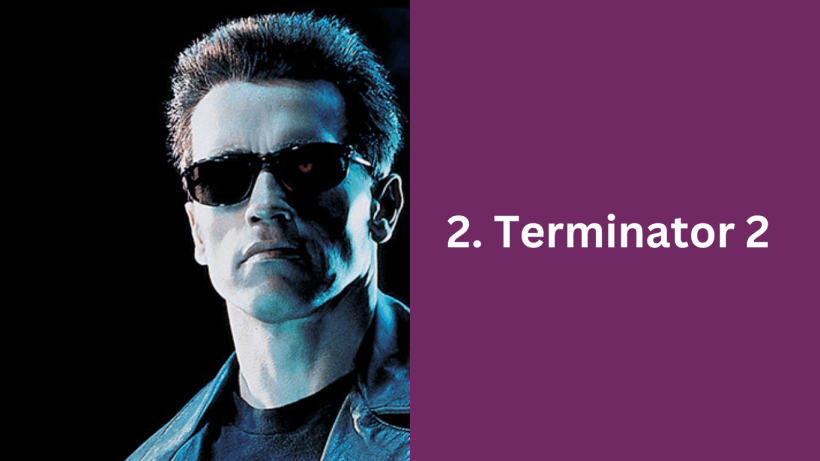
2. Terminator 2: Judgment Day (1991)
In this sequel, a reprogrammed Terminator (Arnold Schwarzenegger) is sent back in time to protect young John Connor, the future leader of the human resistance, from a more advanced and deadly liquid-metal Terminator (Robert Patrick). Together with John’s mother Sarah (Linda Hamilton), they must stop the impending apocalypse.
Terminator 2 took the 1980s action hero formula and elevated it with groundbreaking special effects, intense action sequences, and emotional depth. Schwarzenegger’s iconic portrayal of a machine turned protector gave the action hero a layered complexity, while the film’s mix of sci-fi and action cemented it as a genre-defining movie.

3. RoboCop (1987)
In a crime-ridden Detroit, police officer Alex Murphy (Peter Weller) is brutally killed and resurrected as RoboCop, a half-man, half-machine law enforcer. As he struggles to regain his humanity, RoboCop battles corrupt corporations and vicious criminals.
RoboCop stands out as both a hard-hitting action film and a sharp social commentary on corporate greed and urban decay. Its combination of graphic violence, dystopian themes, and the hero’s moral dilemmas made it a unique take on the action hero, blending raw action with deeper social questions.
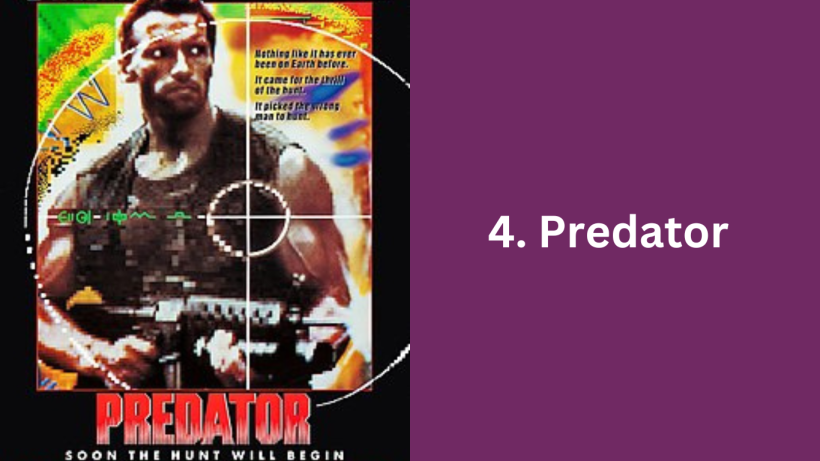
4. Predator (1987)
A team of elite commandos led by Dutch (Arnold Schwarzenegger) is sent on a rescue mission in the jungles of Central America, only to find themselves hunted by an extraterrestrial warrior with advanced weaponry and camouflage abilities.
Predator combined military action with sci-fi horror, pitting Schwarzenegger’s superhuman soldier against an equally formidable alien enemy. The film is known for its intense survival-based action and its relentless pace, with Dutch exemplifying the 1980s action hero as a figure of brute strength and resourcefulness.
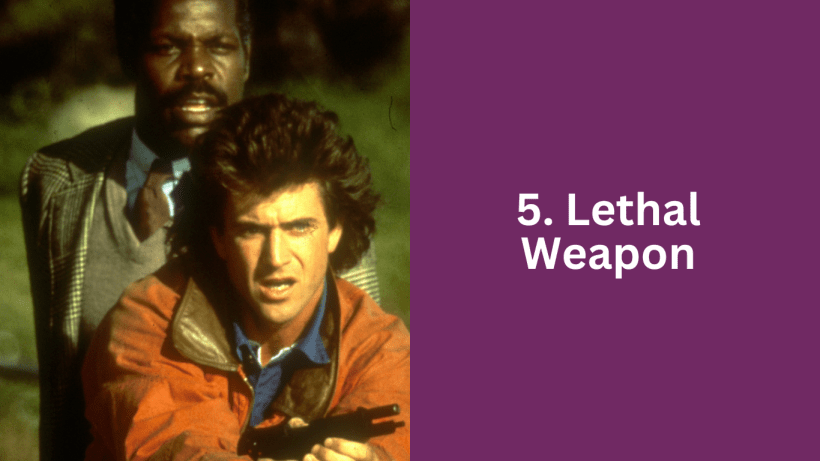
5. Lethal Weapon (1987)
Veteran LAPD detective Roger Murtaugh (Danny Glover) is partnered with Martin Riggs (Mel Gibson), a younger, volatile cop who’s teetering on the edge after the death of his wife. Together, they take on a drug-smuggling ring while forming an unlikely but strong friendship.
Lethal Weapon introduced the “buddy cop” subgenre to mainstream action films, mixing intense action with humor and emotional drama. Riggs’ dangerous, unpredictable persona contrasted with Murtaugh’s steady, cautious nature, creating a dynamic duo that redefined how action heroes could interact and evolve throughout the film.
The legacy of the action hero
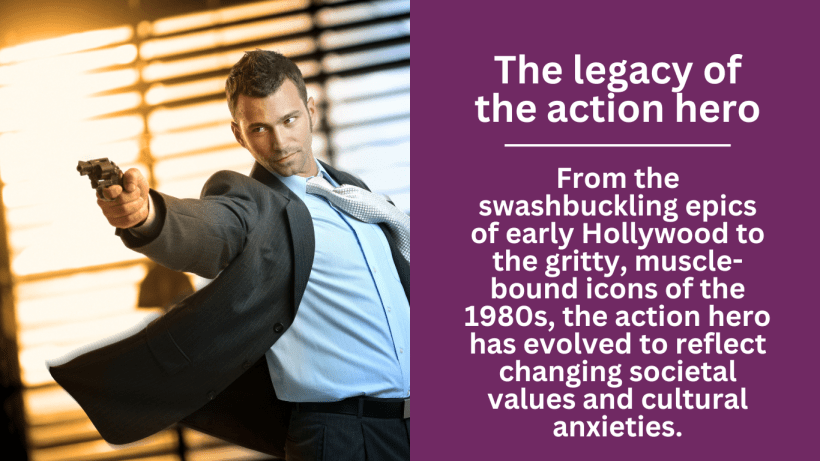
The rise of the action hero in cinema is a journey rooted in ancient myths but transformed through the lens of modern filmmaking. From the swashbuckling epics of early Hollywood to the gritty, muscle-bound icons of the 1980s, the action hero has evolved to reflect changing societal values and cultural anxieties. Movies like Die Hard, Terminator 2, RoboCop, Predator, and Lethal Weapon exemplify this transformation, blending intense action with deeper narratives of heroism, vulnerability, and moral conflict. These films not only defined the genre but also cemented the action hero as a timeless figure in popular culture—one that continues to resonate with audiences today.
What about you, what are some of your favorite action hero movies? Do you prefer the action heroes of the 1980s to those of today? If so, why? Are there heroes in books that still spring to mind more than those created in modern cinema? What are some of those heroes from literature? What other genres would you like to see a deep dive into? Let me know in the comments below. Thank you to each and every one of you who make GayintheCLE what it is today.


 Gay in the CLE