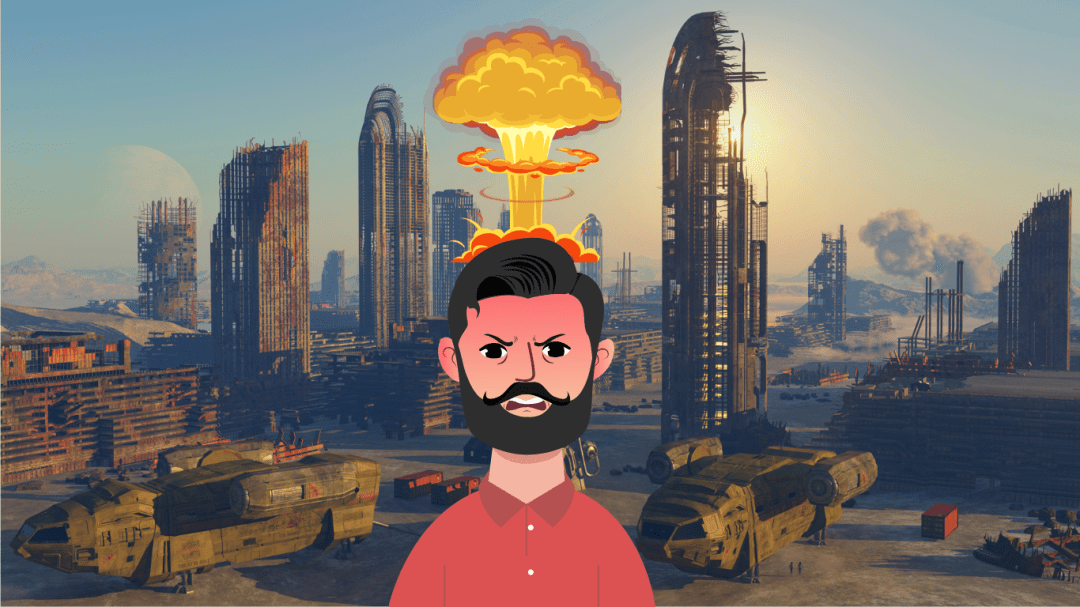
I find myself at a crossroads in my life, there are two main choices in front of me. One choice is to continue doing the things I have done in my life and live with the fallout of those choices. The other choice is to adapt and forage ahead on a new path, to become better and find new ways to interact with everything around me. What I am slowly realizing is that I have been at the crossroad for a while now, only I had been keeping my head down thinking it would get better and that I was moving forward. The truth has come how that I had, in fact, been walking in circles thinking it was progress. Boy, have I been blinded.
I want to share with you how I have ended up at this place and how past events have created the mindset I seem to carry around, everywhere I go. Welcome to Confessions of a HotHead: Learning to Live with My Anger and my journey through life.
- Anger: constructive and destructive
- Once upon a time
- Lessons of the father
- The art of displacement
- Anger’s Infection
- Redirecting the beast
- One of many

Anger: constructive and destructive
Anger is a complicated emotion. It seems simple enough, on the surface. Unlike happiness or sadness, its triggers can be anything and come from everywhere. Stressful situations, perceived unfair treatment, grief, feeling attacked, and personal faults are just some of the triggers that can flare anger. For me, unfair treatment, feeling attacked, or if I think people see me as stupid, its guaranteed my anger will flare up to a bonfire.
While anger is a normal emotion, it can be concerning when we are feeling angry all the time or if our expressing it starts to interfere with work, relationships, and our mental well being. Anger burns through energy like no other emotions and exacts its explosiveness on our mind and bodies. The lesson I seem to have the hardest learning is that, while we cannot always control what causes our anger, we can control how we react to those feelings. Many times, it leaves me feeling like a leaf being tossed about by a hurricane, just lost to it sweeping me away.
Once upon a time
Introspection can be a good thing, when it is used for growth from outdated modalities. But when all you do is relive the past without changing anything, it becomes torture. Sometimes, this is how I see myself. Perhaps we should start at the beginning.
August 1973, I came into this world blue and needed to be put into an incubator. From there, I went on to go through a multitude of tests to see what all I was allergic to. That led to years of taking allergy shots twice a week. Thanks to my brother’s friend punching me in the eye as a kid, I then spent time at an optometrist for glasses and surgery on my eye. I was a young and expensive kid. My father never let my mother forget just how expensive I was.
My father, in alcohol induced fits of rage, would lament to my mother just how much money was being wasted on electricity, groceries, and her damned sickly son. My father felt that all I really needed was a bit more of a stern handling and not the babying he accused my mother of doing to me. It was from this that he decided that he needed to teach me how to be a real man. These lessons often consisted of watching him become immensely pissed off when he hurt himself and throwing his tools through the window of the house or breaking the things he was working on.

Lessons of the father
My father loved reminding me all the time that I was a baby and not a man. A man cannot show weakness, sickness, or softness, if he does it is a sure sign he is not a man. My father would not stand for this.
My earliest jobs were holding his tools. If he asked for a tool, I better have it at the ready. If I did not, well that means I wasn’t paying attention or not doing my job. The first time was him yelling to “fucking pay attention.” The next time he would slap the tools out of my hand and make me pick them up, while telling me how much of a disappointment I was. If I started crying, he would always come back with, “I will give you something to cry about if you dont shut the fuck up.”
Through him, I saw that anger was the answer to every other emotion or feeling out there. If I was scared about something like a thunderstorm, he would combat that by being angry to me and telling me to grow the fuck up. If I was not doing something the way he thought I should be, it was met with anger and how stupid I was. Each time I learned that anger was the correct response to those feelings.
The art of displacement
My father taught me that anger is the answer to every problem I have. If something doesn’t quite fit into place, you beat it until it does. If someone or something hurts you, lash out at them so they can see your hurt and make them feel it in return. If someone challenges you or makes you feel less than adequate, then you better by god belittle them and make them feel like the smallest speck of dirt on this great big blue ball we live on.
I embraced anger, wrapped myself in it like it was a cloak of protection. I believed it protected me. If I presented myself as angry, people left me alone and I could focus on doing things that I felt were the right way. No matter the emotion I was feeling, I turned it into anger. I saw the divide growing between me and people as a way to keep away those that would hurt me, not as a disconnection from society and reality.
It felt empowering to take an emotion like fear or hurt and turning it into aggression against the thing that was causing me pain. It gave me the impression of strength and power, power to control and take action against what was causing discomfort. Now it is at a point where I rarely see anger flaring up before it becomes a problem. It washes over me like a warm river, taking away the things I dont want to feel to give me a feeling that I think I understand. In actuality, I am no more in control than I am with the other emotions.

Anger’s Infection
It is easy to see some of the lasting effects of anger. It can ruin relationships and even result in job loss, if it is not controlled. Where we fail to talk about the effects of anger is on a personal level. Its effects on the body are just as destructive as it is to relationships around us.
Anger, in its worst forms, negatively impacts us by raising our blood pressure and releasing stress hormones. These hormones have a direct impact on our immune systems and can be a potential catalyst for us getting sick. It also has a distinct possibility of creating social isolation and taking years off of our lives. There are, at least, two distinct types of anger; constructive and destructive anger.
Constructive anger
Constructive anger can be defined as when we manage our emotions and channel the feeling of anger into situations that help us improve or prevent other actions from taking place. It involves pausing, calming down, processing what caused the reaction, and coming up with a plan.
Destructive anger
Destructive anger is the exact opposite of that. It’s Spontaneous and explosive. It is outwardly expressing by lashing out at others or slamming doors. This type negatively impacts our physical and mental health, not to mention our relationships with others.
If you are unsure which you are dealing with, here are a couple helpful warning signs.
Warning signs
- Struggling to compromise or come to an agreement without getting angry
- Problems expressing emotions in a calm and healthy way
- Ignoring people or refusing to speak to them
- Shouting, swearing, or becoming physically violent or threatening
- Putting yourself down or punching yourself
- Increased substance use
- Frequent regrets and feelings of guilt around your reactions to situations or how you spoke to other people.
Holy smokes man, as I type that list, I am scared to admit that I fit five or six of those signs. Knowing this, it sparked massive feelings for regrets for how I make others feel. I am sure that my boyfriend could chime in here, as well. The good news is that no matter how explosive you may be, you can be helped. I chuckle as I say this due to making it sound easy. Let me be frank, managing your anger is as hard as managing an addiction. Quite frankly, it is an addiction. But I will share some lessons I am working on to help.

Redirecting the beast
Most people work with anger in two main ways, expressing and suppressing. Expressing is the most visible way. Think of the term “exploded with anger,” it carves out a pretty vibrant image of what that would look like.Expressing can and usually is bad. It comes from bottling up emotions and not dealing with the triggers effectively. This is mainly because we express anger negatively. Instead of blowing up, it is better to go with discussing anger. Which means we should probably think of not suppressing our feelings and pushing them down. But suppression has its merits, in small douses. By pushing down our explosive urges, we can often take a mental check of the trigger and see if reacting is worth it. But there are other ways of dealing, as well.
Relaxation and Self-Care
Relaxation and self-care are important to our wellbeing, even though they are rarely discussed, openly. Adding in daily times for a bit of relaxation and self-care allows it to become commonplace for us and gives us breadth to deal with anger flare ups. Think of it this way. If you are tired, feel overwhelmed, and on edge, you are more like to explode with anger than if you were in a clam and peaceful place. Self-care like this can come from exercise, long walks, meditation, or reading. Just about anything that brings you a sense of calmness. \
Reframing
This is where I am trying to put my focus for my anger issues. Think of it more like cognitive restructuring. To water this down a little, it simply means challenging the inner dialogue that is adding to your anger and reframing it in a way that causes less suffering. Using an example that comes up a lot for me, if someone ignores the advice we are giving in a meeting, we see it as them not valuing your ability or being disrespectful to you. Reframing it could allow you to see that they are just sharing frustrations about how something is or isn’t working and isn’t an insult to you or your knowledge.
Listen, not just hear
When we get upset about something someone says to us, it is typically because our inner monologue is in overdrive. We start finishing their sentences and predicting what they are going to say. Doing all of this puts us on the defensive. Bridging on the example above, if my boss comes to me saying “I feel like there are improvements that can be made to the network,” it is more about trying to make our services the best possible for our staff and guests and not saying we are incompetent or not doing our job correctly. What typically happens is that those dark inner voices are convinced that what he is actually saying is that we are not good enough for our job and we are being taken for granted. This is because we only hear what he says and aren’t actually listening to the issues he is presenting.
Don’t pull that trigger
A trigger is simply something that pulls at the threads of our emotional reactions. Finding and learning to navigate our triggers isnt easy but it can be done. One of the best methods comes from journaling. When you experience a big negative situation, taking some time to sit down and writing about it can be vastly helpful. This will require you to be a bit more objective in your thoughts and writing but it is especially helpful. Over time you will start to see patterns in what may be driving your outbursts and from there you can start dealing with those triggers. Maybe it is simply learning that when someone comes to you with an issue that they aren’t complaining about you but how the situation makes them feel.
Seeking help
Do not be like me and think that asking for help is a sign of weakness. I avoided going to therapy over my anger management issues for years. I felt that going to a “shrink” was a sign of weakness. It meant that I couldn’t control my emotions or situations. I was taught that going to therapy meant you were weak and couldn’t accept fault for your actions. Thanks to my boyfriend and how he normalizes therapy, I saw where there could be improvements and with my diagnosis of cirrhosis, it gave me someone to talk about the dark things with. Counselors and therapists are trained to help us track, understand, and change our emotional actions. Remember, asking for help is stronger than going it alone.If you are trying to lift a heavy load, you already realize that asking someone to help you lift it is much more productive than doing it yourself and ending up injured.

One of many
Anger is a normal emotion, what isn’t normal is bottling it up and lashing out at someone. Anger can be productive but if left unchecked it is controlling. If you feel anger becoming unmanageable, remember you are not alone. There are people and things you can do to cope with it. It isn’t an easy solution, but with time and dedication, you can learn to manage how you deal with anger and become more productive at shaping it into avenues of growth and development.
Anger has ruled the better part of my life and my only hope is that you, also, learn how to process and handle that dark demon living inside of you. Make no mistake, while I am sharing my personal takes on this, they are just that, my personal takes. I have not mastered dealing with anger but I am starting to acknowledge the impact it has on me, my life, and those around me. I want to be better and I want to interact with others better. What about you, how do you deal with anger? Do you feel it is powerful or have you seen the destruction it can wrack on your life? What things help you calm down from when you are feeling your most angry? Are there triggers you feel that I didn’t cover? Let me know in the comments below.


 Gay in the CLE