
The below is not medical advice. It’s a primer of information. A blueprint of knowledge to be added to. What to expect during those first few terrifying days and weeks after we’re told we have an incurable liver disease we never thought we’d have.
This isn’t medical advice, just my experience. When I got the news about my liver, it was a shock. I figured I’d share what I learned. I dont focus a lot on giving you medical or dietary advice, as that is too interdependent on where you are with the diagnosis and what your medical team suggests for you. This is just a blueprint of some basic information to help ease your mind a little.
There are some types of medical procedures or medicines that a new patient may encounter and there are also new ones being developed all the time, This is not meant to be all inclusive. If you know of something I missed or you have heard about, drop me a note in the comments below.
This is just a guide on what I have found to be helpful in my research and from my medical team. Some of these are general questions that I have seen asked by patients on the various forums I follow. What follows is more about helping you feel some form of support where we often feel alone. You may wonder why this is part 2, the easy answer is that we will be discussing tests, terminology, and more in depth things that are better suited to come after understanding the basics. If you are reading this, then you are part of this group. Whether it was your diagnosis or of a loved one, there are those of us here to help. So let’s get comfortable as we discuss… Living with Cirrhosis PT2: A Beginner’s Guide.
- Why a primer
- Cirrhosis terms you may hear
- Other potential issues
- Preparing for the fight
- Your best weapons
- Medical Procedures
- The big Lebow… I mean takeaway

Why a primer
A primer is a beginner’s book to help them understand a topic or idea. It is meant as a starting point to teach you to understand but also look deeper and ask the right questions. This is what I wished I had when I was given my diagnosis. It has helped me cope to do research into what this disease means, all the tests, and how to keep myself alive and fighting. It also allowed me to understand more what the tests results were saying and how they impact my overall health.
This research has given me strength to fight and a better understanding of the science and mechanisms behind cirrhosis. Please, keep in mind that your medical team will tell you what you should be doing, and above all, that advice should be followed to the letter. They know what is best for you and where you are with your condition. They know the best ways to manage symptoms, what you should be eating, and how to help your get better. Again, listen to them. Every person with cirrhosis is unique and no one set of advice will be the cure all for everyone. Be patient with yourself, this disease, and your medical team. But never stop asking questions.
Let’s dive in…

Cirrhosis terms you may hear
When you receive your diagnosis, the doctors start throwing a plethora of medical terms at you as if you already know what they mean. Most of us are in shock from our diagnosis and forget to ask for clarification and we just keep going without any more information.
That is truly frustrating for new patients, so lets break those terms down a bit to help you understand them.
Portal Hypertension
Think of your liver as a highway. When it’s healthy, traffic flows smoothly.But when there’s a problem, cars start to pile up. That’s portal hypertension. Portal Hypertension is a buildup of pressure in your abdomen, just like blood pressure. As your liver becomes damaged, it no longer works as it should. It doesn’t allow blood to flow easily through it, on its return to the heart. This in turn creates extra pressure in the Portal Vein. In this situation, the blood backs up into the spleen causing it to enlarge. That is why they also take images of your spleen when you go in for ultrasound tests.
Fun fact: More blood comes together and is moved through the portal vein than anywhere else in the entire body, even the heart.
Enlarged spleens are just one side effect of having cirrhosis. So what causes blood flow issues and Portal Hypertension?
Fibrosis
As your liver becomes damaged, it tries to heal itself. If you are healthy, it typically does and becomes whole again. With cirrhosis, the damage is extensive and causes scarring that doesnt heal. This scarring is Fibrosis. Fibrosis slows the blood flow through the liver. This damage causes nodules and other abnormalities that can come from various diseases/infections, like hepatitis. It is also caused by your liver working overtime processing hard to process things like alcohol. Doctors are even finding out now that genetics plays a large role in cirrhosis in people.
This scarring is the basis of what cirrhosis is, at its root. Once this scarring takes place, the liver does not heal from it and one of the big jobs of the liver is healing itself. Here is the rub of it all. Since the liver loves to try to heal itself, cirrhosis sends it into overload. It will continuously try to regrow new and healthy cell so much that it increases our odds of developing liver cancer. This leads to us having to go in for MRIs and other screenings for that. Some of us can be put on medication to help lower those chances.
But portal hypertension and damage to the liver doesnt stop there. It can start to have effects on other parts of the body. And those effects can have larger repercussions.
Varices
Our bodies are amazing pieces of advanced machinery. If there is a problem or damage along one pathway of our bodies, our body tries to adapt by creating a new pathway. This can be seen in the brain, often. If one neural pathway is damaged, a new one can be created. This is not just reserved to the brain. In fact, when portal hypertension sets in, our body tries to do its best by redistributing that blood flow. It looks for new pathways, veins, to utilize to get the blood back to the heart.
Remember that fun fact from portal hypertension, this is a direct effect of it. The body will utilize esophageal varices to redistribute that blood. That sounds like a good thing, but there is a problem. These varices can be a risky detour for the body. These varices have a tendency to swell with the amount of pressure/blood they are forced to recirculate and can possibly rupture. This can lead to an unknown bleed out. This was a massive risk for my mother, as she had weak veins, normally.
Dangers of esophageal varices: One of the issues that arise with cirrhosis is our bodies not creating enough platelets, any more. Platelets help prevent and stop bleeding. When you injure yourself, the body sends platelets to the affected site to stop bleeding and allow that area to heal. This means if you develop varices that there is a higher chance they can rupture and not heal on their own. Sometimes, it is easy to tell if this is an issue as blood will change the color of your stool or vomit, giving it a dark/black color.
Contrary to the name, the varices are actually located at the bottom of your esophagus, near your stomach. If the blood pools in your stomach, it can leave you feeling nauseous. This is one of the causes of the common side effect of feeling sick to your stomach.
Other potential issues
At this point you are probably thinking, more issues? I know the feeling, it can feel overwhelming. Just remember to breathe and that there are others going through all of this and are here to help.
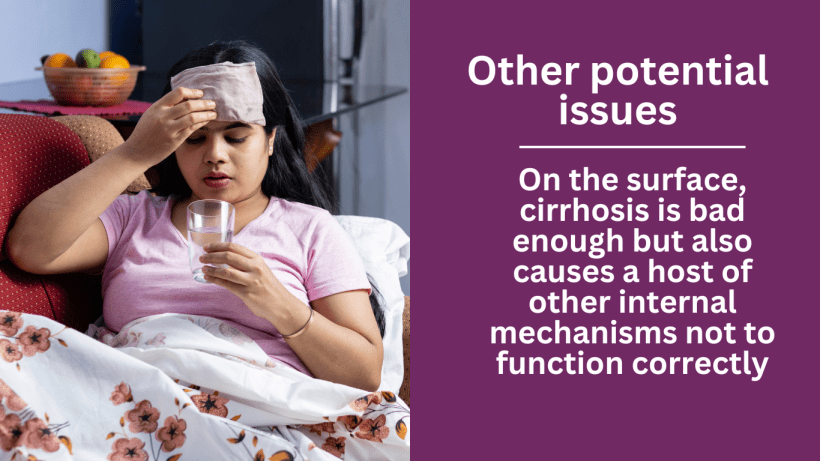
On the surface, cirrhosis is bad enough but also causes a host of other internal mechanisms not to function correctly or with other mechanisms of your body. As mentioned above, it can lead to lower platelet counts, which in turn affects your blood’s ability to clot. It also lowers albumin levels, which have a direct relation on keeping your cells hydrated. For reference, albumin is the white part of eggs and does the same thing for the egg yolk.
Albumin isnt the only substance in your body affected by cirrhosis, there is also creatinine. Creatinine is a waste product your body creates in breaking down protein. Watching creatinine levels allows your doctors to have an idea how well your kidneys are filtering out waste products from your body and how much protein absorption ay be going on. Kidney disease is another side effect of cirrhosis and should be monitored just as closely.
By keeping track of albumin and creatinine levels, we can make sure the body’s cells are maintaining their cell structure and overall health. Cirrhosis is a wasting disease and as such you are at risk for losing muscle mass (lean muscle) easily. This happens, easiest, overnight when your body goes into it’s catabolism state. This is a normal state the body goes through where it breaks down complicated structures for more simpler ones the body can use easily. If there is not enough energy, protein, and other things circulating, the body will start to break down muscle. This is why your doctors will have you focus on protein intake and exercise. Both of these are important in our overall health. We need muscle for everything we do, even walking.
Dangers of Ascites
This is a term you will hear pretty quickly after your diagnosis. It is also one of the easier to see symptoms of cirrhosis, as noticeable as jaundice. This is where fluid builds up in your abdomen, making you appear swollen. Ascites is not like fat deposits, it feels taut. Ascites has a direct correlation to portal hypertension and a lack of a protein in your blood, albumin.
Ascites can also get infected and cause bigger problems. As it is caused by portal hypertension, it also affects it by creating extra abdominal pressure. It can also cause painful breathing as the fluid presses against the lungs. It is also known to cause umbilical hernias, this is where your belly button protrudes outward. The only treatment for this is draining of the fluids in the affected areas.
Hepatic Encephalopathy (HE)
Hepatic encephalopathy is a condition affecting the brain due to liver dysfunction. One of the biggest side effects of cirrhosis is limiting the body’s ability to process toxins, such as ammonia, from the bloodstream. As these toxins build up in the bloodstream and body, they start to take effect on various systems. Hepatic encephalopathy are mental symptoms caused by this build up.
HE is categorized as degradation of mental facilities. In the beginning it may cause simply confusion but often leads to mood changes, complete loss of memory, and worse. Hepatic encephalopathy is broken down into five stages.
- Stage 0: Minimal HE. Slight changes in memory and concentration.
- Stage 1: Mild HE. Mood changes and sleep problems.
- Stage 2: Moderate HE. Inappropriate behavior, slurred speech, trouble doing basic math.
- Stage 3: Severe HE. Disorientation, extreme sleepiness, or anxiety.
- Stage 4: Coma.
With all of this negativity, you may think there isnt much hope. Have I got news for you…
Preparing for the fight
Whew… I have just dropped a lot of bad news on you and you are probably ready for a little levity. After all, it’s not all doom and gloom. Instead of looking at it as a dire disease, let’s look at it as a situation we have to accommodate ourselves to. Like learning new skills at work or adapting to someone new who just moved in with you. It takes some time, but you can adapt to this diagnosis.
Cirrhosis is a progressive disease and does affect everyone differently, but it’s symptoms have some great and proven management options. Many of these are simply but do require discipline to implement and keep up with. There are those that are a bit more complicated and involve surgery. Then there are the ones that are more medicinal and requires tethering yourself to the porcelain god for periods of time. But, it is hope.
So you just found out that you have cirrhosis, remember the most important thing here is to breathe. Yes, this is terrifying news that leaves you confused and thinking there isnt hope but you are the first person to have been diagnosed with cirrhosis and, thankfully, doctors are becoming more informed on this disease daily. Just remember, the more knowledge you empower yourself with, the less scary the disease will feel.
Strap In
From the onset of your diagnosis and few quite a while after it, you will be subjected to the diagnosis and testing phase. The first thing you need to do, especially if alcohol got you to this point, is to stop drinking immediately. The longer you continue to drink, the more damage you inflict upon an organ that is fighting for its very life. Next, work on modifying your diet, in conjunction with your liver doctor and a nutritionist. This will allow your liver to start to reduce its inflammation, while this isnt a cure it does allow you and your body to work to reach a new equilibrium. This baseline will allow your medical team to create a plan of action for you and an accurate assessment of your health and your future.
Keep that part in mind, “Your Future.” Cirrhosis will cause you to have a changed life, but it isn’t an immediate death sentence, if you choose it not to be. Let’s look at some tools to help you along.

Your best weapons
Let me impart the most important wisdom to take away from this. The less hard your liver has to work, the better it is for it. End of story. I know what you are saying, that cant be it. The answer is that it isn’t, but it is an important understanding to have and, therefore, essential information.
Your liver is damaged and nothing will change that. Much like you cant restart a journey you already took, the damage to your liver can’t be undone. Instead, we need to reshape our thinking and start giving it as little to handle as possible. This is your best bet for minimizing or avoiding other side effects of this disease. All that I shared before are symptoms and results of what has gotten you here. What follows will hope you avoid them.
So, let’s focus on the basic processes of the liver, which is about 500 in total. Your doctors will give you specifics in how to do this, but lets discuss some.
Diet
This will be the biggest change for you. Prepare to start tracking and measuring everything. You must be disciplined and focused here. Focus on service sizes and familiarize yourself with food labels and what they mean. Listen to what your doctors tell you for any restriction, especially sodium, alcohol, and processed foods. Lower foods that are harder for the body to process, like red meats, fried foods, and overly processed food items.
With time, this will become second nature. It can also get frustrating but remember the ultimate goal you are working towards. A few minor tweaks can make some of the harder changes easier to deal with.
Sugars and fats
Your liver processes everything your body takes in, fats and sugars are just one of the multitudes it deals with. Sugars and fats are a bit special, though, and the wrong ones can really turn your liver into a bigger punching bag. White granulated sugars are heavily processed and much harder for your body to break down. Fried foods contain oils that your liver struggles to process, at the best of times.
So, which sugars are bad? That is a bit easier to discuss. Alcohol, sucralose, and a large amount of man-made sweeteners are bad. But wait, too much of natural sugars are just as harmful. These all process out and become fat. Since your body now has a harder time processing that fat for energy, its result is to store it around organs for later usage. However, it doesnt get used as easily and just create fat deposits. Body fat makes the liver work overtime and causes more damage.
Fats are just as problematic. Many are harder for your body to breakdown, trans fats and too much saturated fats aren’t good. But remember this, your body needs fat to stay healthy, especially for brain function. So what oils are best, natural of course. Use things like olive oil, seed oils, avocado oils, and such. One of the oils you need are the Omega 3 oils, this are essential to your body. Look for the multitude of healthier oils and remember to use them in moderation.
Protein
There was a time when doctors told cirrhosis patients to restrict protein. There is science that shows that too much protein is bad and can push hepatic encephalopathy along faster, but that is extreme amounts.
Protein is essential for your body, especially now. You are going to need a lot of lean protein. Lean protein means sources that are lower in fat content, which is why red meat should be dealt with in moderation. Your doctors will tell you how much protein you need and that basis is determined by your bloodwork. Too much protein can be bad for your kidneys, as well. That is why it is imperative you listen to your doctor’s recommendation and not to me or some internet article that tells you a magic number. It will not be the same for everyone.
Carbohydrates
Let me share a secret here, you cannot cut out carbohydrates. It is impossible. Everything contains them and even becoming a vegetarian will not remove this fact. All vegetables are carbohydrates. What you can do is limit your intake and focus on the more healthy ones, instead. What are those healthier ones? Whole grains and fiber, for the most part.
Regular bowel movements are super imporatnt for cirrhosis patients, this is one way how your body removes toxins from it. Some of these toxins are bilirubin and ammonia but it also helps for absorption of proteins and vitamins. Constipation is dangerous now, so, make sure you are telling your doctors about it when it happens. There are medications that can help with this but don’t rely on them. In fact, many of these medicines create an immediate need to relieve yourself and require some extra time in the “throne room.”
Water and other liquids
Water is essential to the body, it helps with the eradication of wastes, helps regulate your body temperature, and even affects your mood. While you may be put on some restrictions here, it is important to stay hydrated. Restriction often comes in when ascites is flaring up and is designed to help alleviate it quicker and keep it under control. Some restrictions can leave you drinking 2 liters a day, 1.5 liters and then there are some that have no restrictions at all. Listen to your doctor’s advice, it is important.
Where can you get those needed liquids? You may be wondering exactly what you can drink since you have to give up so much, the good news is things like coffee are not off the table and, thankfully, today there are so many more healthier options out there, you will never be at a loss. There are mocktails that are being created that give you the feel of an adult beverage without the alcohol. There are also near beers, near wines, and near liquors. Remember to be mindful of labels and doctor advice. Even .5 percent alcohol is still alcohol and if drank frequently enough can have an effect on the liver. Aim for zero alcohol drinks.
If you are on water restrictions or are retaining water, there are some really great meds out there for that. They include, Spironolactone and other diuretics.
Salt
I am going to just say this… Less Is More. Always air on keeping sodium as low as possible. Here is a surprising shock for most people. The recommended daily allowance of salt for any person is less than 2300 mg/day. To put that into more tangible understanding, that is less than one teaspoon a day. That is a shocker in a culture that loves to over salt everything. So that means eating out is so much harder as those places blow the daily allowance on just one item.
Guess what, there are some pretty amazing sodium substitutes out there. You can also learn to use spices as a way of offsetting sodium usage. Salt control is critical for keeping ascites at bay and not retaining water.
Medical Procedures
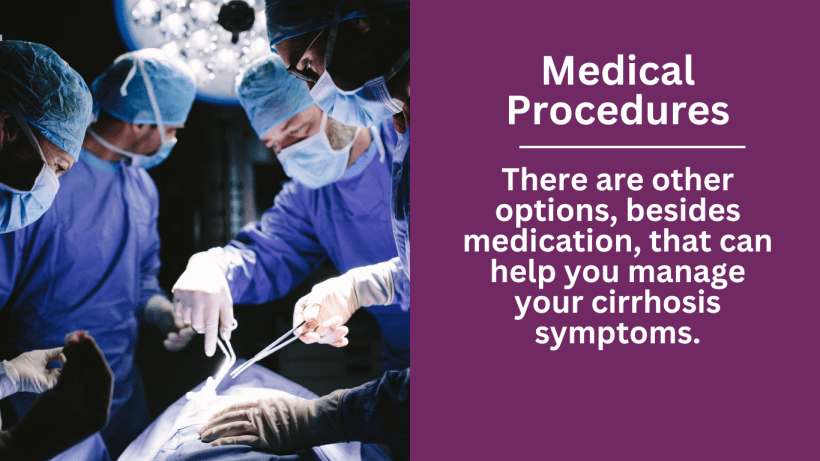
There are other options, besides medication, that can help you manage your cirrhosis symptoms. Some of what will be listed are more extreme and some are more frequent. Dont let the thought of these options freak you out. Many of them are temporary basis and a few require longer.
T.I.P.S
Transjugular intrahelpatic portosystemic shunt, or T.I.P.S for short, is a procedure that involves placing a stent that will connect the portal veins to adjacent blood vessels to help lower the pressure. This can help relieve the pressure of blood flowing through a damaged liver and help to prevent bleeding and fluid back up.
Banding
When varices are found, they need to be monitored. In some causes, those varices will need a procedure called banding. In the simplest of terms, banding is placing rubber bands around varices to allow them to close off permanently and drive the blood flow back to the portal vein. This helps prevent them from being in danger of rupturing.
Imaging and Radiology
This classification is all about those tests like fibroscans, MRIs, ultrasounds, and more. There are so many diagnostic tools to help gauge your overall liver health and risk factors. These are your new best friends, albeit intrustive and aggravating ones, in diagnosing and maintaining your new lifestyle to be as healthy as possible.
Colonoscopy
Ahh yes, the dreaded alien probe of the hospital scene. The good news is that you get to sleep through this procedure but the prep is a different story all together. If you never had one, the prep part is just a bunch of laxatives you have to drink and being connected to your toilet for the better part of the time. Safety note. I wouldnt drive to work, go into work, or be out in public when you are doing cool-prep. You will regret it.
Paracentesis
I wont go into this one, very much. If you are squeamish, you will thank me for it. Basically, paracentesis is the process of draining the fluids built up with ascites, using a long, hollow needle.
Remember that these procedures and tips are only a few of the things out there that await you. Your doctors will tailor treatments to your condition status and better serve you.

The big Lebow… I mean takeaway
Patience is key as you navigate the diagnostic process. Build a strong healthcare team including a hepatologist,gastroenterologist, and primary care physician. Be an active participant in your care, following their advice closely.Strong communication and a positive attitude can foster excellent support from your medical team, helping you manage your condition effectively.
Remember, you are not alone. Over time the shock of this diagnosis will start to subside. You will find a new normal and even start to appreciate the life you have. While you may have new limitations, your life is far from over. As Rabbit Junk says in the song Survivor, “you’re a mother fucking survivor.” You will fight this disease and it will not control you. Remember above all things… be kind to yourself.
Have you or someone you know/love been diagnosed with cirrhosis? What are your thoughts? Has any of my articles helped with understanding your disease? Let me know in the comments below. If you would prefer an article that links all of my cirrhosis articles together, also let me know below. You will get through this, I have been diagnosed for three years and through my dedication and persistence, I am staying relatively healthy. And if this article was helpful, be looking out for the next part where I will go into more detail about understanding your MELD Score and what it means to you.


 Gay in the CLE