
I would venture to say that there are very few people who are not familiar with the running joke of how the Simpsons have predicted the future more times than seems possible, by accident. It is creepy to see our beloved television shows or movies show a bizarre future that somehow eerily comes to fruition. At the time, more often than not, it was done as a joke or a slight nod that we should be careful of the decisions we make, lest they become reality.
Growing up, I was so excited to think of the possibility that cartoons like The Jetsons showed where we would all have flying cars, screens that allowed us to view content and talk to people, to have wearable devices that made life easier. Many of those things did not happen and has left me a tad salty about it. However, there have been enough of them in movies and television shows that keep most of us entertained. Today let’s dive into From Cell Phones to Drones: How 80s Movies Foreshadowed Modern Life.
- Beyond the Remote: Movies & TV as Temporary Escapes from Reality
- 1980s Sci-Fi Predictions: A Look at Movies That Foreshadowed Our Reality
- Crystal Ball on VHS: Shocking 1980s Movie Predictions We’re Living Now
Beyond the Remote: Movies & TV as Temporary Escapes from Reality
Movies and television were designed as a means of escape from reality. For the thirty to sixty minutes of content, we got a chance to experience things from the imagination of others and take a break from our own. We were given a cast of characters that sometimes were set in the future and used technology that many of us could not wait to use, ourselves. Some movies like Star Wars and Star Trek show technology that is still outside of our capabilities but that gap is getting smaller. Even still, there are pieces of technology in those movies that do exist today. Star Trek made the idea of a personal communicator the ideal dream of many. Today, smart phones have came to become a normal part of our existence and give us the same abilities that those communicators did.
Those shows, it could be argued, were the fertile ground for imaginations to create the wonderful technology and time saving gadgets we see today. There is a darker side, also. A great many movies showcase how technology can be manipulated by those in power to keep people under control or to stamp out perceived threats. That tech has been invented as much as those devices that make life easier. You cant seem to have all the good without some of the bad.

1980s Sci-Fi Predictions: A Look at Movies That Foreshadowed Our Reality
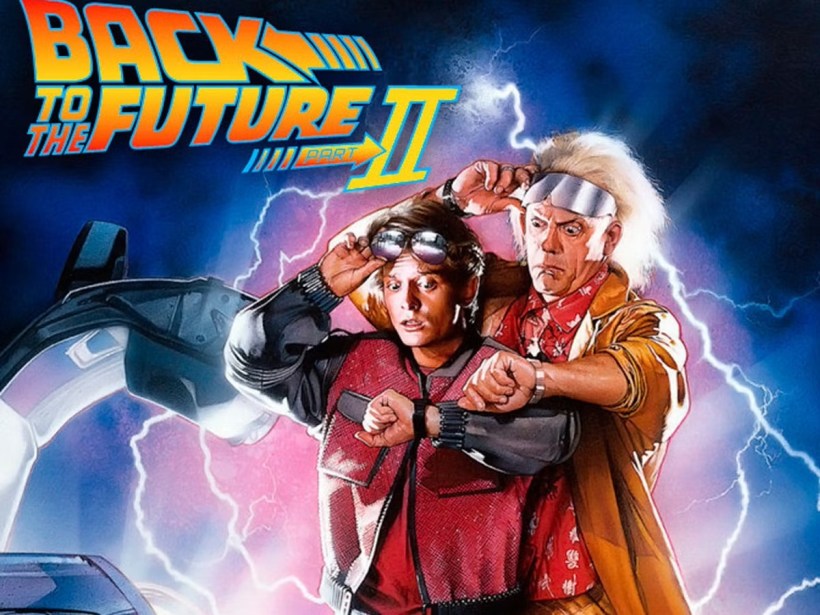
1. Back to the Future II
There are few movies that are synonymous with a decade as is the Back to the Future franchise. The entire movie franchise was a powerhouse of actors. Michael J. Fox, Christopher Lloyd, Crispin Glover, Lea Thompson, Elisabeth Shue are but only a few of the people who made this franchise a hit. The whole premise of the series is how life can be affected by one simple change. It is a movie that cautions you to be careful what you ask for or you might actually get it. Back to the Future II picks up shortly after the events of the first movie and sends Marty McFly (Michael J. Fox) into his future, to save it.
So what were some of the predictions made by Back to the Future II? The year was 2015 and Back to the Future II bombarded us with cool gadgets from the future. At the time, they seemed so outlandish that they could only exist in the movie world flash forward to today and many of them are commonplace.
Flying Drones
Once Marty lands in 2015, we are shown how drones are everywhere, in the future. They are seen walking dogs, taking pictures for the news, and much more. How far have we come with drones, today? A quick search of the internet or Amazon will give you multiple pages of types of drones. Many companies, like Amazon, have tried to find ways of using drones for delivery services. The most common usage, similar to the movie, is using drones to capture photographs that would be almost impossible otherwise.
Mobile Payment Tech
Payment options have come a long way, over the years. In Back to the Future II, we are shown someone asking Marty to donate money to preserving the town clock and, you guessed it, they are using a device that looks a lot like a tablet to complete the donation. Flashforward to today and we use apps like Venmo, PayPay, and Zelle to send money electronically to anyone.
Biometric Recognition
In the movie, Marty takes his girlfriend, Jennifer, with him into the future. At some, she is seen entering their house in the future using her thumbprint. Today we use biometric devices and recognition in many places. Smart phones utilize it to gain access to the device or to authorize payments. Many smart home door locks still use some form of biometric recognition, like thumbprints, for access. Airports have utilized retinal scanning as a means of proving identities.
If you have never seen a Back to the Future movie, I highly recommend you check them out. They are good wholesome fun.
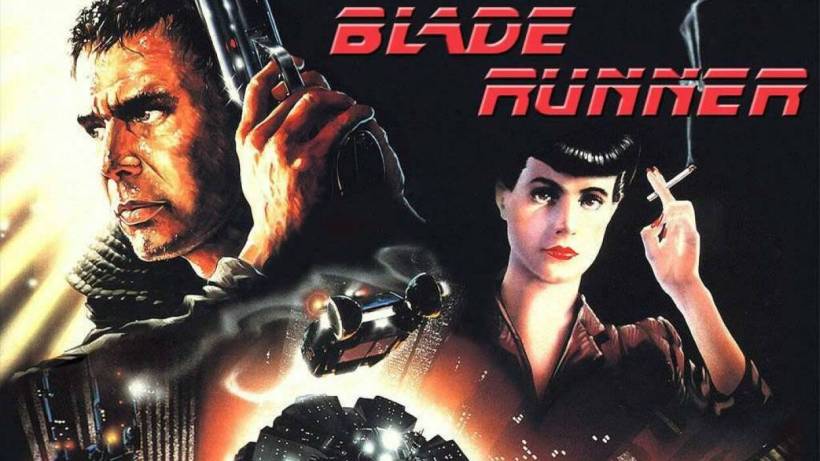
2. Blade Runner
In 1981, director Ridley Scott released what would become one of the most iconic cult classic science fiction films to ever grace the big screen, Blade Runner. This movie was set in a dystopian future of the world where mega corporations ruled everything. The city of Los Angeles has become a massive city and technology is as commonplace as is the constant bad weather. The movie is about a cop who’s job is to track down errant cyborgs and retire them. While flying cars and cyborgs haven’t come to pass, yet, there are a great many pieces of tech this film showcases that we do use on a daily basis.
Voice Assistants/Smart homes
There is a point in the movie where we see Deckard, played by Harrison Ford, accessing an elevator and a robotic voice ask for a “voice print identification.” This is a means of verifying that the person accessing the elevator is someone who is tied to the home in which the elevator takes them to. Today, Alexa and Apple Home allow us to tailor our homes and devices to recognize our voices to be able to carry out scenes or device interactions.
VIdeo Calling
In the movie, we see Deckard make a video call to a replicant, cyborg, named Rachel. The call was a way to move the movie forward by creating a connection between the two characters. Video calling was used a few times in the movies and at the time seemed so far away from being a daily thing that it was seen more as a novelty.
To clear the record, video calling was born in the 1920s, as shocking as that may sound. The boss of AT&T spoke with, then, President Herbert Hoover using a combination of a television signal and a phone line. It wouldn’t be until around 2003 that video conferencing company, Skype, would make it more commonplace. Now, cell phone makers have added a version of video calling to almost every phone.
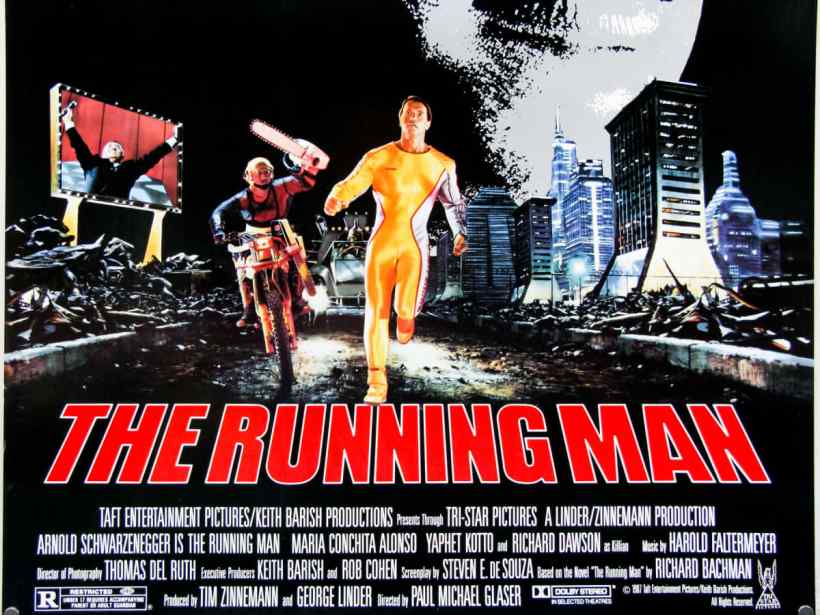
3. The Running Man
The Running Man is a film adaptation of a story from Richard Bachman (aka Stephen King, in case you didnt know) and takes place in the dystopian future of 2019. Dystopian media is a good system check for our world and how quickly we can devolve into madness when a select group of people (or person) start thinking for the masses. The backbone of this story is how the world is obsessed with reality television, as if that doesnt sound familiar. In this future, the government has decided to create a reality show called The Running Man where prisoners and convicts are pitted against an elite team of game players called gladiators. If the prisoners win, they receive their freedom. But, if the gladiators win then the prisoners lose… their lives. Arnold Schwarzenegger is arrested and made to take part in the games where he starts to notice some glaring issues with the competition.
Reality TV
We have become a society that is in love with reality tv, for whatever reason. Whether it is escapism or a way for us to quietly judge others compared to some perceived ideals we have about ourselves, we simply cannot get enough. The Biggest Loser, Big Brother, Survivor, and the The Amazing Race are just but a few of the droves or reality tv programming that is out there. Is it really a huge leap to see that this kind of television can evolve to be more invasive and consuming by us? This movie isnt the only one to show prisoners as game players in reality television. Gerard Butler did a movie called Gamer with a very similar premise.
Deep Fakes
Ai has started to become an integral part of our daily lives. We have seen how ChatGPT and Google’s Bard can create Python programs, write emails and texts for us, and answer questions on our phones without having to type anything with our fingers. But it doesnt stop there, Ai has become core components of photography software and video editing. it allows us to create images and scenes that we could not easily create, otherwise. It also give us an easier ability to fake things. This can been seen happening in this movie. In fact, the entire movie is based on computer altered video footage that makes Schwarzenegger’s character, Ben Richards, appear to have done something against the law that lands him in jail. Further in the movie, we see how the head of this reality tv empire uses similar technology to show how previous winners are enjoying laps of luxury in far off tropical destinations. This is becoming easier to see around us today.
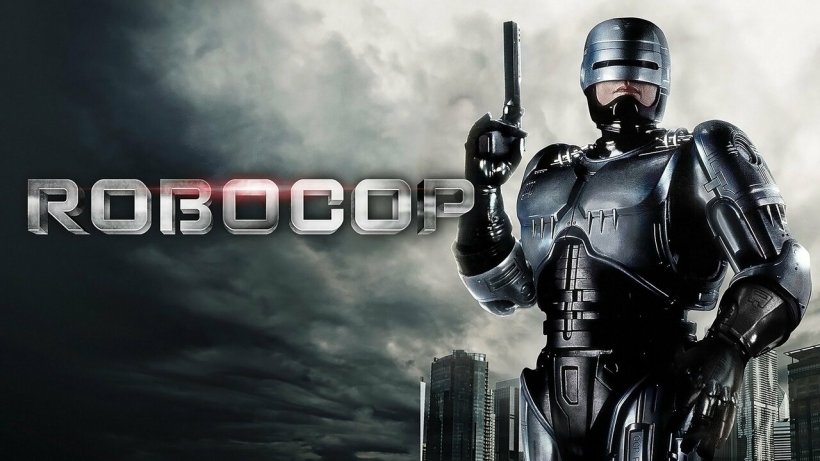
4. Robocop
In the summer of 1987, Robocop hit theaters and was considered a financial success as it grossed just over $53 million. Many reviewers held it up as a “clever action film with deeper philosophical messages and satire. At the same time, it received many negative reviews over the extreme violence it portrayed, that violence was systemic to the society in the movie and how humanity had devolved as it progress into the future and criminals ran almost everything. Peter Weller’s character, Alex Murphy, works as a Detroit police office. Murphy still believes in the law but is taken captive by the villainous forces of a Detroit crime boss. He is tortured and murdered before his body is given to the Omni Corporation for a new directive. Omni Corp has been tasked with taking over the crumbling police department in order to save the city and create the program that makes Murphy into Robocop.
Video Glasses
Bare with me as this one is a little less noticeable than many of the others. Once Alex Murphy becomes Robocop, he interfaces with the world much like a computer does. For instance, his visor allows him to receive details about the environment he is in and suspect information. Essentially it is plugged into anything that has internet connection and can ascertain the information he needs to complete his job. In 2013, we saw the first iteration of a product that offered similar connections but for the average user, welcome to the world Google Glass. This short lived technology gave users the ability to have a camera and a computer screen right in front of their eyes. They could take video calls, interact with the web, and take pictures, all without others realizing what was happening. This technology, at the time, proved to have some glaring security issues and was mothballed. However, we are seeing other companies take it to next levels with things like the Oculus and Apple’s new Vision Pro headset.
Media Controlling the masses
Robocop showed a world where crime and lack or resources forced the government to hide when crime bosses took over. They were simply outmatched to be able to handle it. This is where technology came into play and using media to spin stories. This is hardly new, but with recent years we are starting to see just how much of the world is created for us by means of new reports. Segments are spun to make us feel fear about growing threats and at the same time are used to bring us together to support new changes. It all depends on how the media spins it. At this time, thankfully, the media or those that control it, have not gotten to the point of controlling society, totally. Not yet anyway.
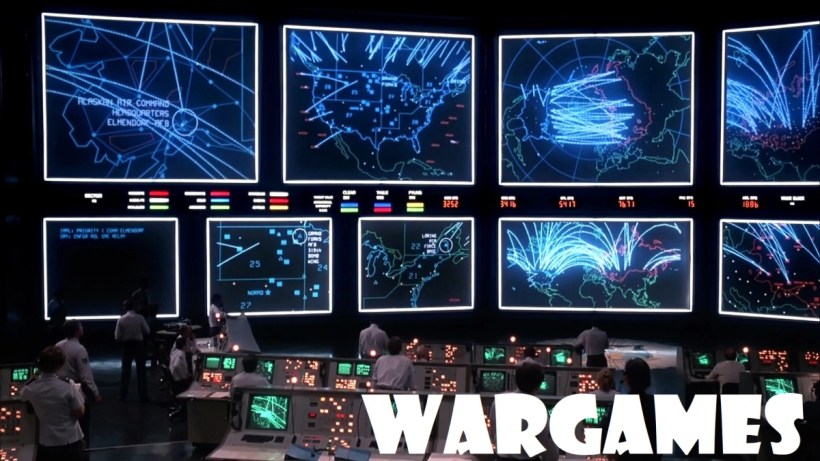
5.Wargames
Let me start this section by saying that just about every movie ever made that shows hackers and how they do what they do are wrong. The movie Hackers, for instance, is shown having the main characters covered in a projection like display from their computer screens. Or that hacking a massive corporation computer can be done from a phone booth in Grand Central Station in a matter of minutes. Wargames had similar issues in that a computer program was able to communicate with the star, Matthew Broderick, as if they were in the same room together. Also, it shows how easily Broderick was able to hack into a top secret government facility’s wargame program and make it think the world was ending. That being said, there were a lot of things in that movie that have come to pass. The biggest is how interconnected we are to everything. The world is run on the internet, believe it or not.
Hackers are everywhere
Wargames showed one glaring thing that has become true, even before it became a commonplace. The term hacker has been around for a very long time and with the invention of the internet, cyber hackers became a reality. In the beginning, most of what was done was very innocuous. In fact, I remember days when my friends and I had a list of phone numbers we could call that had computer modems answering the other end. We were able to easily log into things like small airport towers, the weather bureau, and a few colleges. We were able to poke around in their systems and see things that most people, other than their users, never would. Today, that kind of hacking has become a much larger issue with far more dangerous implications.
Cyber warfare
Building off the early hacker idea, the movie escalated it to cyber warfare. Granted, in the movie that cyber threat was coming from the computer itself, whereas today cyber warfare is waged by countries and armies spanning the world over. This movie was really ahead of its time but, at the time of its release, Ronald Reagan was so impressed with the premise and worried about its implications that he ordered extensive research into cyber-security. That research team concluded that the cyber threats in the movie were not so far out of the realm of possibility that Reagan then went on to sign a national security directive on telecommunications and automated information systems security. Talk about life imitating art.

Crystal Ball on VHS: Shocking 1980s Movie Predictions We’re Living Now
It can leave us with a feeling of great unease when we see reality coming very close to entertainment that is meant to make us think and question. In the days when books were left to fuel our imagination and then compare to reality, there seemed to be a larger divide between the two. But as motion pictures became integral to our lives, we saw those ‘predictions’ come to live in vivid color in ten foot tall images on screen in darkened theaters. It was then that we started the correlation that the media is predicting the future. We are very quickly approaching the event horizon of which is more true, life imitating art or art imitating life. It often seems that movies are showcasing technology as just beyond where we are when we actually have had it in operation for quite some time.
Do you feel that movies and televisions are predicting what may come from our society if we keep on our current path or is it simply showing us what is already happening and we think it is more than that? Do you feel that technology has become too intrusive in our lives adn that we need to scale back so we dont reach the places we see in movies? Let me know in the comments below. Were any of these movies mentioned favorites of your’s or did you dislike them for various reasons. Hit that comment section and let me know. Thanks again for taking the time to be a part of the GayintheCLE community. We simply cannot do it without each and everyone of you.


 Gay in the CLE