
I started my love of running in the summer of 2021. To learn more about that story, check out Running to Save My Life. Since that beginning, it has been a whirlwind of lessons. Learning how to run, how to breathe, how to fuel before, and after, that is only touching the surface of what I have had to learn. It was and is A LOT. But I absolutely love running.
My favorite places to run are trails during spring, and in to early fall. Running in winter? Yeah, not so much. The biggest reason behind it comes from all of the weight I have lost and regulating body temperature. I now stay cold more than I do warm, so running in the winter months is definitely less than ideal. This year I broke down and bought a treadmill, but it is definitely not as fun as running a trail or road with the wind in your face and the sounds of nature. So what do we do in situations like this? We adapt.
Today, I want to share with you 7 TIps to Keep You Running in the Cold. We will touch on proper gear, what temperatures you should avoid, hydration and more. Hopefully, this will give you a little more knowledge and encouragement if you are trying to find ways to get out and hit the pavement for a winter run.
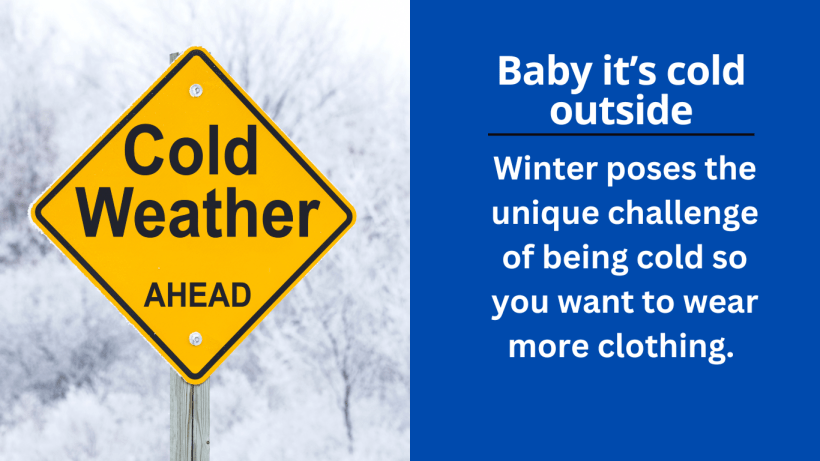
Baby it’s cold outside
Let’s face it, if you are a runner then you no doubt prefer to run when it is warmer outside. Since running causes you to heat up very quickly, spring and summer can allow you to wear as minimal clothing as possible to ensure that you are staying cool out on your runs. Winter poses the unique challenge of being cold so you want to wear more clothing. Unfortunately, as you are running, you still get hot and then you are stuck overheating with all of the clothing you are wearing.
Then there is the issue with weather in winter time. The weather changes all the time. In the spring and summer, you may get a pop up shower when you are out running and that barely slows us down. We stare straight ahead and keep our legs pumping. The good part is that it can offer a break from the heat. WInter weather changes can be problematic. You could be out on a run and it starts sleeting when you are nowhere near your starting point. A heavy snowstorm could roll up and your visibility be reduced to zero. Stopping for any of these conditions means that your body temperature is going to drop, and rather quickly, opening you up to a world of issues. That is if you are not properly prepared.
But with a little planning, weather and cold will no longer be obstacles but added fun along the way.

Benefits of winter running
Running in winter can give you a real confidence boost, it shows you are out there killing it, still! And, winter running can leave you feeling rejuvenated. Sticking to your training in the winter months has the added benefit of keeping you accountable for your training. It keeps you out there on the streets or trails during those darker and colder months, the time when most people reduce outside activity.
Science is showing us that running has many bodily impacts, as well as how it can benefit your mental health. And one of the things that often make runners even more happy is when they don’t have to share a trail with walkers, hikers, dog walkers, and etc. The winter months can allow your favorite trails to be your own little wonderland.
There is also the fortitude it brings. If you are a person who competes as a runner, you are well aware that most marathons do not cancel the event simply because the weather is a little off. Training during the various seasons and weather conditions trains your body to deal with them and keep going. So even if you sign up for some marathon and you get there and it’s cold or possibly snowing, your body will just drop into gear and do what it already knows how to do. Run in the cold.
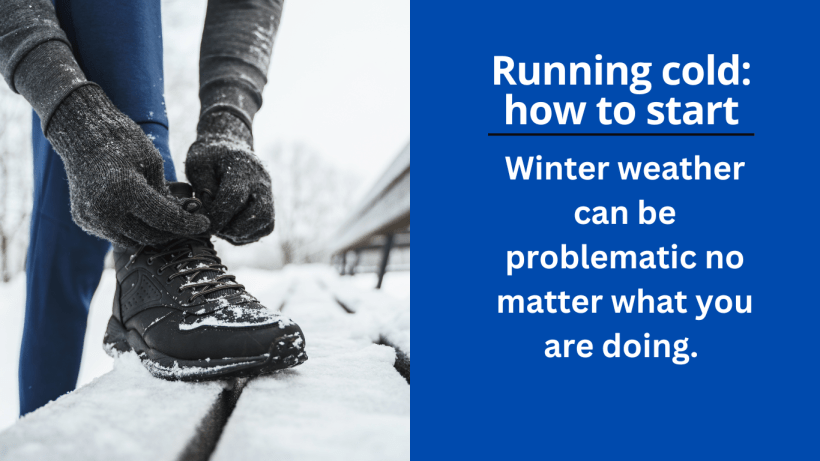
Running cold: how to start
You might be thinking, with that intro, that running in the cold is not for you. It’s too complicated, will probably involve spending a lot of money on new gear, and just not worth dealing with the temps. Would it surprise you that you are already mostly ready to start running in the cold? Running is running, no matter what time of year it is. If you have been running for any length of time, then you already have the biggest part done. So, approaching winter running in the same manner will ensure your ability to adapt.
Let’s review the basics.
Start slowly – Just like any warm up for a run, it is best to start slow. Start with a walk, you don’t need to focus on pace or distance. This is only to warm you up. From there you can run into some of your stretching routines. This is more to get your body and muscles warmed up and allow your breathing to adjust to the colder temperatures.
Attainable goals – Running in some temperatures is a lot harder than your typical warm weather runs. It could be best to set smaller goals first. Maybe start our first run and go for about fifteen minutes. Once you feel good with this, you can start increasing it by 5 or 10 minutes.
Stay weather focused – Winter weather can be problematic no matter what you are doing. Running adds the unique challenge of you being out in the elements with no real cover. If you get stranded, your body temperature becomes a factor quick. Make sure to check the weather before you head out. You may not want to be running in subzero or blizzard conditions, They offer their own challenges, even for experienced runners. Visibility is another important factor, you need to be seen to ensure motorists don’t hit you or if something happens, you can be found. The easiest thing to remember is to look for days where the temperatures are moderate and no storms on the radar.
Some simple guidelines. If it is below-10 F it is probably best to stay indoors. It can take about 30 minutes for tissue injury to happen. Windchill causes it to be much colder than the stated temperature, hint – if it is 30 degrees F and you have wind speed of 10MPH, then the temp will feel like 20 degrees. Breathing also becomes a challenge in colder temperatures. You will get that dreaded burning sensation in your lungs a lot quicker and if you have asthma, it can make it feel much worse
Exit strategy – this means know where you are going, how long it will take you, and when you will be back. Make sure you also let someone know about your plans, should anything go wrong. This also gives you the ability to have someone able to pick you up, should conditions turn bad. Be sure to take into account temperature, condition of trails, sidewalks, and roads for ice. Remember, if you feel unsafe, for any reason, stay inside.
Plan based on time – this one combines gear with times of day. If you are the person who runs at 6pm everyday after work, during spring and summer. Remember that time may be dark and leave you in unsafe conditions. Pack a head lamp or light of some kind. Temperatures will be different, as well, so wear layers accordingly.

7 Tips to keep you running in the cold
WIth the basics behind us, now we can start with the 7 Tips to Keep You Running in the Cold. With these tips, it will ensure that you have the most comfortable, safe running in weather experience you can. The biggest thing to remember is to use your head. If you feel unsure about the run, for any reason, pack it in for the time being and see if weather conditions improve in an hour or so. Don’t beat yourself up if the weather isn’t on your side and you have to put off your run for the day. If all else fails, use that treadmill that is hanging out in the corner of your room.
1. Know your threshold for cold
You want to make sure that you limit your chances of exposure or frostbite, so be sure to dress appropriately for cold weather. Ease your way into it, to make sure you body warms up as much as needed for the temperature. That includes your joints. If you have arthritis, then you are familiar with how the cold can make you feel more stiff than a rusted hinge. Warm up outside so your body adapts better to the temp.
Wear layers so you can stay warm but adjust as needed. Be mindful of weather conditions and dropping temps, you don’t want to risk hypothermia or exposure. If it is too cold for you, maybe hit up your gym instead or use your treadmill.
2. Layering is your friend
I have mentioned this a couple times in this article already, so let’s discuss it more specifically. There is no one and done formula for layering, it all depends on you and your tolerance to temperatures. Finding the proper layers for the temperatures you are running in will help you manage sweat while you are keeping warm. You are going to sweat, that cannot be avoided. Keeping that to a minimum will help ensure you stay warmer longer. The first time an icy cold wind hits your sweat soaked layers, you will know cold on a whole new level. This will need the proper mixing of layers and pace to help you mitigate how much you are sweating. Be prepared to remove and reapply clothing layers as conditions dictate.
To start, you will want to wear body layers that are easy to remove or put on. Base layer should be material that will wick away sweat and insulate you. A perfect example of this would be a merino wool shirt. But, merino can be pricey. There are plenty of lower cost and great options out there. Check out this review of great base layers, if you need help. Next is your mid-layer. This should be something light but somewhat insulating. A good recommendation would be a light fleece shirt of gilet(vest), you still want good mobility of your arms though, Also, if there is any precipitation in the forecast, maybe some kind of light shell that can keep you dry. For your legs, depending on the temperature and your acclimation to it, you will probably want to opt for a pair of lightly insulated running tights or running pants. Light brushed internal fabric will be the most beneficial. Dont skimp on socks, you would be surprised how much a great pair of socks will go in keeping you warm. Increase the length to mid calf of calf height and look for good merino wool. Keeps you warm and wicks moisture, all while preventing odors. Lastly, your shoes can be the same tried and true you have worn all year, with some exceptions. But, if you are wanting something a bit more waterproof then you will need to look for Gore-Tex lined shoes.
3.Motivation for the dark and cold times
One of the biggest challenges many runners face is maintaining motivation to run. It is hard work, running. Running the same trails causes you to not pay attention and that can lead to injuries. Even life just happens to get in the way and we miss a day or two. Combine that with the cold temperatures of winter and your motivation really drags. So, how can you combat that?
Remember, first and foremost, you are still running and that allows you to be out there with nature and a clear head. That is a HUGE motivation for me. If you have favorite trails you frequent, look forward to the fact that they will be less crowded since it is cold out.
One of the best motivators out there is that if you keep running during winter, you wont have to start all over with the entry phase of getting back into your running groove, when it gets warm. You have already been out there and your conditioning is still up, so you have that little advantage in spring.
4.You still need to hydrate
When we think of hydration, what comes to mind first is running in those hot summer conditions. We know our bodies are sweating out those valuable nutrients and water, so we plan by staying hydrated during our runs. The same thing needs to follow into winter running. The problem is drinking ice cold water when it is icy cold outside doesn’t seem overly desirable. It is important as the weather is often drier and there is the fact that your body expends more moisture breathing in colder months, thanks to increased evaporation in the cold dry air.
Be mindful of temperature. If it is below freezing, carrying a water bladder in a backpack is ill advised, as it may freeze, Stick to bottles. You can even add a layer of hose over the bottle or bladder to help reduce the possibility of freezing. Try pre-hydarating, too. This means drinking a cup of warm water before you head out the door. You can also drink a warm sports drink or tea. Just as important is re-hydrating when you get back from your run.
5.Slow and steady wins the race
When its warmer, many of us focus on increasing our speed and distance. It could be in preparation for a race or just to get better running. However, winter months, due to cold conditions, are better suited to building up those bases we need to improve. Like our aerobic base or our lactate threshold. When you are out running in the winter, snow and ice on your path will definitely slow you down. Take that as a cue and opt for a slow and shorter pace. This will allow you to accommodate conditions better but also allow you to work on breathing and pace to ensure you are working to make your bases better.
6.Winter accessories
Winter offers its own unique challenges to running. You now have to factor in snow and ice, as well as, reduced hours of light. And let us not forget the temperatures. This is where having a few additional accessories in your arsenal will be beneficial. When it comes to traction, you may need to consider some kind of ice traction device. Using shoes that have good grip in ice, mud, and water will be helpful. Take a few moments to survey the area you want to run to see what conditions you are facing will also allow you to prepare better. If you still plan to run, then thinking about running crampons may be helpful. These metal spikes will ensure you retain traction in all kinds of conditions.
If you are the runner that prefers early morning or night runs, then visibility is a factor. Make sure you have reflective striping on your running gear. Carry a headlamp. I can’t stress this enough, use a headlamp. Running with a light in your hand can be problematic. You may throw it, drop it, or not give enough light to the area you are running in and that can lead to injuries. If you are running during the day, make sure you pack your sunglasses with adequate UV coatings. The snow makes the sun appear brighter and its also reflective. This all can cause more eye strain and allow you to miss something important on your run.
Cold temperatures can do a number on the human body in a very short amount of time. I mentioned above that about 30 minutes out in cold temperatures can cause tissue damage. Remember to wear gloves to keep your hands warm. Use a beanie or headband to keep your head warm. And a neck gaiter to cover your face.
7.Post run care
Post or after run care is as important as your pre run care, even more so in colder weather. As soon as you get home, from your run, change out of your wet clothing. This will eliminate the change of you getting a chill. As your body starts to cool down, after your run, those sweat soaked clothes can feel like sheets of ice wrapped around you. If, after that, you are still having trouble warming up, consider a hot beverage or a shower or bath. All of those things will start to raise your body’s temperature and ensure you have after run issues.

Hazy shade of winter
There you have it 7 Tips to Keep You Running in the Cold. When winter arrives, you don’t have to stop running outside until spring gets here. You just have to know how to plan properly for it. Running in the winter can be a challenge but if you take these few steps to prepare beforehand, you will ensure that you have a better cold running experience. Wearing the proper layers, knowing the weather before you head out, and what your tolerance is will work to keep you safe while you are out on the trails.
What do you think? Were there any tips you had not thought of, before? Maybe you have developed your own tried and true methods of running in the colder months, what are some of your top tips? Or maybe you are planning your first winter running training, has this helped remove some of the fear and anxiety you may have had. Let me know in the comments below. I hope you found this article useful in your running lifestyle.


 Gay in the CLE