
Technology has come a long way since the 70s and 80s, but there are some gadgets from that era that we can’t help but get nostalgic over. From cassette tapes to floppy disks, there were plenty of inventions that made our lives easier back then. But what about the gadgets that didn’t quite make it into the mainstream? In this post, we’re going to take a trip down memory lane and remember 9 forgotten gadgets of the 70s and 80s. Some of them were quirky, some were innovative, and some were just plain weird. Nonetheless, these gadgets all had something special that makes them worth remembering. So, sit back and relax as we take a trip back in time and explore some of the most fascinating and forgotten pieces of technology from the past.

Gadgets of the 70s and 80s
The 70s and 80s were a time of great innovation and change, especially in the world of gadgets and technology. It was a time when the home computer was just starting to become popular, when the Walkman was revolutionizing music on the go, and when video games were first starting to take off.
However, not all gadgets stood the test of time. There were many that captured the imagination of people at the time, but then quickly fell out of favor and were forgotten. In this article, we will take a trip down memory lane and explore 10 forgotten gadgets of the 70s and 80s.
From the quirky to the cool, these gadgets were all the rage at one point, but for one reason or another, they just didn’t stick around. So, sit back, relax and join us as we take a stroll through the technological relics of the past, and remember the gadgets that once captured our hearts and minds.
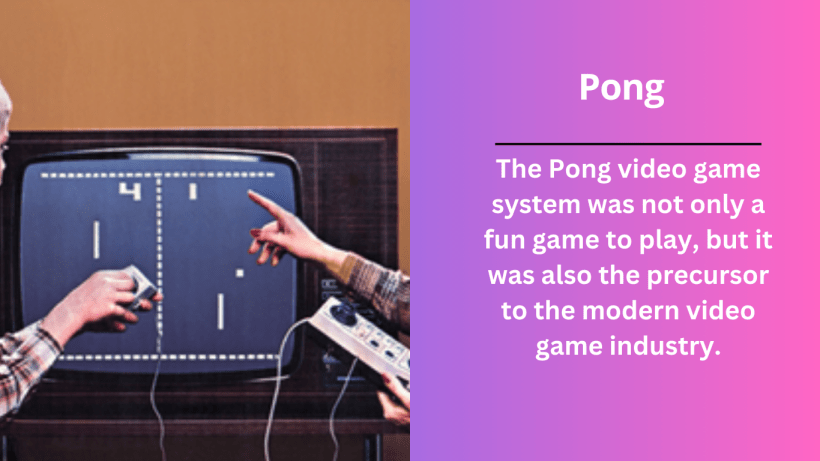
1. The Pong Video Game System
The Pong video game system was one of the most popular gadgets of the 70s and 80s. It was released by Atari in 1972 and was the first home video game console. Pong was a simple game that simulated table tennis and was played on a black and white television. The console consisted of a plastic case, two knobs, a button, and a few electronic components. The game was simple to play, just move the knob to move the paddle and hit the ball back to your opponent.
Pong was an instant hit and was one of the most popular gadgets of the time. It was the perfect way to spend an evening with friends and family. The game was so popular that it spawned many clones and knock-offs. The Pong video game system was not only a fun game to play, but it was also the precursor to the modern video game industry.
Despite its simplicity, Pong was a groundbreaking gadget that paved the way for future video game consoles. It was the start of a revolution that would change the way we play and interact with video games forever. Today, Pong is a nostalgic reminder of simpler times and is still enjoyed by many retro gamers around the world.

2. 8-Track Tapes
Ah, the 8-track tape. Once the pinnacle of music technology in the 1970s, it now serves as a nostalgic reminder of a bygone era.
The 8-track tape was a magnetic tape cartridge that was widely popular for music playback in the 1970s. It was the first format to offer portable music and was found in cars, homes, and everywhere in between. The tapes were easy to use, with the music divided into four stereo tracks, allowing for continuous play for up to 90 minutes.
However, the 8-track tape format was not without its flaws. The tapes were bulky and prone to jamming, with the tracks often fading or losing sound quality as they aged. Additionally, the tapes were difficult to rewind or fast forward, often resulting in the music skipping or repeating.
Despite its flaws, the 8-track tape remains a beloved relic of the 1970s, with collectors and enthusiasts still seeking out rare tapes and players. Whether it’s the nostalgia of a bygone era or the unique sound quality of the tapes, the 8-track tape will always hold a special place in the hearts of music lovers everywhere.

3. The Boombox
The boombox was an iconic gadget of the 70s and 80s that became synonymous with hip hop and street culture. These portable music players were often carried on the shoulder, providing music for individuals or groups on the go.
The boombox was more than just a music player, it was a symbol of style and status. The bigger and louder the boombox, the more impressive it was. Many boomboxes featured additional features such as cassette players, FM radios, and equalizers, making them a versatile device for music lovers.
While the boombox lost its popularity in the 90s with the introduction of the Walkman and later, the iPod, it remains an iconic gadget of its time. Today, boomboxes are making a comeback with modern versions that combine the classic design with modern features like Bluetooth connectivity and smartphone compatibility.

4. The Polaroid Camera
The Polaroid camera was a game-changer in the world of photography. It allowed people to take a picture and have a printed copy in their hands within minutes. No more waiting days for film to be developed and printed.
These cameras were incredibly popular in the 70s and 80s, and for good reason. They were easy to use and provided instant gratification. However, with the advent of digital cameras and smartphones, the Polaroid camera became less popular and was eventually phased out of production.

5. Floppy Disks
Before USB drives and cloud storage, we relied on the floppy disk. These flexible squares of magnetic goodness stored all our important files, games, and even some legendary mixtapes. They were delicate, unreliable, and oh so satisfying when they actually worked.
These little bits of tech came in 8, 5 ¼, and 3 ½ inch varieties. In order to load software, of any kind, onto a computer, it required you to insert one into a floppy drive, wait for it to fully install (slowly, mind you) then signal for you to remove it and install the next one. The only good part about the 8 and 5 1/4 ” drives were that you could make the double sided, with only a slight modification to the actual disk.
6. VHS and Betamax
VHS tapes were also the precursor to the DVD. They were the first home video format that allowed people to watch movies in their own homes. And while the quality of VHS tapes was not as good as DVDs or Blu-rays, they were revolutionary for their time.
However, as technology continued to advance, VHS tapes became less and less popular. They were eventually replaced by DVDs, which were smaller, had better picture quality, and didn’t require rewinding. And now, with streaming services like Netflix and Hulu, physical media is all but dead.
Betamax was the creation of Sony and was launched in 1975. It was the first domestic video cassette format to be released and in many ways, it was ahead of its time. It had better quality than VHS, was smaller and more portable, and had a better audio track. However, it was more expensive than VHS and could only hold up to an hour of recording time, compared to VHS’s two hours.
Despite the advantages, Betamax lost out to VHS in the format war. One of the main reasons for this was that VHS had a longer recording time, which was more convenient for recording movies and TV shows. VHS also had a lower cost, which made it more attractive to consumers.

7. The Rotary Phone
The rotary phone, also known as the dial phone, was a staple of households in the 70s and 80s. It was a simpler time when technology wasn’t as advanced as it is today and the rotary phone was the go-to means of communication. This device was designed with a circular dial on the front that had numbers arranged in a clockwise direction. To make a call, you had to rotate the dial to enter the phone number you wanted to dial. Each number had a corresponding click sound, and it would take a few seconds to complete a full rotation to dial a number.
The rotary phone was a sturdy and reliable gadget that could withstand wear and tear. It was also popular because it didn’t require an electricity source to function. However, as technology advanced and touch-tone phones were introduced, the rotary phone slowly became obsolete. Although it may seem outdated now, it is still a nostalgic device that evokes memories of a simpler time.

8. The Typewriter
The typewriter was once the primary tool of writers, office workers, and students for decades before the advent of computers and word processors. It was a powerful machine that revolutionized the way people wrote and communicated.
The sound of the keys being struck and the ink ribbon moving back and forth, creating letters on the paper, was a familiar sound in many homes and offices. It was a time-consuming process, but it was the only way to produce professional-looking documents.
The typewriter was a workhorse of its time and was manufactured in different models for different purposes. There were electric and manual typewriters, portable and desktop models, and even special typewriters for braille and stenography.
The typewriter may have been forgotten, but its impact on the world of communication cannot be understated. It paved the way for modern writing technology and has left a lasting legacy for generations to come.
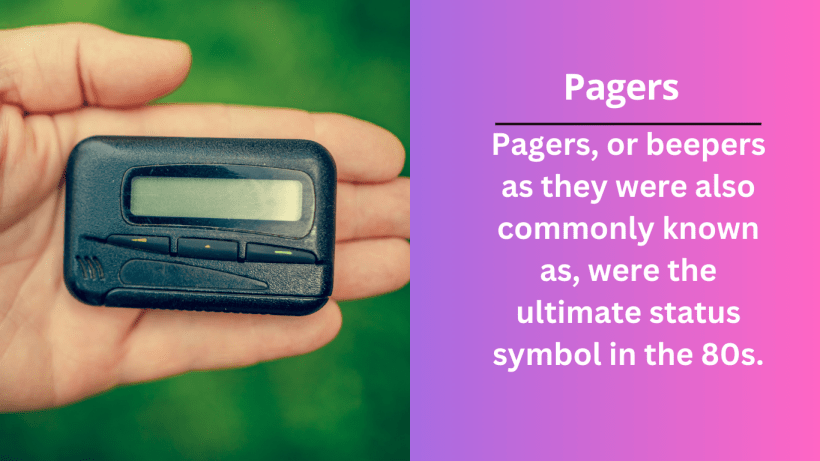
9. Pagers
Pagers, or beepers as they were also commonly known as, were the ultimate status symbol in the 80s. If you had a pager, you were considered to be on the cutting edge of technology. Pagers were the original text messaging devices and allowed users to send short, numeric messages to each other.
The concept was simple – someone would call your pager number and leave you a message. The message would be displayed on your pager’s screen, allowing you to call them back or respond with a predefined message such as “call me back” or “meet me here.”Those cryptic numeric codes meant something to you, and only you. Oh, the suspense of waiting to find a payphone to return a call!
Pagers removed our leashes from our house phone and allowed us to wander about our day to day and still be reached by anyone that needed us. If you were a regular person with one, it usually meant your parents or spouse had the ability to message you anywhere.
The value of remembering the past
Nostalgia is a powerful force that can evoke a wide range of emotions. It’s a feeling that can bring us back to a simpler time, a time when life was less complicated, and everything seemed possible. The 70s and 80s were decades that were filled with changes, both in terms of technology and social norms. Looking back, it’s easy to see how much has changed since then, but it’s also important to remember the value of the past.
Looking back at these 10 forgotten gadgets of the 70s and 80s, it’s clear how much technology has evolved over the decades. These gadgets may have been considered cutting edge at the time, but many of them have now been replaced by newer, more advanced versions.
What about you, what tech do you remember that has seemed to have slipped from the annals of history? What things do you wish you still had access to? Let me know in the comments below.


 Gay in the CLE
I remember the Sharp Wizard managed all of my family/friends contact information starting in the early 1990s.
I was so glad when I was able to migrate all of that data to a phone in the pre-iPhone years of the 2000s.
I think that the device was a palm pilot-ish Kyocera before moving on to the Blackberry — then finally an iPhone that added portable music to the functionality. Great memories!
LikeLiked by 1 person
that’s one I don’t remember. I will have to look into it
LikeLike