
Greetings, aspiring runners! You’re about to embark on a journey that’ll not only strengthen your body but also empower your mind. Running may seem intimidating, but fear not – I’m here to guide you through the wonderful world of slow training. Slow and steady wins the race, and in this article, we’ll delve into why running slow is the secret sauce for beginners, how to start your slow training journey, and the incredible benefits that await you. Lace up those sneakers and let’s hit the road!
Why run slow?
Picture this: you’re at the starting line of a marathon, heart pounding with excitement. But wait, there’s no need to sprint like Usain Bolt right from the get-go. Slow training is your passport to building a strong foundation, reducing the risk of injury, and ensuring that your love affair with running endures.
But why should you run slow, you might ask? It seems counterintuitive, running sounds like something that should be as fast as you can. But there are great benefits to running slow. Running slow can help lower instances of injury, help increase your aerobic base, help you run faster, and many more. This is the one thing that most beginner runners are not taught or understand fully. As a beginning runner, I fell into this category and it has taken a year to start to slow down so I can improve.
Running slower can help you keep better track of your running form, to make sure your footfalls are more neutral, that you aren’t bouncing up and down too much, or that you are not twisting at your wait. All fo these thing will help reduce the chance of overuse and injuries in general. Running slow also allows you to work on breath work, to ensure you are breathing correctly and efficiently. The more oxygen in your system, the more fuel you are providing to your body. Lastly, training slow allows you to build up muscle and become faster, especially when you need that extra burst.
But what does it mean and what are the benefits?

What is running slow and its benefits?
Running slow will be different for every person, just like running is. But, the essence of how to run slowly means that you should be able to carry on a conversation with someone while running. Obviously, if you are sprinting that can’t happen and means you are not running slow. But, how can you figure this out? Here are a couple examples
Scenario 1
Let’s say when you go out to run a 5k (just over 3 miles), you clock the ending at 30 minutes. That translates to about a 9 minute and 40 second mile. Your easy run should fall somewhere around the 12 minute mark.
Scenario 2
If you are the runner that tracks heart rate instead of minutes, a gentle pace should be somewhere between 110 and 140 beats per minute (BPM).
These are not hard and fast numbers, just guidelines to show you how to figure your slow run out or gain an idea where to start. When you start doing this, you will start focusing on how slow it is and that you are now the slowest runner out there. That is rubbish. First off, you should not be comparing yourself to other runners, there are far too many variables to consider when doing this. Even worse, if you feel you are still slow when you are running your fastest then you definitely aren’t going slow enough at the right times.
Here are seven benefits running slow does for you:
- Injury Prevention: Slow training gives your muscles, ligaments, and tendons time to adapt, reducing the risk of injuries that can come from pushing too hard, too soon.
- Build Endurance: As you gradually increase your running time, your endurance will skyrocket. Suddenly, those hills won’t seem so daunting anymore.
- Mental Clarity: Running slow is like meditation on the move. It’s a chance to clear your mind, solve problems, and channel your inner zen.
- Long-Term Love for Running: Slow training helps you fall in love with the rhythm of running. It’s a relationship that grows over time, leading to a lifelong commitment to the sport.
- Strength: Strengthens muscles in legs, torso, and arms and promotes a more efficient running form
- Overall Improvements: Trains cardio, respiratory, and muscular systems to work more efficiently.
- Body training: Increases the quantity and size of mitochondria, improving oxygen use and glycogen stores.
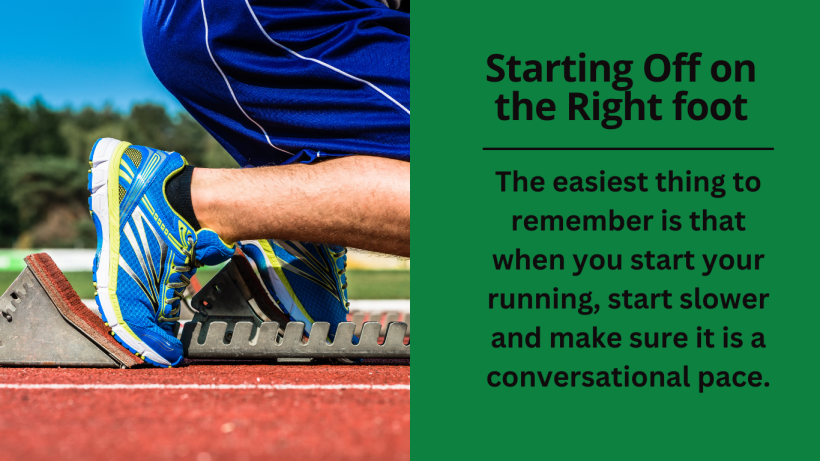
Starting Off on the Right Foot
If you are reading this and you have been running for a while, you may wonder how you can slow it down enough to get these benefits. Or maybe you are just starting and you are wanting to make sure you start on the right foot. (Bad pun, sorry)
The easiest thing to remember is that when you start your running, start slower and make sure it is a conversational pace. If you have a running partner, this is easier to accomplish. If you run solo, just try talking during your run. Just a few short sentences is all you need, do they come easily or more like you are gasping for air to do it. If you are gasping, you aren’t going slow enough, You can also end your work out with a five minute slow run cycle. You can slow it as much as possible, trying to get your heart rate to or under 100 bpm.
Most running trainers will tell you to keep your hard workouts to a minimum each week. Think somewhere between two to four times. If you only run three times a week, then make sure at least one of them is a slower run.
Here are some facts to consider. If you normally have a high weekly mileage, it is best to vary your distances. Make at least one a short, easy run, less than 45 mins. This type of easy run allows your muscles to flush waste from them and help build strength. A medium distance run (between 45-90 mins) at a slow place will allow your body to build strength with less stress. It will also help your body transfer and use oxygen more. A long solo run (90 minutes and above) will allow the body to improve glycogen storage and increase its ability to handle the discomfort of long runs. There is also the added benefit that a slower run can help burn fat more than just carbs and muscle.
How can you start your slow run sessions?
- Warm-Up Rituals: Begin each session with a dynamic warm-up. Arm swings, leg swings, and light jogging get your muscles and joints primed for action.
- Pace Yourself: Slow training isn’t about torturing yourself; it’s about finding a pace that’s comfortable and sustainable. The talk test is your secret weapon – if you can hold a conversation while running, you’re nailing the slow pace.
- Embrace Walk-Run Intervals: Don’t be shy to include walking breaks. They’re your power naps on the road. Gradually decrease walking intervals as you gain confidence and stamina.
- Mind Your Form: Running is a dance between your body and the road. Stand tall, shoulders relaxed, and arms swinging naturally. Imagine there’s a string pulling you upwards from the top of your head.
- Stay Hydrated: Water is your best friend. Sip on it before, during, and after your run to keep your body happy and hydrated.
From basics to beyond
We have discussed why running slow is good for you and your training and we have also discussed how to start out your sessions running slow. Now it is time to implement these ideals into a running strategy, it’s time to create your running plan.
- Set Realistic Goals: Start with achievable goals. For instance, aim for 20-30 minutes of slow running three times a week.
- Progress Gradually: Add a few extra minutes to your run each week. Patience is key – Rome wasn’t built in a day, and neither is your running prowess.
- Rest and Recovery: Your body isn’t a machine. Give it the rest it deserves. Plan rest days between your running sessions to let your muscles repair and rejuvenate.
- Nutrition Matters: Fuel your body with a balanced diet that includes complex carbs, lean proteins, and healthy fats. Your runs will thank you!

Staying Motivated
Dear beginner runner, you’re setting off on a path that’s filled with excitement, challenges, and limitless potential. Slow training is your passport to a lifelong affair with running – one that’s marked by steady progress, unwavering determination, and a love for the journey itself. So lace up, take a deep breath, and embrace the power of running slow. Your tortoise-like dedication will bring you victories that even the fastest hares can’t fathom.
Remember, every journey has its ups and downs. When motivation wavers, remind yourself of why you started. Celebrate small victories – every step, every minute counts. Join a running group, set rewards for reaching milestones, and keep your playlist fresh to stay pumped.


 Gay in the CLE