
The “Gay Best Friend” is a societal cliche that has been perpetuated in pop culture for decades. It is a stereotype that implies that every woman needs a gay best friend to complete her life. This stereotype is not only offensive but also harmful. It reduces the complexities of LGBTQ+ individuals to a one-dimensional caricature. In this blog post, we will be deconstructing the myth of the “Gay Best Friend” and exploring the negative impact it has on the LGBTQ+ community. We’ll also be discussing how to move away from this stereotype and towards a more accurate representation of LGBTQ+ individuals in media and society. Join us as we delve into this important discussion and work towards creating a more inclusive and accepting world.
The origin of the “Gay Best Friend” stereotype
The “Gay Best Friend” stereotype has been around for a while and has been perpetuated by popular culture. It first appeared in movies and TV shows in the 1990s as a way to add a fun, sassy character to the cast. The character was usually a flamboyant and fashionable gay man who served as a sidekick to the female lead. He was portrayed as being witty, supportive, and non-threatening to the female lead and her relationships. This portrayal of gay men reinforced the idea that they were not interested in women romantically and were safe to be around.
The stereotype gained even more traction in the early 2000s when the term “GBF” (Gay Best Friend) was coined. The term was used to describe an actual friend who happened to be gay and was close to a female. However, it quickly became a label that some gay men felt they had to live up to in order to be accepted by their female friends. This led to the further commodification of gay men as accessories to heterosexual women.
While the “Gay Best Friend” stereotype may seem harmless on the surface, it reinforces harmful ideas about gender and sexuality. It suggests that gay men exist solely for the pleasure and entertainment of heterosexual women and perpetuates the idea that men and women cannot be friends without there being some kind of sexual tension. It is time to deconstruct this stereotype and move towards more nuanced and respectful representations of gay men in popular culture.
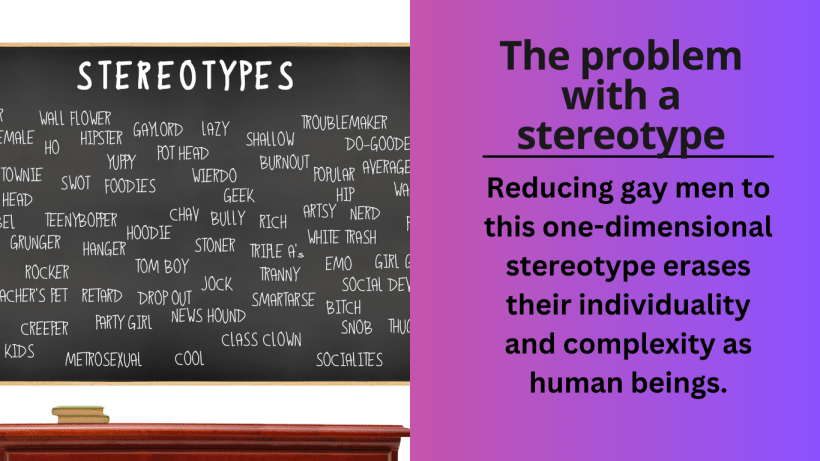
The problem with reducing gay men to a stereotype
The “gay best friend” stereotype is a common one in popular culture and media. It often portrays gay men as accessories to straight women, providing them with fashion advice, romantic counsel, and emotional support. While this trope can be seen as harmless or even positive, it actually reinforces harmful stereotypes and expectations about gay men.
Reducing gay men to this one-dimensional stereotype erases their individuality and complexity as human beings. It also reinforces the idea that gay men are only valuable insofar as they provide entertainment, emotional labor, or fashion expertise to straight women. This is not only harmful to gay men, but it also perpetuates the idea that straight women are entitled to these things from them.
Furthermore, the “gay best friend” stereotype often portrays gay men as effeminate, flamboyant, and overly emotional. This reinforces the idea that masculinity is the default and that anyone who deviates from that norm is lesser or abnormal. This can create an environment where gay men are subjected to ridicule, discrimination, and even violence for not conforming to traditional gender norms.
Reducing gay men to the “gay best friend” stereotype is harmful and reinforces harmful stereotypes and expectations about gay men. It is important to challenge and deconstruct this trope in order to create a more inclusive and accepting society.
The impact of the GBF stereotype on the LGBTQ+ community
The “Gay Best Friend” stereotype has been perpetuated in the media for years, but its impact on the LGBTQ+ community cannot be ignored. This stereotype has reduced the complexity of LGBTQ+ individuals to a stereotype that promotes tokenism, trivialization, and discrimination.
The GBF stereotype creates a perception that all LGBTQ+ individuals are the same, with similar characteristics, interests, and experiences. This blanket portrayal of LGBTQ+ individuals is harmful as it reduces their diversity and individuality. It also creates a perception that the only value of LGBTQ+ individuals is their ability to entertain, give fashion tips, and provide emotional support to their straight counterparts.
The GBF stereotype also promotes tokenism, which is the practice of only including one LGBTQ+ individual in a group as a means of fulfilling diversity requirements without acknowledging the diversity within the LGBTQ+ community. It also trivializes the struggles that the LGBTQ+ community faces such as discrimination, harassment, and violence. Additionally, it reinforces the idea that the LGBTQ+ community exists to serve and entertain the straight population, rather than being a diverse and complex community in its own right.
It’s essential to deconstruct the GBF stereotype to promote understanding and respect for the LGBTQ+ community. By acknowledging the diversity and complexity of LGBTQ+ individuals and their experiences, we can create a more accepting and inclusive society.
How the GBF stereotype perpetuates harmful gender norms
The “Gay Best Friend” stereotype is not only harmful to the LGBTQ+ community but also perpetuates harmful gender norms. The stereotype often portrays gay men as accessories to heterosexual women, existing solely to serve their needs and provide emotional support.
This reinforces the idea that women need a man, even if he is gay, to complete them and that men should only fulfill specific roles in a woman’s life. It reinforces the idea that men should be emotionally unavailable and that women are inherently emotional.
This stereotype also erases the identities of LGBTQ+ individuals, reducing them to a single aspect of their personality and negating the complexities of their lives. This can lead to further discrimination and marginalization of the community.
Furthermore, the “Gay Best Friend” stereotype has been used in popular culture to justify homophobia and perpetuate negative stereotypes about gay men, such as the idea that they are promiscuous or shallow.
It is crucial to recognize and challenge harmful gender norms and stereotypes in order to create a more inclusive and equal society. By breaking down the “Gay Best Friend” stereotype, we can begin to create more authentic and nuanced representations of LGBTQ+ individuals, which can lead to greater understanding and acceptance.
How to be an ally and avoid perpetuating the GBF stereotype
Being an ally means being aware of how certain actions or words can contribute to harmful stereotypes and taking steps to avoid perpetuating them. The “Gay Best Friend” stereotype is one that has been harmful to the LGBTQ+ community for years, and it’s important to be mindful of how we talk about and treat our LGBTQ+ friends.
One way to be an ally is to avoid tokenizing or objectifying LGBTQ+ individuals. Referring to someone as your “GBF ” or “gay best friend” reduces them to a stereotype and can make them feel like they are only valued for their sexuality. Instead, treat them as a person first and foremost, and recognize their sexuality as just one part of their identity.
Another way to be an ally is to educate yourself and others on the harmful effects of stereotypes like the “GBF” trope. Take the time to learn about the experiences of LGBTQ+ individuals and the challenges they face, and share this knowledge with those around you. By speaking out against harmful stereotypes and advocating for change, you can help create a more inclusive and accepting society for all people.
Moving beyond the GBF stereotype to embrace authentic, complex relationships.
The concept of the “Gay Best Friend” (GBF) has been a common trope in popular culture for many years. It’s often portrayed as a straight woman’s accessory, a flamboyant and sassy sidekick whose only purpose in the story is to provide comic relief and support her in her romantic pursuits. This stereotype not only reinforces harmful ideas about gender and sexuality but also oversimplifies and dehumanizes complex relationships.
To move beyond this damaging stereotype, we need to embrace authentic and complex relationships between people of all backgrounds. Whether you’re straight, gay, or anywhere in between, friendships should be based on mutual respect, shared interests, and a genuine connection. People are not accessories, and neither are their identities.
By embracing diverse friendships and acknowledging the nuance and complexity of relationships, we can break down harmful stereotypes and foster more meaningful connections. Instead of limiting ourselves to preconceptions and assumptions, let’s celebrate the diversity of the people around us and build friendships based on authenticity, compassion, and respect.
It takes a village
It is easy to get caught up in how things are portrayed on television. Seeing the idea of a gay best friend sounds good but we often don’t realize the damage or negative feelings that may cause the other person to experience. To get a better understanding of human interactions, it does take a village. Without diversity, we cannot always understand our own strengths and where we fit in.
What about you, have you ever been considered the GBF or maybe you have one? Was the a consensual agreement or did it just happen? What benefits do you both get out of it? Do you feel this term is outdated and needs to be removed? Perhaps you dont see an issue with it and like the idea of having or being a GBF. Let me know in the comments below. Thanks for reading


 Gay in the CLE
A woman I knew who had gay men as friends told me that the reason why she has them is because a gay man isn’t going to be sexually interested in her. Yes, those guys were usually quite effeminate and emotional, but I’ve seen more masculine guys being friends with women, too.
Does it denigrate gay men? I don’t know – I never thought about it in those terms but I’d say that “a lot of people” don’t give a lot of thought about a woman having gay men as friends since the more effeminate ones are… one of the girls and as one guy told me. Is it a stereotype? Eh, maybe but every stereotype has some basis in truth and we do tend to think that if one is like this, all are like this.
Nice writing.
LikeLike
It could also be the time in which we change the rhetoric. Stereotypes are easy and rarely beneficial, they are also usually put in place and held by those that do not fit into them. It becomes a way of pigeonholing people to fit boxes that makes it easier for others to process. It is up to each of us to decide what we will accept and wont and then let others know that, as well.
Thanks for the comment and glad you enjoyed the article. Always helpful knowing what people think about the subjects i bring up. Until next time. Have a great day!
LikeLiked by 1 person
When you understand why people behave this way, it… makes sense.
LikeLike