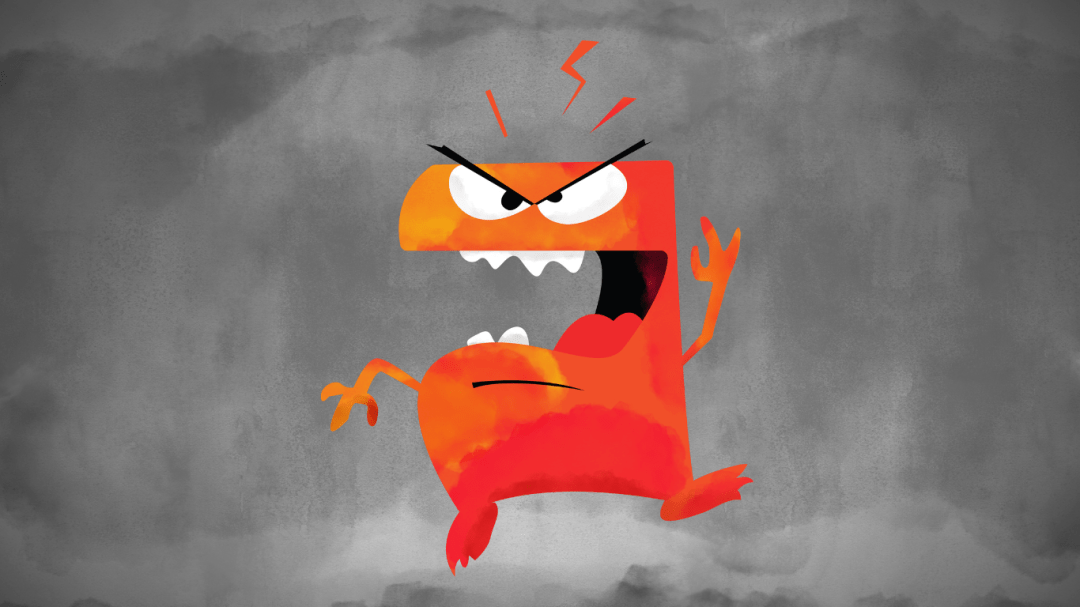
Picture it: You are talking with someone. They are saying something that isnt quite right, you wait til they are finished and causally correct the thing they said. They snap back at you that they know what they are talking about and why would you try to make them look stupid. They yell and seem very upset. You are confused as to what would have set them off. You are left confused and a little angry that they would react to you in such a way. You try to understand why they are mad at you. Does this sound familiar? Is there more to it than just the interaction you just had?
Anger is an often misunderstood emotion. Anger is caused by excessive distress and usually comes when you are mad at someone. It is also an emotion of dominance, it is necessary in nature to establish that one member of a group is the alpha or to keep other beings out of your territory. One thing is, we all seem to associate it with just being mad or defensive. Anger is actually a defense mechanism that comes into play to protect us. But as humans, we also often use anger when we are scared or feel threatened. It is a perfect way for us to hide vulnerability or what we may think others see as a weakness. For me, this is often my reason for being angry.

Exploring the misunderstood nature of anger
Anger is an emotion that often carries a negative connotation. It is often seen as destructive, uncontrollable, and something to be avoided at all costs. However, it is important to recognize that anger, like any other emotion, serves a purpose and can be harnessed for positive change.
Misconceptions surrounding anger stem from the belief that it is solely associated with aggression and hostility. While anger can certainly manifest in these ways, it also has the potential to be a catalyst for transformation, empowerment, and social justice.
To truly understand anger, we must delve deeper into its nature. Anger is a natural response to fear, perceived injustice, mistreatment, or violation of personal boundaries. It is an alarm bell signaling that something is amiss and requires attention. By ignoring or suppressing anger, we deny ourselves the opportunity to address the underlying issues causing it.
Instead of viewing anger as a destructive force, we can reframe it as a powerful tool for positive change. When channeled effectively, anger can motivate us to stand up against injustice, advocate for ourselves and others, and initiate meaningful transformations in our lives and society.
Throughout this blog post, we will explore the multifaceted nature of anger, debunking common misconceptions and providing insights into how we can harness its power for personal growth and societal progress. By embracing and understanding anger, we can unlock its potential to catalyze positive change and create a more just and equitable world.
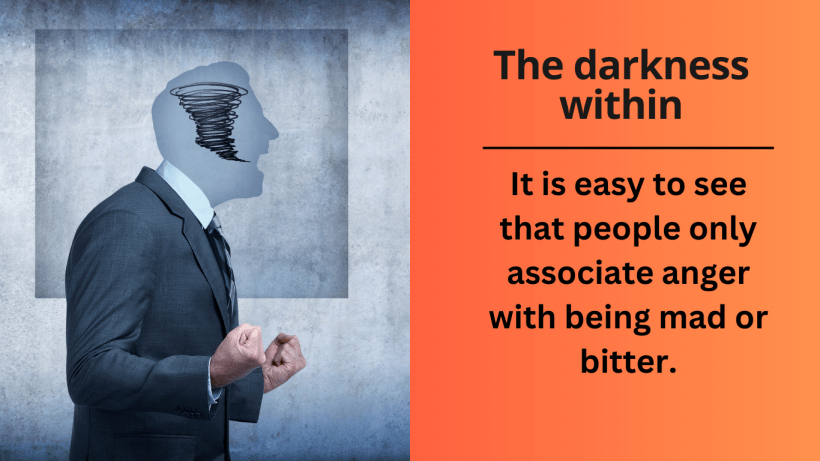
The darkness within
It is easy to see that people only associate anger with being mad or bitter, I encounter it everyday. It is a second nature response to me and definitely keeps people at a distance. I have used it for years and people have noticed. I hear the remarks made, often not secretive, behind hands when people dont think you can hear. For most of my life I accepted that maybe everyone was right and I was simply born to be a bitter person who finds it easier to lash out at people instead of welcoming them with open arms. Deep down, I knew it wasn’t completely correct, either.
That was until I started trying to understand my emotions…
I truly believe, and know, that I am not what my father had hoped having a son would be like. After I was born, I was moved to an incubator due to conditions that happened at the time of my birth. Very quickly, my parents found out I had other issues and we spent a lot of time, and money, going to various doctors to figure out what some of my issues were. After many tests, the multitude of things I was allergic to were shared with my family and I started a weekly visit to the doctors for allergy shots. As a kid, I was more likely to be found playing with dolls, carrying around my mother’s old purses as toys, and dressing up in her gown and singing into curling brushes. My father was appalled, to say the least.I struggled through my elementary years of school, because I hadn’t found out how I learned best. My grades were often low and my father let me know his disapproval over that, as well.
“How can you be so stupid.”
“You’re too girly.”
“You are not my son”
These comments and more were hurled at me all through my childhood. Then, one day, he simply started to interact with me less. At first it hurt and I couldn’t figure out what I was doing wrong that would upset him so much. Soon, that metastasized in me and turned to bitterness and anger. I then began to think if he saw these things in me, so did others. And from there, anger became a default response to situations.
I just couldn’t understand why.

The science of anger and fear
Anger is a powerful emotion that has intrigued humans for centuries. It can manifest in various ways, from mild annoyance to intense rage. While anger is often seen as a standalone emotion, research suggests that it frequently stems from a deeper and more primal emotion: fear.
Anger is a natural emotional response that typically arises in response to perceived threats or injustices. It can be triggered by a wide range of stimuli, such as conflicts, frustration, or feelings of being mistreated. From an evolutionary perspective, anger can be seen as an adaptive response that mobilizes the body for action, preparing individuals to defend themselves against potential threats.
While anger and fear may appear distinct, researchers have long recognized the interconnectedness between these two emotions. Fear is often considered the primary emotion from which anger emerges. When an individual encounters a threatening situation, fear is the initial emotional response, activating the body’s fight-or-flight response. However, in certain circumstances, fear can morph into anger as a secondary emotional reaction.
Perception plays a critical role in the transition from fear to anger. When individuals perceive a threat, their minds evaluate the situation based on their own beliefs, values, and past experiences. If they perceive the situation as unfair, unjust, or violating their boundaries, anger is likely to arise as a response. Essentially, anger can be viewed as a self-protective mechanism triggered by a perceived infringement on one’s well-being or a challenge to one’s sense of control.
At the core of anger lies the fear of losing something valuable or important. This fear can be rooted in a variety of concerns, including physical safety, personal autonomy, social status, or emotional well-being. For instance, anger can arise when someone feels threatened by the loss of a relationship, a job, or their self-esteem. In these situations, anger emerges as a defense mechanism aimed at regaining control, asserting boundaries, or addressing perceived injustices.

From childhood to adult
I didn’t come to the revelation that my anger was a byproduct of something other than being mad or bitter until much later in my life. In fact, it took a very attentive therapist to help me see that connection. If my anger was solely focused on my father, maybe I could have seen that connection years ago. But, anger is a default emotion for me with almost everyone. I also see where it is strongest now, thanks to all of my therapy.
The biggest place that anger explodes from me is when someone challenges my intellect or I perceive they think I am stupid. My animal instincts kick in to challenge and prove them wrong. I move to a display of dominance and fire off quick snaps of sentences and become very short with people. It is because I feel hurt and scared.
In that instance of me thinking someone thinks I am stupid, I am immediately transported back to my childhood and the disapproving looks of my father, classmates, and various other people. It becomes like many of those scenes in movies where the person is surrounded by images their minds have created of people laughing at them, mocking them, or telling them how bad they are. The kid in me gets pushed into a corner and suddenly, this primal being I created, to protect myself, comes bounding out of the darkness throwing things and swings its limbs wildly to scare them into seeing that I am not how they perceive me. I wrap myself up in that armor because at some point it made me feel strong and that felt good. It told me that I was a good kid and I thought it knew me.
What I didn’t realize is that darkness was telling me what I wanted to hear because it wanted to continue to be what I could depend on to keep me safe and that it would make others see that I am worthy. It blinded me from the truth that it is keeping me isolated away from people so they cannot see my worth and ultimately may see me as my father did, all those years ago.
Making anger useful
When we take the time to understand and address the underlying issues behind our anger, we can transform it into a catalyst for positive change. It becomes a powerful force that motivates us to stand up for ourselves, advocate for justice, and create healthy boundaries in our relationships.
Cultivating emotional intelligence and self-awareness is essential when it comes to managing anger effectively. Anger is often misunderstood and seen as a negative emotion that should be suppressed or avoided. However, by embracing and understanding anger, we can harness its power for positive change.
Emotional intelligence involves recognizing and understanding our own emotions, as well as those of others. It is about being able to manage and navigate through emotions in a healthy and constructive way. When it comes to anger, emotional intelligence allows us to recognize when we are becoming angry, understand the underlying reasons behind our anger, and respond in a way that is beneficial rather than destructive.
Self-awareness plays a crucial role in managing anger. It involves being aware of our own triggers, patterns, and behaviors when we are angry. By gaining insight into what causes our anger and how it manifests, we can take proactive steps to address and manage it. This may involve implementing coping strategies such as deep breathing exercises, mindfulness techniques, or seeking professional help if needed.
In addition to self-awareness, cultivating empathy is also important in managing anger. Empathy allows us to understand and consider the perspectives and emotions of others, even when we are feeling angry. By putting ourselves in someone else’s shoes, we can approach conflicts and disagreements with compassion and seek resolutions that are fair and mutually beneficial.
By developing emotional intelligence and self-awareness, we can transform anger from a destructive force into a catalyst for positive change. Instead of reacting impulsively or aggressively, we can learn to respond thoughtfully and assertively. This allows us to address the root causes of our anger, communicate effectively, and work towards solutions that promote understanding, growth, and harmony in our relationships and in our own personal development.
Taming the savage beast
Anger is a powerful emotion that has intrigued humans for centuries. It can manifest in various ways, from mild annoyance to intense rage. While anger is often seen as a standalone emotion, research suggests that it frequently stems from a deeper and more primal emotion: fear. We first need to understand what triggers our anger before we can learn how to use it for positive changes in our lives. Often, we cannot do it alone and it may take outside help. There is no weakness in seeing medical help for anything we are going through, in fact, that is a much stronger show of strength than weakness.
What about you, does anger rule your life? Have you heard from others that they think you are angry all the time? Have you taken a deeper look at what causes your anger? Maybe you have found ways to make it more beneficial. Let me know in the comments below. I am still on my journey and looking for better ways to manage the darkness in me. I stumble more than I make progress but I keep trying. Remember, your insights may be what helps someone else who is just starting their journey or stuck at a place where they feel they cannot make progress. You could be the one that offers a breakthrough they didn’t see before.


 Gay in the CLE