Society has made great strides in recognizing and accepting LGBTQ+ individuals and their rights, but there is still a lot of misunderstanding and misinformation around LGBTQ+ relationships. For years, the default assumption has been that all relationships are binary: a man and a woman. However, with the increasing awareness of gender and sexual diversity, it’s crucial to understand the uniqueness and diversity of LGBTQ+ relationships. From the dynamics of lesbian relationships to the emotional bonds of gay couples, LGBTQ+ relationships are not just a variation of heterosexual relationships.
In this post, we will explore the different aspects of LGBTQ+ relationships, including the challenges they face, the importance of communication, and the factors that contribute to their success. By gaining a deeper understanding of these relationships, we hope to foster greater inclusivity and promote acceptance for all kinds of love.

The importance of understanding LGBTQ relationships
In recent years, there has been an increased awareness and understanding of LGBTQ relationships, and the unique challenges that can be faced by those who identify as LGBTQ. These relationships are no different from any other relationships in terms of the love, commitment, and dedication that they require, but there are some unique aspects that should be considered. Understanding and respecting these unique aspects is essential in creating a more inclusive society that values and supports diversity in all its forms.
Historically, LGBTQ relationships were not recognized or valued by society, and they were often stigmatized and discriminated against. This led to a lack of legal recognition and protection for LGBTQ couples, as well as a lack of support and resources for LGBTQ individuals and families. However, in recent years, there has been progress in recognizing and valuing LGBTQ relationships, including the legalization of same-sex marriage in many countries around the world.
Despite this progress, there is still much work to be done in terms of understanding and supporting LGBTQ relationships. The unique experiences, challenges, and strengths of LGBTQ relationships are often overlooked or misunderstood, and this can lead to a lack of support and resources for LGBTQ individuals and families. By increasing our understanding of LGBTQ relationships, and by valuing and supporting these relationships, we can create a more inclusive and supportive society for all.

The history of LGBTQ relationships and their journey to acceptance
LGBTQ relationships have existed throughout history, but their acceptance has evolved over time. In many cultures, same-sex relationships were once revered, while in others, they were deemed taboo or even punishable by death. It wasn’t until the 20th century that the modern LGBTQ rights movement began to take shape, with the fight for equal rights and recognition of same-sex relationships gaining momentum.
In 1973, the American Psychiatric Association removed homosexuality from its list of mental disorders, marking a significant milestone in the acceptance of LGBTQ individuals and relationships.
In 2015, the United States Supreme Court legalized same-sex marriage across the country, extending the same legal rights and protections to LGBTQ couples as heterosexual ones.
However, even with the legal recognition of same-sex relationships, discrimination and challenges still persist for LGBTQ individuals, including limited access to healthcare, housing, and employment opportunities.
It’s important to recognize the history and journey of LGBTQ relationships to understand the unique experiences and challenges faced by the community. By acknowledging and celebrating the diversity of love and relationships, we can build a more inclusive and accepting society for all.
The importance of understanding different relationship dynamics
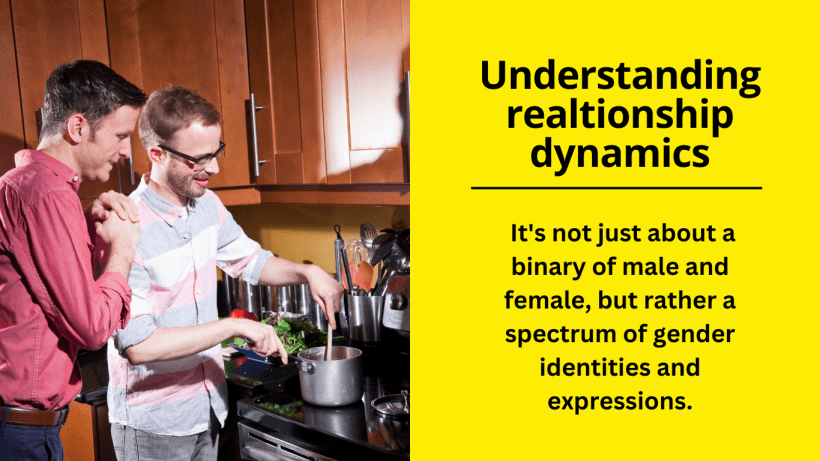
One of the most important things to understand about LGBTQ relationships is that they can take on many different dynamics. It’s not just about a binary of male and female, but rather a spectrum of gender identities and expressions. This means that relationships can involve people who identify as transgender, non-binary, or genderqueer, among other identities. Each individual brings their unique experiences and perspectives to the relationship, which can lead to different dynamics and communication styles.
It’s also important to understand that LGBTQ relationships may not follow traditional relationship norms. For example, monogamy may not be the norm for all couples, with some opting for polyamory or open relationships. It’s important to recognize that these dynamics are not inherently negative or unhealthy, but rather a reflection of the individuals involved and their preferences.
By acknowledging and understanding the different relationship dynamics that can exist within the LGBTQ community, we can promote more inclusive and accepting attitudes towards all types of relationships. It’s crucial to approach each relationship with an open mind and a willingness to learn about and respect the unique dynamics, challenges, and joys that each one brings.

Common misconceptions and stereotypes about LGBTQ relationships
Unfortunately, there are still many misconceptions and stereotypes surrounding LGBTQ relationships. One of the most common misconceptions is that LGBTQ relationships are not as serious or committed as heterosexual relationships. This is simply not true. LGBTQ couples face many of the same challenges as heterosexual couples, such as financial struggles, communication issues, and conflicts over household responsibilities. In fact, many studies have shown that LGBTQ couples are just as committed and likely to stay together as heterosexual couples.
Another misconception is that LGBTQ relationships are all about sex and lack emotional intimacy. This harmful stereotype reduces LGBTQ individuals to sexual objects and ignores the deep emotional connections that exist in many LGBTQ relationships. Just like in heterosexual relationships, LGBTQ couples experience love, trust, and emotional connection.
There is also a common stereotype that LGBTQ relationships are always open or non-monogamous. While some LGBTQ couples do choose to have open relationships, many others choose to be monogamous, just like many heterosexual couples. It’s important to understand that the decision to be open or monogamous is a personal choice and not a defining characteristic of LGBTQ relationships.
It’s crucial to challenge these misconceptions and stereotypes about LGBTQ relationships. By doing so, we can help create a more accepting and inclusive society where everyone’s unique relationships are valued and respected.

Understanding the impact of gender identity and sexual orientation on relationships
Gender identity and sexual orientation are two of the most important factors that shape LGBTQ relationships. Unlike heterosexual relationships, LGBTQ relationships are not bound by the traditional gender roles and expectations that society has constructed over the years. Instead, LGBTQ relationships are shaped by the unique experiences and perspectives of each individual involved.
For instance, two men in a relationship may not have the same expectations or experiences as two women in a relationship. Similarly, a transgender person may have a different experience in a relationship than a cisgender person.
It is important to acknowledge and respect these differences in order to build healthy and fulfilling relationships. This means taking the time to understand and appreciate the unique perspectives and experiences of each partner, as well as being open and honest about one’s own experiences and expectations.
Another important factor to consider is the impact of societal attitudes and prejudices on LGBTQ relationships. Discrimination and prejudice can have a significant impact on the mental health and wellbeing of LGBTQ individuals, which can in turn affect their relationships. It is important for partners in LGBTQ relationships to support and uplift each other in the face of such challenges.
In short, understanding the impact of gender identity and sexual orientation on relationships is crucial for building healthy, respectful, and fulfilling LGBTQ relationships. It requires empathy, open-mindedness, and a willingness to learn and grow together.

The unique challenges faced by LGBTQ couples
LGBTQ couples face unique challenges that are often not experienced by heterosexual couples. One of the most significant challenges is discrimination, which can come in various forms, including legal, social, and institutional. For example, in some countries, same-sex marriage is not legally recognized, making it challenging for LGBTQ couples to access legal protections and benefits that are automatically granted to heterosexual couples.
Social discrimination is also a significant challenge. LGBTQ couples may face prejudice, hostility, and hate crimes, which can affect their emotional and mental well-being. Institutional discrimination, such as difficulty accessing healthcare or adoption services, can also be a significant barrier.
Another significant challenge faced by LGBTQ couples is the lack of visibility and representation in popular culture. Many LGBTQ individuals grow up without seeing healthy and loving LGBTQ relationships modeled in the media or in their communities, which can make it difficult to identify and build healthy LGBTQ relationships.
Despite these challenges, many LGBTQ couples have built thriving and loving relationships, often relying on strong communication skills and a deep understanding of their partner’s unique needs and experiences. By recognizing and understanding the unique challenges faced by LGBTQ couples, we can work towards creating a more inclusive and supportive society for all.

The role of community support and acceptance in LGBTQ relationships
Community support and acceptance play a vital role in the success of LGBTQ relationships. In fact, research shows that the level of support and acceptance from the LGBTQ community and society at large can greatly impact the quality and longevity of these relationships.
Many LGBTQ individuals face significant challenges when it comes to finding acceptance and support, which can often lead to feelings of isolation, loneliness, and even mental health issues. However, those who are able to find a supportive community of peers and allies often experience increased self-esteem, better mental health, and more fulfilling relationships.
Furthermore, community support and acceptance can also help to reduce stress and anxiety related to discrimination and prejudice that many LGBTQ individuals face on a daily basis. When LGBTQ individuals feel supported and accepted by their community, as well as their family and friends, they are more likely to feel empowered and confident in their relationships and their lives overall.
Therefore, it is important for society as a whole to work towards creating more inclusive and accepting environments for LGBTQ individuals. This can include everything from implementing policies and laws that protect LGBTQ rights, to promoting diversity and inclusion in schools, workplaces, and communities.
Ultimately, the more support and acceptance that LGBTQ individuals receive, the more likely they are to form strong and healthy relationships that stand the test of time.
Embracing the uniqueness and diversity of all relationships.
It is important to embrace the uniqueness and diversity of all relationships, including those within the LGBTQ community. Relationships are not one-size-fits-all, and it is crucial to understand and accept the differences that make each one special.
It is essential to remember that LGBTQ relationships face unique challenges, including stigma, discrimination, and societal pressures. However, these challenges do not define these relationships. Instead, they are an opportunity to showcase the strength, resilience, and love that exist within them.
By understanding and embracing the uniqueness of LGBTQ relationships, we can create a more inclusive and accepting society. We can celebrate the diversity that exists in the world and recognize that love knows no bounds.
It is up to all of us to challenge our own biases and assumptions and to educate ourselves on the experiences of those in the LGBTQ community. By doing so, we can build stronger and more supportive relationships for all.
What about you? What issues have you faced with heterosexual people in regards to your relationships? Do you feel that anything presented in the article has an affect on your relationships? Do you think that LGBTQ relationships should be treated just like heterosexual relationships or should the be viewed from a unique standpoint, since there are many differences? Let me know your thoughts in the comments below.


 Gay in the CLE