
With my diagnosis of high blood pressure and cirrhosis, my diet and lifestyle became the center stage of my life. I knew I needed to improve both to live better and to just LIVE. It was a daunting task to think about changing all of my habits I had over my years. I had previously given up soda, which I thought I would never be able to do but did. Now I needed to cut our all processed foods, reduce meat intake, remove salt, and lower the amount of sugar I was consuming. Thankfully, the Mediterranean Diet helped with that.
It would be better to call it the Mediterranean Lifestyle, as what you eat is much closer to what is called the peasant diet of those that live around the Mediterranean Sea. To be transparent, I used this change, as well as becoming a vegetarian to change my life. You don’t have to go that far.
If you’re interested in starting the Mediterranean diet, but don’t know where to begin, you’ve come to the right place. In this comprehensive guide, we will cover everything you need to know to get started with the Mediterranean diet. From the science behind the diet to meal planning and shopping tips, you’ll have everything you need to start your journey towards a healthier lifestyle. So, lets dive into the Mediterranean Diet 101: A Comprehensive Guide to Get Started.
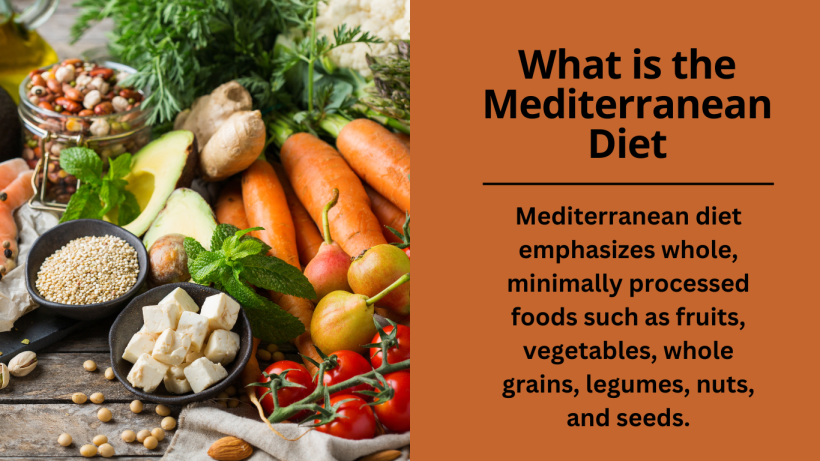
What is the Mediterranean Diet
The Mediterranean diet is a lifestyle that has been around for centuries, but has gained popularity in recent years due to its numerous health benefits. It is a heart-healthy diet that emphasizes whole foods, healthy fats, and a variety of fruits and vegetables. The Mediterranean diet has been shown to reduce the risk of heart disease, stroke, and type 2 diabetes, and can even help with weight loss.
The Mediterranean diet is a way of eating that is based on the traditional foods and cooking styles of the countries surrounding the Mediterranean Sea. This includes countries such as Greece, Italy, Spain, and Turkey. The Mediterranean diet is often hailed as one of the healthiest diets in the world, and it has been shown to have numerous health benefits.
At its core, the Mediterranean diet emphasizes whole, minimally processed foods such as fruits, vegetables, whole grains, legumes, nuts, and seeds. It also includes a moderate amount of fish, poultry, and dairy products, and encourages the use of healthy fats such as olive oil. Red meat and sweets are limited in the Mediterranean diet. You can also substitute animal proteins for vegetable proteins. Personally, I still use eggs and cheese as large sources of proteins.
In addition to the health benefits, the Mediterranean diet is also lauded for its emphasis on enjoying food in a social and relaxed setting. Meals are typically enjoyed with family and friends, and the focus is on savoring the flavors and taking time to enjoy the experience.

Health benefits of the Mediterranean Diet
The Mediterranean diet is not just a tasty way of eating but it also comes with a plethora of health benefits. Studies have shown that following a Mediterranean diet can lead to a decreased risk of heart disease, type 2 diabetes, certain cancers, and even Alzheimer’s disease.
One of the key components of the Mediterranean diet is consuming healthy fats found in foods such as olive oil, nuts, and fatty fish. These healthy fats help to lower bad cholesterol levels and reduce inflammation in the body.
The diet also emphasizes the consumption of whole grains, fruits, and vegetables which are packed with vitamins, minerals, and fiber that are essential for overall health and well-being.
In addition, the Mediterranean diet encourages the consumption of lean protein sources such as poultry, fish, and legumes which are important for muscle growth and repair. Vegetable protein also includes this without the addition of animal fats found in meat.
Another benefit of the Mediterranean diet is that it promotes mindful eating, enjoying meals with family and friends, and taking time to savor the flavors and textures of food. This can lead to a more positive relationship with food and decreased risk of overeating or emotional eating.
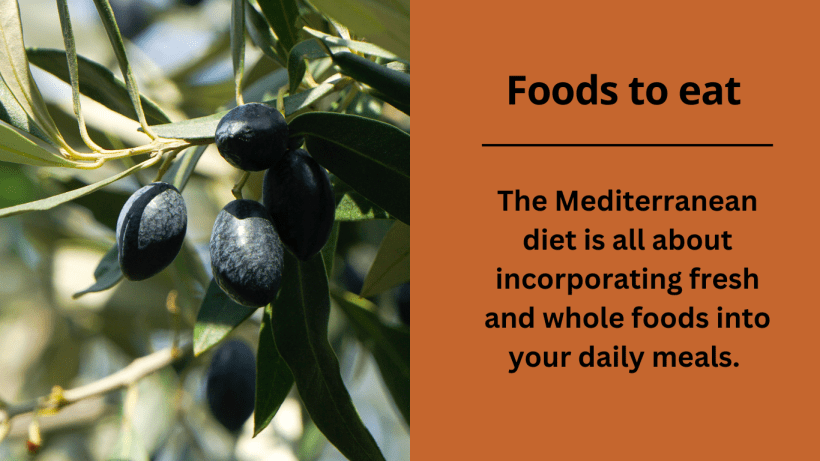
Foods to eat on the Mediterranean Diet
The Mediterranean diet is all about incorporating fresh and whole foods into your daily meals. Here are some of the foods that you should include in your diet:
1. Fruits and vegetables: These should be the foundation of your meals. Aim for at least 5 servings of fruits and vegetables a day. You can have them as a salad, roasted, grilled, or as a snack.
2. Whole grains: Whole grains like brown rice, quinoa, whole wheat bread, and whole grain pasta are packed with fiber, vitamins, and minerals.
3. Nuts and seeds: Nuts and seeds are a great source of healthy fats, fiber, and protein. You can have them as a snack, sprinkle them on your salad, or add them to your breakfast.
4. Legumes: Legumes like lentils, chickpeas, and beans are a great source of protein, fiber, and complex carbs. They can be added to soups, stews, salads, or made into dips.
5. Fish and seafood: Fish and seafood are a staple in the Mediterranean diet. They are a great source of protein, omega-3 fatty acids, and other essential nutrients. Aim for at least 2 servings of fish per week. The key here is that meat was more like a condiment to this lifestyle. It wasnt the focus of the dish.
6. Olive oil: Olive oil is a healthy fat that is a key component of the Mediterranean diet. Use it for cooking, as a salad dressing, or dip bread in it.
By incorporating these foods into your diet, you’ll not only feel full and satisfied but also reap the benefits of a healthy and balanced diet. This is thanks to the inclusion of fatty foods, carbs from the vegetables, and protein. All give you a more full feeling.
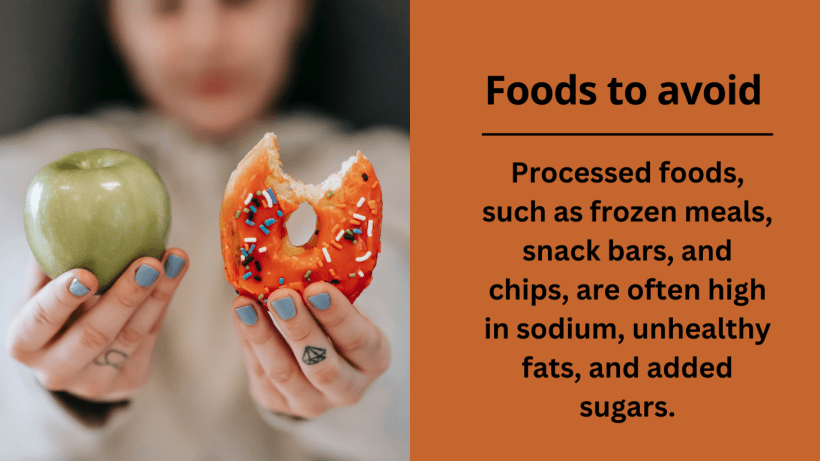
Foods to avoid on the Mediterranean Diet
While the Mediterranean diet is all about whole, nutrient-dense foods, there are some foods that are best avoided. These include highly processed foods, refined grains, sugar-sweetened beverages, and foods high in added sugars and saturated fats.
Processed foods, such as frozen meals, snack bars, and chips, are often high in sodium, unhealthy fats, and added sugars. They also tend to be low in nutrients, which means they won’t provide the health benefits that the Mediterranean diet is known for.
Refined grains, like white bread, pasta, and rice, have been stripped of their natural fiber, vitamins, and minerals. They’re also quickly broken down into sugar in the body, which can cause a spike in blood sugar levels.
Sugar-sweetened beverages, such as soda, energy drinks, and sports drinks, are high in added sugars and provide empty calories. They have been linked to an increased risk of obesity, type 2 diabetes, and other chronic diseases.
Foods high in added sugars and saturated fats, such as candy, pastries, and fried foods, should also be avoided on the Mediterranean diet. These foods can cause inflammation in the body and increase the risk of heart disease.
By avoiding these foods and focusing on whole, nutrient-dense foods, you’ll be able to fully embrace the Mediterranean diet and reap its many health benefits.

Tips for starting the Mediterranean Diet
Starting the Mediterranean diet can be overwhelming, but with the right mindset and a few tips, you can easily get started. Here are some tips to help you make the transition:
1. Start slow: The Mediterranean diet is a lifestyle change, not a quick fix. Start by making small changes to your diet and gradually incorporate more Mediterranean foods over time.
2. Focus on whole foods: The Mediterranean diet is all about whole, unprocessed foods. Make sure to incorporate plenty of fruits, vegetables, whole grains, lean proteins, and healthy fats into your diet.
3. Experiment with new flavors: The Mediterranean diet is known for its bold and flavorful dishes. Experiment with new spices, herbs, and ingredients to keep your meals interesting and exciting.
4. Meal prep: Prepping meals in advance can help you stay on track and avoid unhealthy options when you’re short on time. Make sure to prep plenty of fresh fruits and vegetables, lean proteins, and whole grains.
5. Stay hydrated: Drinking plenty of water is key to any healthy diet. Aim for at least 8 glasses of water a day and limit sugary drinks like soda and juice.
6. Don’t deprive yourself: The Mediterranean diet is all about balance. Don’t deprive yourself of your favorite foods, instead, enjoy them in moderation and focus on making healthier choices overall.
By following these tips, you’ll be well on your way to adopting a healthy and delicious Mediterranean diet. Remember, it’s all about making small changes and finding what works for you and your lifestyle.
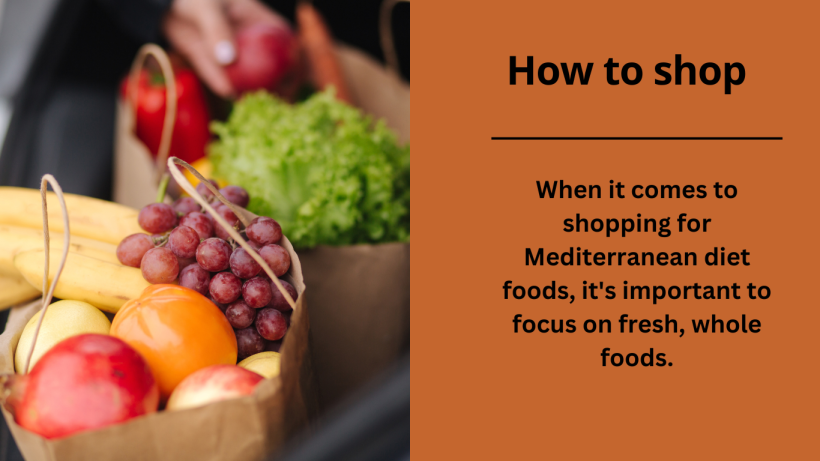
How to shop for Mediterranean foods
When it comes to shopping for Mediterranean diet foods, it’s important to focus on fresh, whole foods. The Mediterranean diet emphasizes fruits, vegetables, whole grains, legumes, nuts, and seeds. When shopping for produce, choose a variety of colorful fruits and vegetables to ensure you are getting a wide range of nutrients. When it comes to whole grains, opt for brown rice, quinoa, whole wheat pasta, and whole grain bread. Legumes such as chickpeas, lentils, and beans are also a staple of the Mediterranean diet and can be used in a variety of dishes.
In addition to whole foods, the Mediterranean diet also includes healthy fats such as olive oil, nuts, and seeds. When shopping for olive oil, look for extra-virgin olive oil, which is the highest quality and has the most health benefits. Be cautious as not all olive oils are created equal. Better quality is always preferred and one way to tell the quality is by the taste of it or looking for the authenticity seal. It should carry a bit of a bitter/peppery taste and have a smell of fresh grass
When it comes to protein, the Mediterranean diet emphasizes fish and seafood, as well as poultry and eggs in moderation. When choosing fish, opt for fatty fish such as salmon, tuna, and mackerel, which are high in heart-healthy omega-3 fatty acids. You can also get a wealth of omega 3 fatty acids from vegetable proteins like walnuts, flaxseeds, hemp, and edamame,
It’s also important to limit your intake of processed foods, sugary drinks, and red meat, which are not typically included in the Mediterranean diet.
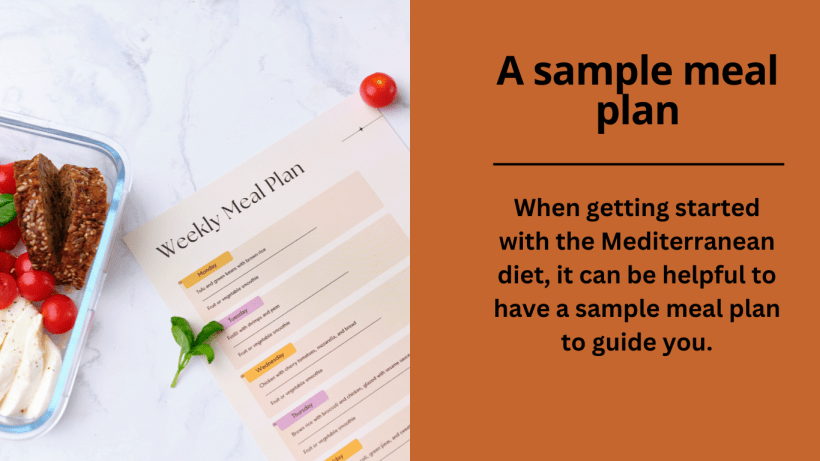
A sample meal plan for the day
If you’re getting started with the Mediterranean diet, it can be helpful to have a sample meal plan to guide you. Also be mindful that you eat smaller, more frequent meals. Five to six small meals are shown to be better for the body and digestion than three larger meals. Here’s an example of what a day on the Mediterranean diet might look like:
Breakfast: Greek yogurt with honey and berries, whole-grain toast with a drizzle of olive oil
Snack: Handful of almonds or an apple
Lunch: Mediterranean salad with mixed greens, cherry tomatoes, cucumber, feta cheese, olives, and a lemon vinaigrette dressing. Served with a side of whole-grain pita bread.
Snack: Carrots with hummus or a small serving of Greek yogurt with a drizzle of honey and cinnamon.
Dinner: Grilled salmon with lemon and herbs, sautéed spinach with garlic and olive oil, and a side of quinoa or brown rice.
Dessert: Fresh fruit, such as a sliced pear or a handful of grapes.
Remember, the Mediterranean diet is all about balance and variety. You don’t have to eat the same thing every day, and you should aim to incorporate plenty of fruits, vegetables, whole grains, lean protein, and healthy fats into your meals. With a little creativity and some experimentation, you’ll soon discover that the Mediterranean diet is not only healthy but also delicious and satisfying.
Mediterranean recipes to try
The Mediterranean diet is known for its delicious and healthy food options, and there are countless recipes to try. Here are a few that you can get started with:
1. Greek Salad: This classic salad is filled with fresh vegetables like cucumber, tomato, and bell pepper. Top it with feta cheese and a drizzle of olive oil for a refreshing and satisfying meal.
2. Grilled Fish: The Mediterranean diet emphasizes seafood as a source of protein. Try grilling a fresh piece of fish, like salmon or tuna, and serving it with a side of grilled vegetables.
3. Hummus: This popular dip is made from chickpeas, tahini, garlic, and lemon juice. It’s a great snack option that’s high in protein and healthy fats.
4. Ratatouille: This vegetable stew is a staple in Mediterranean cuisine. It’s made with eggplant, zucchini, bell pepper, tomato, onion, and garlic, and is typically served with crusty bread.
5. Greek Yogurt Parfait: For a healthy and satisfying breakfast, try layering Greek yogurt, fresh fruit, and granola in a parfait glass. It’s a great way to start your day on a nutritious note.
These are just a few ideas to get you started on your Mediterranean diet journey. Experiment with different herbs and spices to add flavor to your meals, and don’t be afraid to try new ingredients. With so many delicious options, you’ll never get bored with this healthy and flavorful way of eating.
Frequently Asked Questions for the Mediterranean Diet
As with any diet, people have questions about the Mediterranean diet. Here are some of the most common questions and their answers:
1. What are the main components of the Mediterranean diet?
The Mediterranean diet is based on plant-based foods such as fruits, vegetables, whole grains, legumes, and nuts. It also includes fish and seafood as the main source of protein, and poultry, eggs, and dairy products in moderation. Red meat and sweets are consumed only in small amounts.
2. Can I eat pasta on the Mediterranean diet?
Yes, you can eat pasta on the Mediterranean diet, but choose whole grain pasta instead of refined pasta. Also, make sure to add plenty of vegetables and lean protein to your pasta dish.
3. Do I have to give up wine on the Mediterranean diet?
Wine is a part of the Mediterranean diet in moderation. One glass of red wine per day for women and two glasses for men can be consumed.
4. Is the Mediterranean diet expensive?
The Mediterranean diet can be affordable if you focus on buying seasonal produce and bulk grains and legumes. Additionally, consuming less meat and more plant-based foods can save money.
5. Can I lose weight on the Mediterranean diet?
Yes, the Mediterranean diet can aid in weight loss due to its focus on whole foods and plant-based foods. However, it is important to keep portions in check and focus on consuming fewer calories than you burn.
By familiarizing yourself with these frequently asked questions, you can feel confident in starting the Mediterranean diet and making it a sustainable lifestyle change.
Have you tried the Mediterranean diet? If so, how is it working out for you? If this lifestyle choice doesn’t seem right for you, what about it doesn’t work? Let me know in the comments below. You never know, your experiences and views may help someone else with their daily struggles. Thanks for reading!

 Gay in the CLE